Letter Requesting Motion To Vacate Order Of Default With Student Loans In Arizona
Description
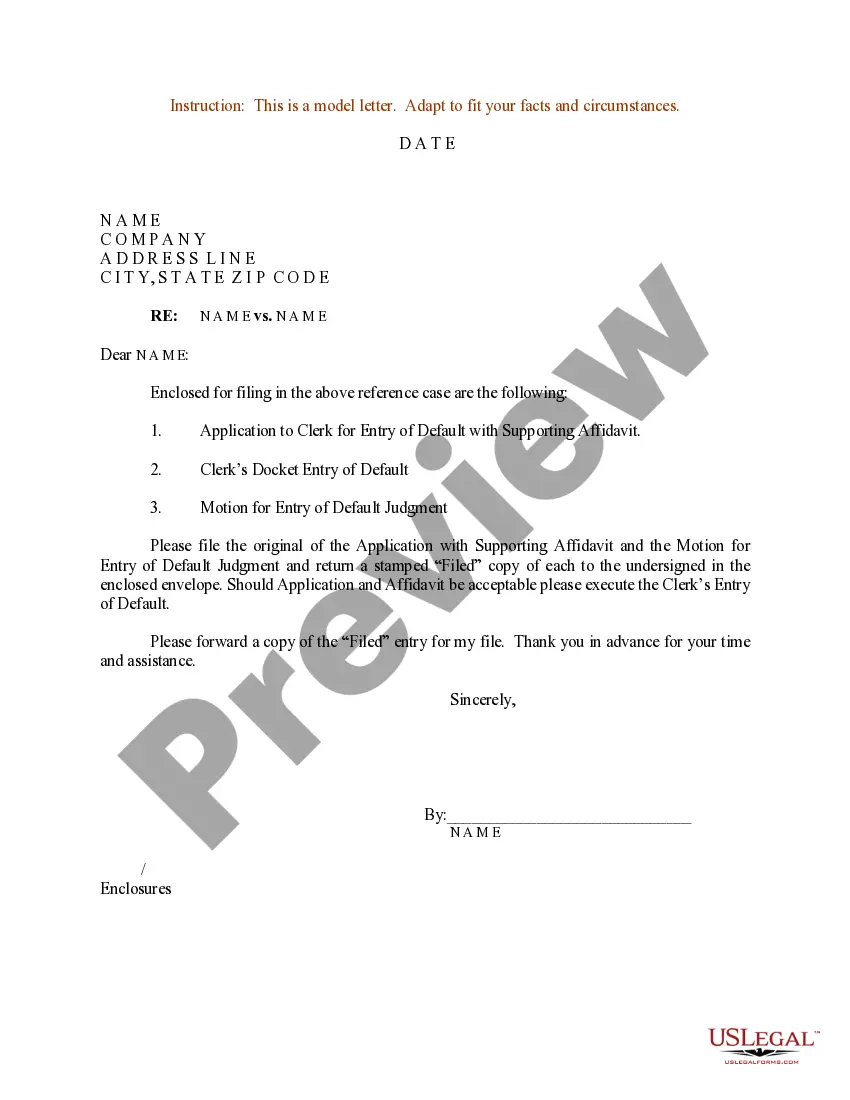
Get your form ready online
Our built-in tools help you complete, sign, share, and store your documents in one place.
Make edits, fill in missing information, and update formatting in US Legal Forms—just like you would in MS Word.
Download a copy, print it, send it by email, or mail it via USPS—whatever works best for your next step.
Sign and collect signatures with our SignNow integration. Send to multiple recipients, set reminders, and more. Go Premium to unlock E-Sign.
If this form requires notarization, complete it online through a secure video call—no need to meet a notary in person or wait for an appointment.
We protect your documents and personal data by following strict security and privacy standards.

Make edits, fill in missing information, and update formatting in US Legal Forms—just like you would in MS Word.

Download a copy, print it, send it by email, or mail it via USPS—whatever works best for your next step.

Sign and collect signatures with our SignNow integration. Send to multiple recipients, set reminders, and more. Go Premium to unlock E-Sign.

If this form requires notarization, complete it online through a secure video call—no need to meet a notary in person or wait for an appointment.

We protect your documents and personal data by following strict security and privacy standards.
Looking for another form?
Form popularity
FAQ
And need to be cancelled. This can happen for several reasons such as significant errors in theMoreAnd need to be cancelled. This can happen for several reasons such as significant errors in the original. Decision or if the conviction was obtained through unconstitutional.
In summary, a motion is a legal term for asking for a formal proceeding during a trial or court case. It's made to the same court level and is granted or dismissed by the same. By contrast, an appeal is filed after a trial ends at a higher court level to reevaluate the decision made during the primary trial/proceeding.
Imagine you've taken someone to court, but they've ignored all proceedings. A motion for default judgment allows you to ask the court to automatically decide in your favor due to the other party's lack of response or action.
A motion to vacate must be filed within a reasonable time. For reasons (1) and (2), the motion must be filed no more than 6 months after the entry of the judgment or the date of the proceeding, whichever is later. The moving party must deliver a copy of the motion to the other party on the date of filing.
In other words, an appeal asks a higher court to review the decision, and a Motion to Vacate asks the lower court to reconsider the case.
The court must allow an application to set aside a default judgment if it has been 'wrongly entered' (CPR 13.2), and. In other circumstances, the court has discretion to, and may, set aside a default judgment (CPR 13.3).
A default judgment may be entered against the State of Arizona or one of its officers or agencies only if, after a hearing, the claimant establishes a claim or right to relief by evidence that satisfies the court. (e)Plaintiffs, Counterclaimants, and Cross-claimants.
An appeal asks a higher court to change the decision made by a lower court. A Motion to Vacate asks the same court to cancel its decision, as if the case never happened.
For good cause shown, and upon terms the court deems just, the court may set aside a judgment entered upon a failure to appear. A motion to set aside a default judgment shall be made in writing within 30 days after entry of the default judgment.
You have four main options to deal with a default judgment: Accept the judgment. Settle the judgment for less. Challenge the judgment. Pursue debt relief.