Consumer Reporting Agency In A Sentence In Ohio
Description
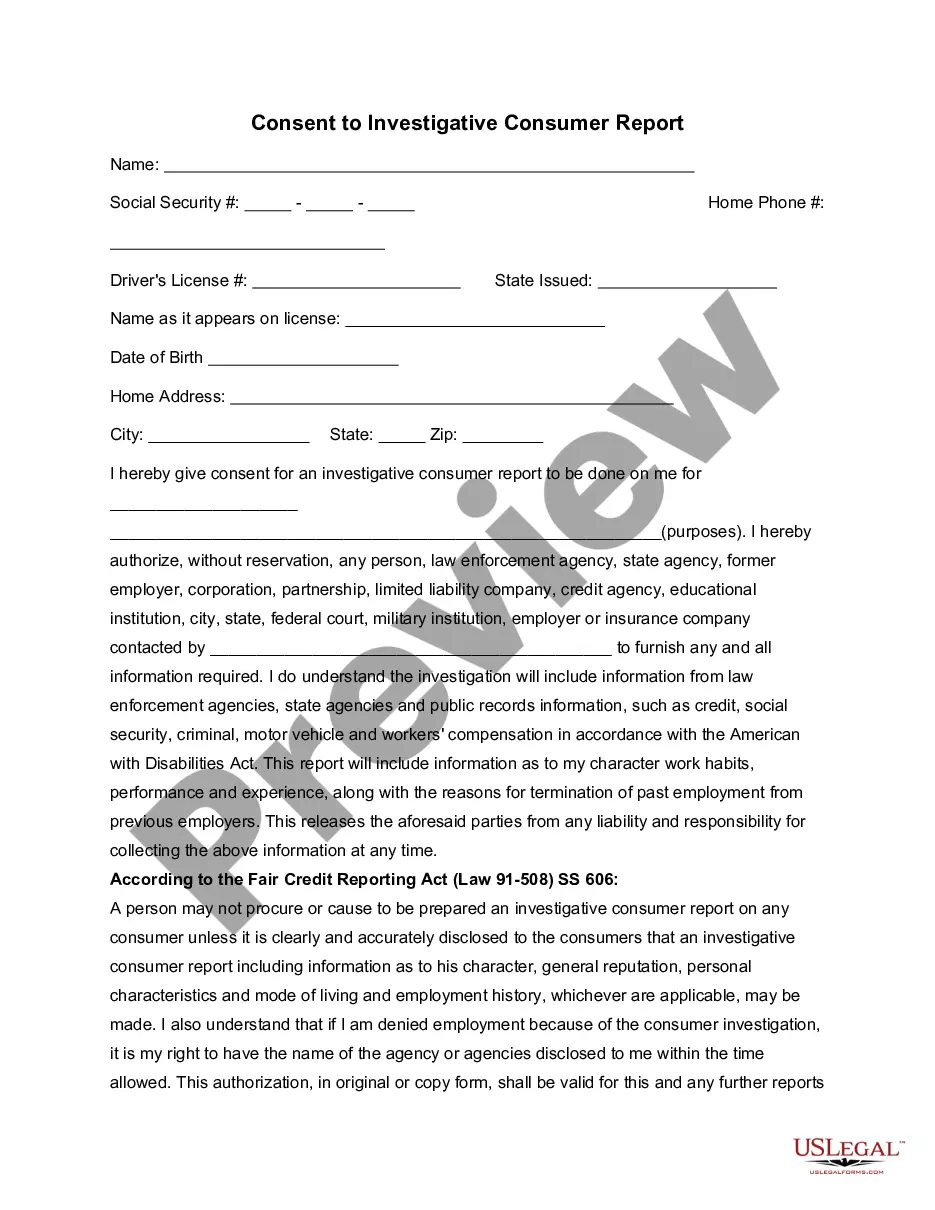

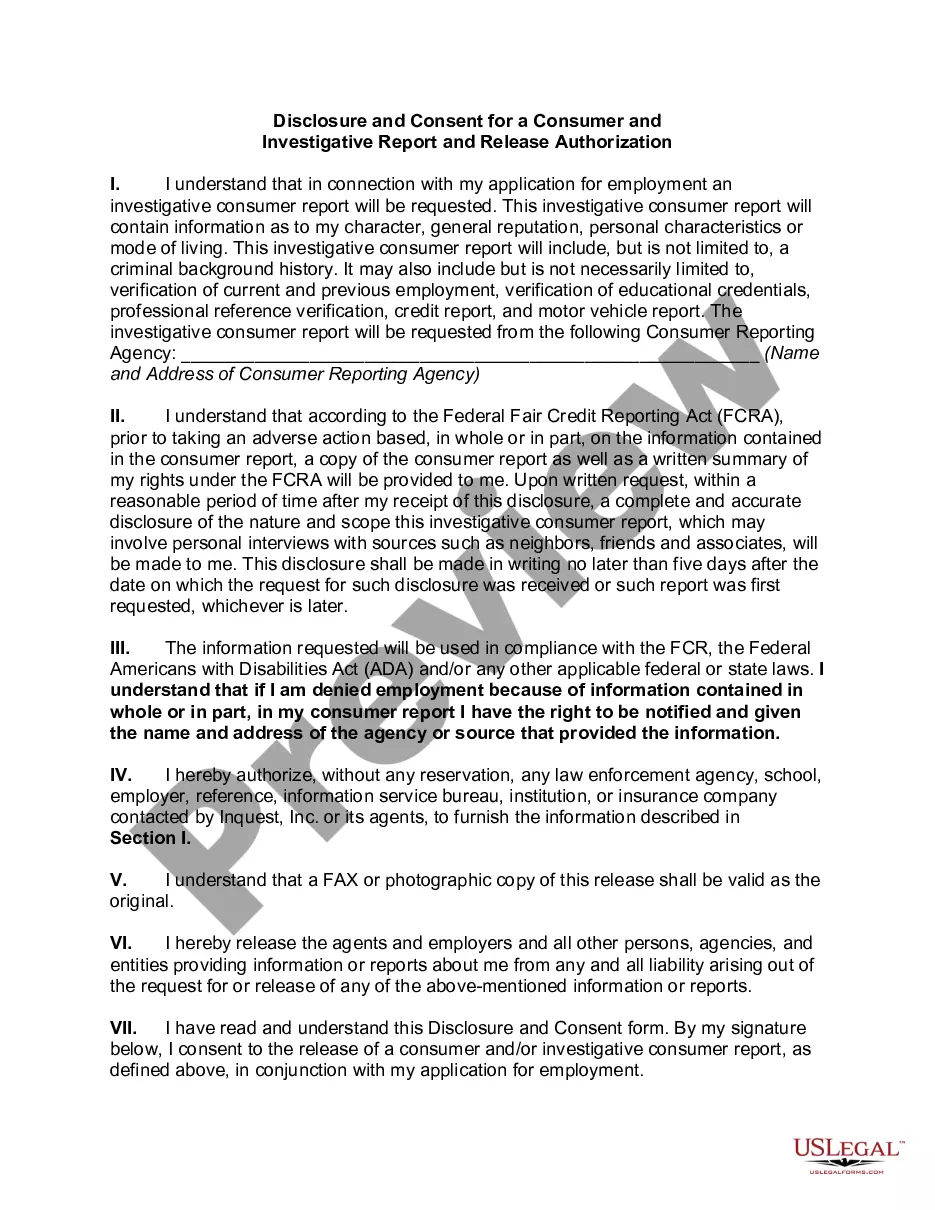
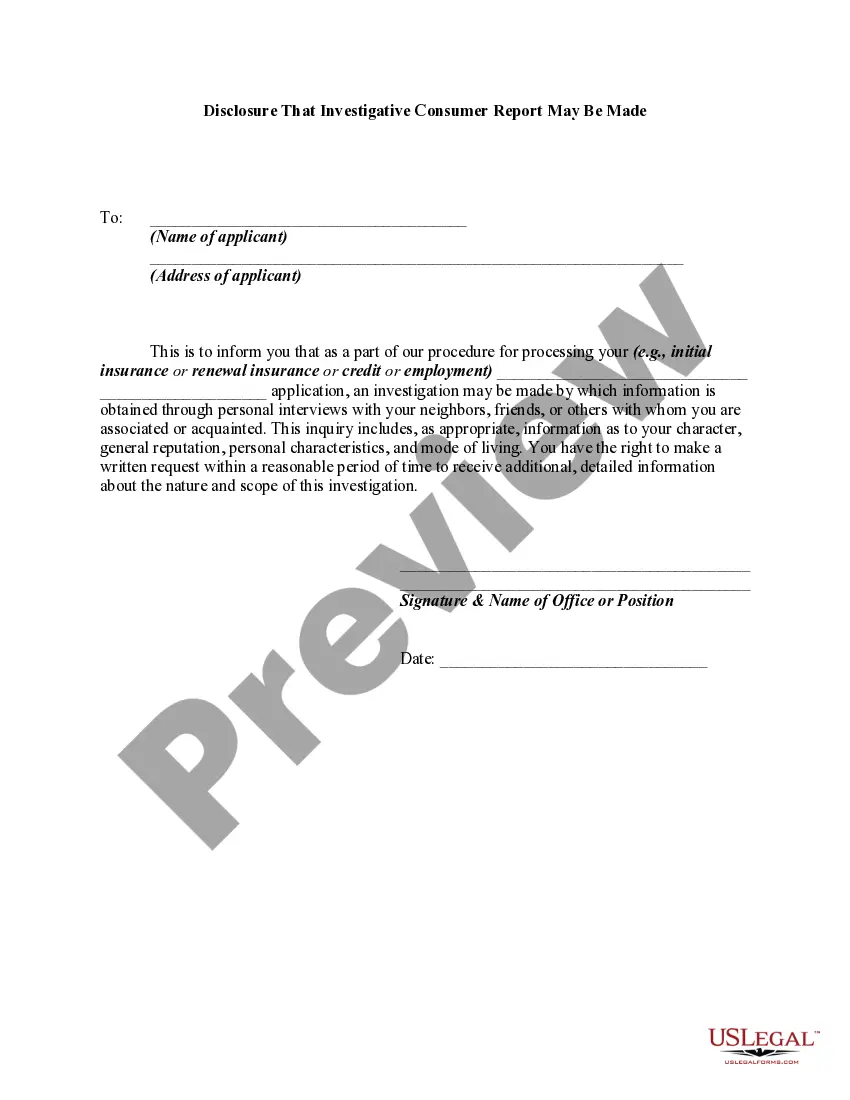
Get your form ready online
Our built-in tools help you complete, sign, share, and store your documents in one place.
Make edits, fill in missing information, and update formatting in US Legal Forms—just like you would in MS Word.
Download a copy, print it, send it by email, or mail it via USPS—whatever works best for your next step.
Sign and collect signatures with our SignNow integration. Send to multiple recipients, set reminders, and more. Go Premium to unlock E-Sign.
If this form requires notarization, complete it online through a secure video call—no need to meet a notary in person or wait for an appointment.
We protect your documents and personal data by following strict security and privacy standards.

Make edits, fill in missing information, and update formatting in US Legal Forms—just like you would in MS Word.

Download a copy, print it, send it by email, or mail it via USPS—whatever works best for your next step.

Sign and collect signatures with our SignNow integration. Send to multiple recipients, set reminders, and more. Go Premium to unlock E-Sign.

If this form requires notarization, complete it online through a secure video call—no need to meet a notary in person or wait for an appointment.

We protect your documents and personal data by following strict security and privacy standards.
Looking for another form?






Form popularity
FAQ
The Ohio Personal Privacy Act (OPPA), designated as House Bill 345, marks a significant legislative development aimed at enhancing the privacy rights of individuals within the state of Ohio. This landmark data privacy bill is designed to empower Ohio residents with greater control over their personal data.
Consumer Protection works to protect Ohio consumers by conducting local and state investigations and by joining multi-state and federal investigations.
The Consumer Credit Protection Act (CCPA) sets federal withholding limits for child support and alimony. These limits are based on your employee's Aggregate Disposable Weekly Earnings (ADWE), which is calculated by subtracting from the employee's gross earnings any taxes and mandatory retirement deductions.
Complaints can be filed online or by calling 800-282-0515. Be sure to include as much information as possible, including the name and location of the business, your own contact information, a description of the problem, and what you would consider to be a reasonable resolution.
The Consumer Protection Section's Economic Crimes division assists local law enforcement and prosecutors in identifying, investigating, and prosecuting consumer fraud of a criminal nature. The division consists of four attorneys and three investigators who are dedicated solely to criminal investigations.
The FTC's Bureau of Consumer Protection stops unfair, deceptive and fraudulent business practices by: collecting complaints and conducting investigations. suing companies and people that break the law. developing rules to maintain a fair marketplace.
Consumer Reports is an independent, nonprofit member organization that works side by side with consumers for truth, transparency, and fairness in the marketplace. Consumer Reports works to create a fair and just marketplace for all.
Nationwide consumer reporting companies There are three big nationwide providers of consumer reports: Equifax, TransUnion, and Experian.
Consumer reporting companies collect information and provide reports to other companies about you. These companies use these reports to inform decisions about providing you with credit, employment, residential rental housing, insurance, and in other decision-making situations.
