Sample Payoff Mortgage Form For Divorce In Washington
Description
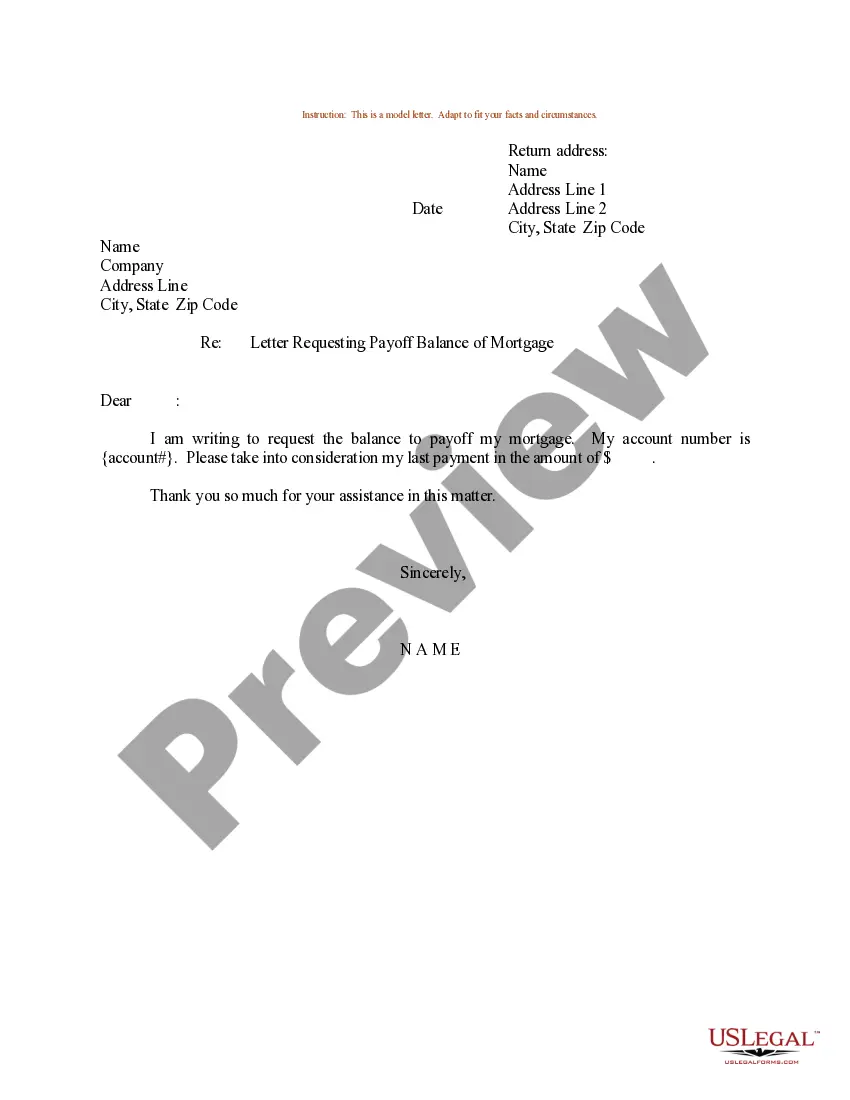
Get your form ready online
Our built-in tools help you complete, sign, share, and store your documents in one place.
Make edits, fill in missing information, and update formatting in US Legal Forms—just like you would in MS Word.
Download a copy, print it, send it by email, or mail it via USPS—whatever works best for your next step.
Sign and collect signatures with our SignNow integration. Send to multiple recipients, set reminders, and more. Go Premium to unlock E-Sign.
If this form requires notarization, complete it online through a secure video call—no need to meet a notary in person or wait for an appointment.
We protect your documents and personal data by following strict security and privacy standards.

Make edits, fill in missing information, and update formatting in US Legal Forms—just like you would in MS Word.

Download a copy, print it, send it by email, or mail it via USPS—whatever works best for your next step.

Sign and collect signatures with our SignNow integration. Send to multiple recipients, set reminders, and more. Go Premium to unlock E-Sign.

If this form requires notarization, complete it online through a secure video call—no need to meet a notary in person or wait for an appointment.

We protect your documents and personal data by following strict security and privacy standards.
Looking for another form?








Form popularity
FAQ
It is possible to get a divorce without going to court, especially in cases where both parties mutually agree to the divorce and its terms. This process is often referred to as an ``uncontested divorce'' or ``amicable divorce.'' Here are the key steps and considerations:
Can I serve divorce papers myself? No. Only a non-party to the case who is over the age of 18 can serve divorce papers under Washington law.
The Washington State Department of Health, Center for Health Statistics issues certified copies of Birth, Death, Marriage, and Divorce certificates, for events that occurred within the State of Washington. These certificates can be ordered online from VitalChek.
A Washington marital settlement agreement is a document used in an uncontested divorce to establish the terms of the dissolution of marriage. Terms in the agreement govern alimony payments, child custody, child support payments, and the division of property and assets, among other matters.
Debt Division in Washington: Community Property State Washington operates under the legal principle of “community property,” meaning that most debts incurred during a marriage are considered joint responsibilities. Regardless of which spouse incurred the debt, it is often viewed as a shared obligation.
Long marriages (those over 5+ years) are likely to result in an equal division of assets, regardless of which party has the wealth.
Washington does not recognize common law marriage. You could live with someone for decades, use their last name, and have children together, but the state would not recognize you as being married. Thus, you wouldn't have the same rights as legally married spouses.
For long-term marriages (over 25 years), the court will usually try to put both parties in an equal financial position for either the remainder of their lives or until both parties retire. The idea is that after 25 years, the parties should be recognized as financially equal partners.
Alimony in Medium-Term Marriages (5–25 years) As a general rule of thumb, courts in Washington State award one year of alimony for every three or four years of marriage. There is no statute or case law explicitly stating this formula, but it is an oft mentioned rule and generally what courts can be expected to do.

