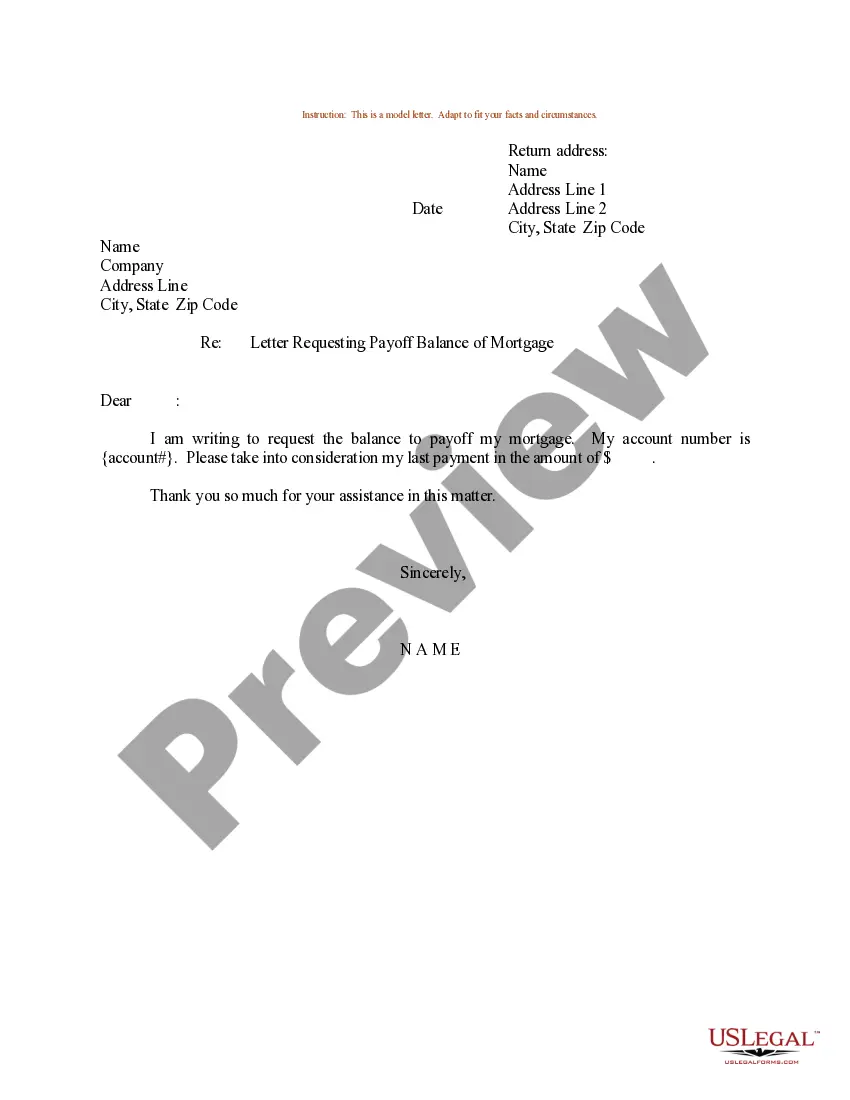
Letter Payoff Loan With 401k In Travis
Description
Get your form ready online
Our built-in tools help you complete, sign, share, and store your documents in one place.
Make edits, fill in missing information, and update formatting in US Legal Forms—just like you would in MS Word.
Download a copy, print it, send it by email, or mail it via USPS—whatever works best for your next step.
Sign and collect signatures with our SignNow integration. Send to multiple recipients, set reminders, and more. Go Premium to unlock E-Sign.
If this form requires notarization, complete it online through a secure video call—no need to meet a notary in person or wait for an appointment.
We protect your documents and personal data by following strict security and privacy standards.

Make edits, fill in missing information, and update formatting in US Legal Forms—just like you would in MS Word.

Download a copy, print it, send it by email, or mail it via USPS—whatever works best for your next step.

Sign and collect signatures with our SignNow integration. Send to multiple recipients, set reminders, and more. Go Premium to unlock E-Sign.

If this form requires notarization, complete it online through a secure video call—no need to meet a notary in person or wait for an appointment.

We protect your documents and personal data by following strict security and privacy standards.
Looking for another form?




Form popularity
FAQ
What are some common strategies for withdrawing retirement savings? Common strategies include the 4% rule, fixed-dollar withdrawals, fixed-percentage withdrawals, and systematic withdrawals. Each strategy has its own benefits and can be tailored to meet individual financial goals and needs.
If your plan permits hardship withdrawals, you may be required to provide documentation to support your need for the funds. Some examples are medical bills, invoices from a college or university, and bank statements. The IRS may require that you provide proof that you don't have liquid assets to cover your expenses.
First, you'll need to contact your lender and let them know you want the information. Depending on your lender, you may have to sign in to an online account, call a helpline, or send a formal letter to start the request process.
Generally speaking, distributions from a workplace retirement plan cannot be made until one of the following happens: You die or become disabled. The plan is terminated and isn't replaced by a new one. You reach age 59 ½. You experience a financial hardship.
How does a 401(k) withdrawal affect your tax return? Once you start withdrawing from your traditional 401(k), your withdrawals are usually taxed as ordinary taxable income. That said, you'll report the taxable part of your distribution directly on your Form 1040 for any tax year that you make a distribution.
Call the Member Service Center at (800) 877-8328 with any questions.
Online Banking - Most credit unions offer an online banking service. If you wish to register for online banking or have any issues with your account such as log in details, you will need to contact your credit union directly. You can find their details using the CU Locator.
How can I check my union balance through SMS? To check the Union Bank balance through SMS, customers can send a message - 'UBAL' to 09223008486 from their registered mobile number.
Call the Member Service Center at (800) 877-8328 with any questions.
