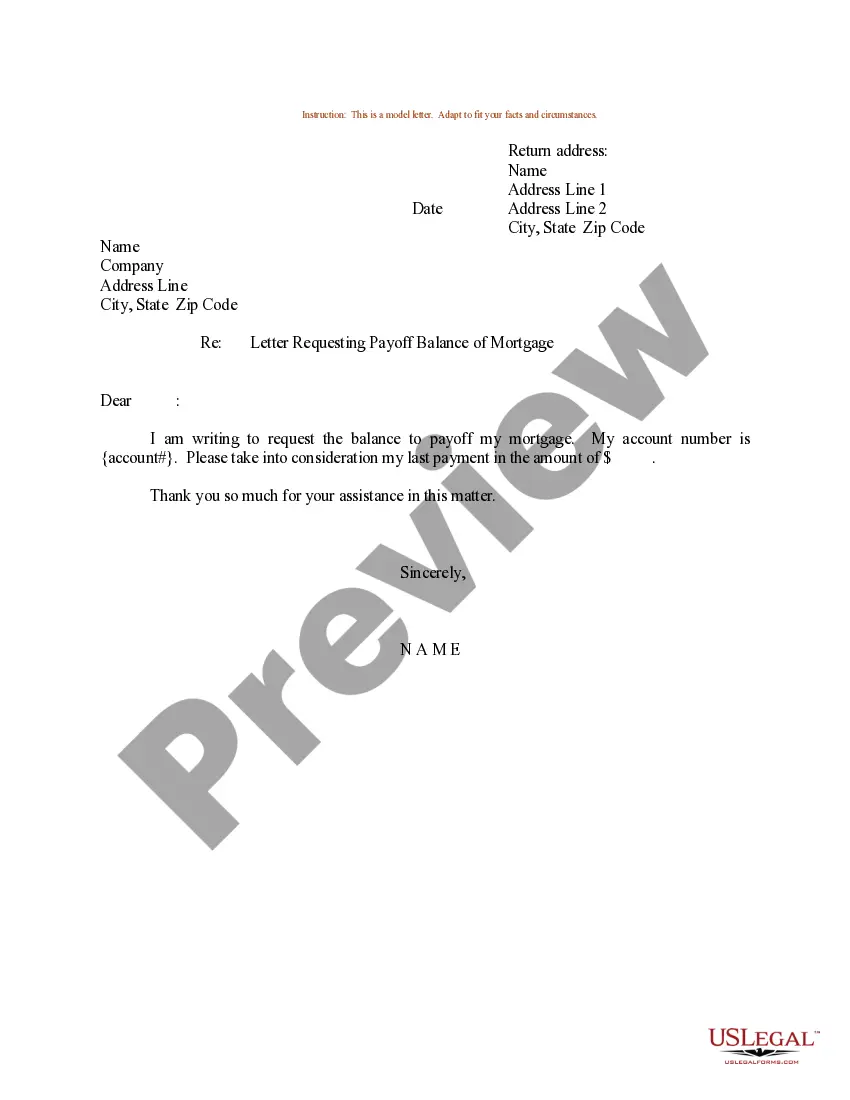
Loan Paid In Full Letter Template Format In Santa Clara
Description
Get your form ready online
Our built-in tools help you complete, sign, share, and store your documents in one place.
Make edits, fill in missing information, and update formatting in US Legal Forms—just like you would in MS Word.
Download a copy, print it, send it by email, or mail it via USPS—whatever works best for your next step.
Sign and collect signatures with our SignNow integration. Send to multiple recipients, set reminders, and more. Go Premium to unlock E-Sign.
If this form requires notarization, complete it online through a secure video call—no need to meet a notary in person or wait for an appointment.
We protect your documents and personal data by following strict security and privacy standards.

Make edits, fill in missing information, and update formatting in US Legal Forms—just like you would in MS Word.

Download a copy, print it, send it by email, or mail it via USPS—whatever works best for your next step.

Sign and collect signatures with our SignNow integration. Send to multiple recipients, set reminders, and more. Go Premium to unlock E-Sign.

If this form requires notarization, complete it online through a secure video call—no need to meet a notary in person or wait for an appointment.

We protect your documents and personal data by following strict security and privacy standards.
Looking for another form?






Form popularity
FAQ
To file or defend a case in small claims court, you must be (a) at least 18 years old or legally emancipated, and (b) mentally competent. A person must be represented by a Guardian ad Litem if he or she is under 18 and not legally emancipated, or has been declared mentally incompetent by a court.
The Small Claims Hearing You must submit copies of your evidence to the court and to each party in your case at least 10 days prior to the hearing. When submitting evidence, you must complete form LASC CIV 278 and use LASC CIV 279 mailing labels.
Frequently Asked Questions (FAQ) Type your letter. Concisely review the main facts. Be polite. Write with your goal in mind. Ask for exactly what you want. Set a deadline. End the letter by stating you will promptly pursue legal remedies if the other party does not meet your demand. Make and keep copies.
Tells the court that you had legal papers in a civil case - other than a summons - delivered to (served on) the other party. Lists the papers that were served and tells who they were served on, where, when, and how they were served, and who served them.
If you are injured and need to make a personal injury claim, you need to write a winning demand letter to the at-fault party or the insurance company.
In California, you're typically required to send a small claims demand letter to the defendant before filing a small claims case.
Start a case Form NameForm NumberGuide Plaintiff's Claim and Order to Go to Small Claims Court SC-100 Fill out forms to start a small claims case Other Plaintiffs or Defendants (Attachment to Plaintiff's Claim and ORDER to Go to Small Claims Court) SC-100A Fictitious Business Name (Small Claims) SC-103 3 more rows
The Nuts and Bolts of a Demand Letter Gather complete information before you start writing. Describe your injuries and medical treatment. List your medical expenses, lost wages, and non-economic damages. Make a settlement demand. Include a deadline for legal action if you want to, but don't bluff.
