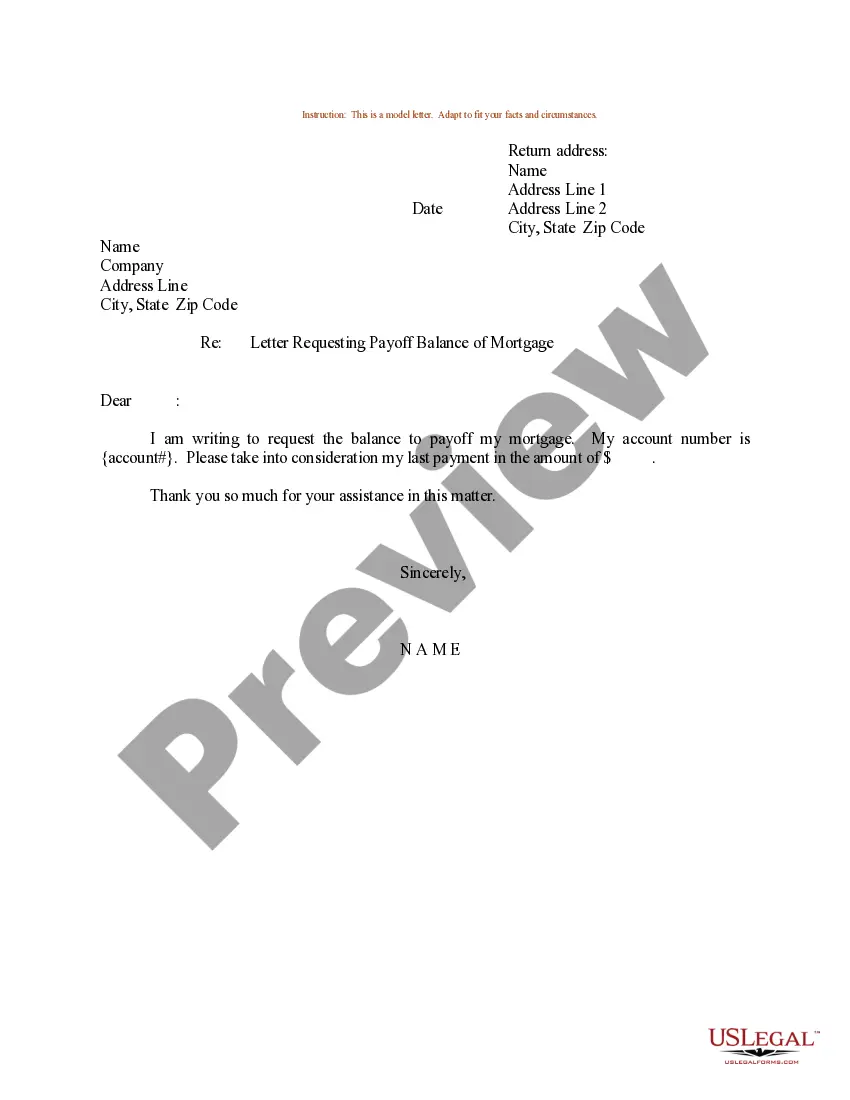
Loan Payoff Letter Format Foreclosure In San Diego
Description
Get your form ready online
Our built-in tools help you complete, sign, share, and store your documents in one place.
Make edits, fill in missing information, and update formatting in US Legal Forms—just like you would in MS Word.
Download a copy, print it, send it by email, or mail it via USPS—whatever works best for your next step.
Sign and collect signatures with our SignNow integration. Send to multiple recipients, set reminders, and more. Go Premium to unlock E-Sign.
If this form requires notarization, complete it online through a secure video call—no need to meet a notary in person or wait for an appointment.
We protect your documents and personal data by following strict security and privacy standards.

Make edits, fill in missing information, and update formatting in US Legal Forms—just like you would in MS Word.

Download a copy, print it, send it by email, or mail it via USPS—whatever works best for your next step.

Sign and collect signatures with our SignNow integration. Send to multiple recipients, set reminders, and more. Go Premium to unlock E-Sign.

If this form requires notarization, complete it online through a secure video call—no need to meet a notary in person or wait for an appointment.

We protect your documents and personal data by following strict security and privacy standards.
Looking for another form?






Form popularity
FAQ
Tips for writing a letter of explanation While the content of the letter will change depending on your situation, be sure to: Provide all details the best you can, including correct dates and dollar amounts. Explain how and when all situations were resolved. If they are not resolved, explain that as well.
Most courteously, I would like to inform you that my name is __________ (name) and I have been working in __________ (department) of your reputed company as ________ (designation) since ________ (duration). I would most humbly inform you that this letter is to request you to issue a clearance certificate in my name.
Employee Clearance Letter Sample (employee name) has worked for (mention service tenure) with (department name and company). He/ She has cleared all her dues during her notice period and has been relieved from his/her services in the (department, company name). He/ she has no obligations from (company name).
In California, the foreclosure process typically begins when a borrower misses a mortgage payment, triggering a Notice of Default (NOD) after about 90 days. Following the NOD, the borrower has approximately 90 days to remedy the default before a Notice of Trustee's Sale is issued.
In California, lenders can foreclose on deeds of trust or mortgages using a nonjudicial foreclosure process (outside of court) or a judicial foreclosure process (through the courts). The nonjudicial foreclosure process is used most commonly in our state.
Most mortgages have a power of sale clause, so lenders can foreclose without going to court (non-judicial). These are the most common type of foreclosures in California.
It takes several months for a lender to foreclose on a California property. If everything goes ing to schedule, the process typically takes approximately 120 days — about four months — but the process can take as long as 200 or more days to conclude.
Provide details such as your account number, branch name, reason for closure, and signature. Ensure all details are accurate. Include a copy of your ID proof, such as Aadhaar, PAN card, or passport. Take the filled form and documents to your home branch of YES Bank.
The statement is provided by the mortgage servicer and can be requested at any time. Accurate payoff information is crucial for managing financial decisions related to property ownership.
To get a payoff letter, ask your lender for an official payoff statement. Call or write to customer service or make the request online. While logged into your account, look for options to request or calculate a payoff amount, and provide details such as your desired payoff date.

