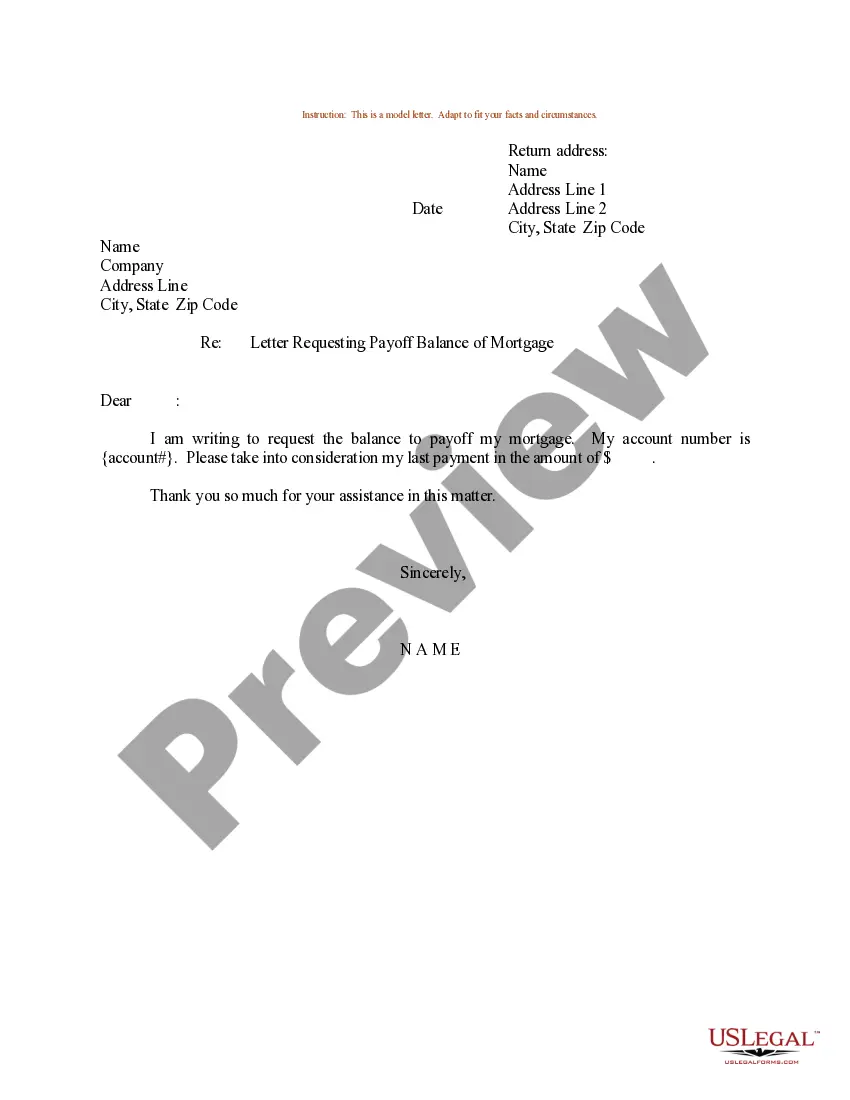
Payoff Letter Example In San Bernardino
Description
Get your form ready online
Our built-in tools help you complete, sign, share, and store your documents in one place.
Make edits, fill in missing information, and update formatting in US Legal Forms—just like you would in MS Word.
Download a copy, print it, send it by email, or mail it via USPS—whatever works best for your next step.
Sign and collect signatures with our SignNow integration. Send to multiple recipients, set reminders, and more. Go Premium to unlock E-Sign.
If this form requires notarization, complete it online through a secure video call—no need to meet a notary in person or wait for an appointment.
We protect your documents and personal data by following strict security and privacy standards.

Make edits, fill in missing information, and update formatting in US Legal Forms—just like you would in MS Word.

Download a copy, print it, send it by email, or mail it via USPS—whatever works best for your next step.

Sign and collect signatures with our SignNow integration. Send to multiple recipients, set reminders, and more. Go Premium to unlock E-Sign.

If this form requires notarization, complete it online through a secure video call—no need to meet a notary in person or wait for an appointment.

We protect your documents and personal data by following strict security and privacy standards.
Looking for another form?








Form popularity
FAQ
Frequently Asked Questions (FAQ) Type your letter. Concisely review the main facts. Be polite. Write with your goal in mind. Ask for exactly what you want. Set a deadline. End the letter by stating you will promptly pursue legal remedies if the other party does not meet your demand. Make and keep copies.
Sample Demand Letter for Payment I am writing to remind you of the outstanding payment for Invoice No. X, dated Invoice Date, in the amount of Amount Due. As of today, Date, this payment is Number of Days days overdue. Despite our previous reminders sent on Dates, we have not yet received this payment.
A demand letter typically includes specific details about the debt, such as the invoice number, the amount owed, and the due date. It also provides a deadline for payment, which is usually a short period, such as 10 or 14 days.
Dear Name, Further to my previous correspondence, I am contacting you regarding late payment for invoice invoice number. The invoice was due on due date, and payment is now overdue by number of days overdue. Be advised that late payment interest may be applied if we do not receive payment within 30 days.
A letter of intent to sue is used to notify an individual or business that legal action may be taken against them if the demands included in the letter are not met. By sending an intent to sue letter, you may be able to resolve the dispute without having to initiate a costly lawsuit.
Here's a short list of what you'll want to include: Facts of the case. An outline of what happened. Statement of the issue. A brief description of the problem. Demand. The dollar amount or action necessary to resolve the case. Response deadline. The date by which the recipient must respond. Noncompliance consequences.
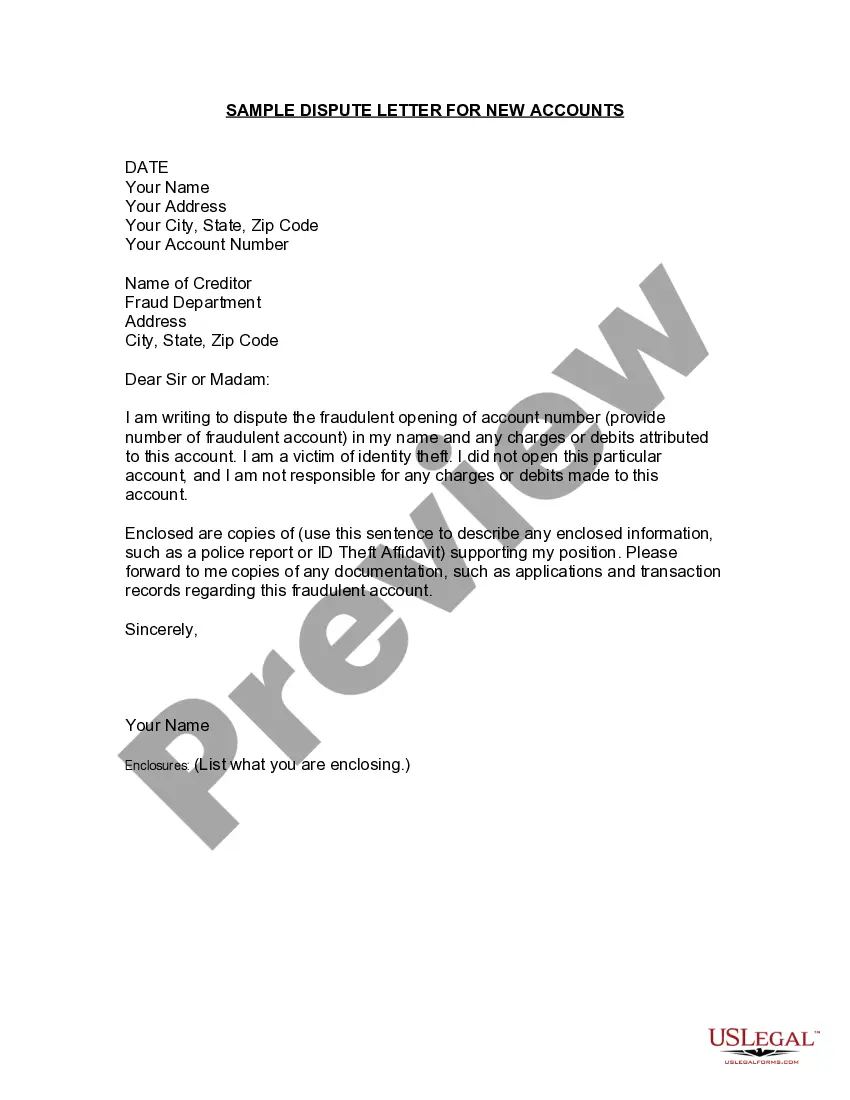
For example, Californians wishing to file a claim against a business for deceptive practices or some other infraction outlined in the state's Consumer Legal Remedies Act (CLRA) must send a demand letter at least 30 days before filing a lawsuit.
Under federal law, the servicer must generally send you a payoff statement within seven business days of your request, subject to a few exceptions. (12 C.F.R. § 1026.36.)
A demand letter is a preliminary tactic used by individuals or entities as an attempt to resolve a dispute, usually over a form of payment owed by one party to another. These letters are an effort by one party involved in the dispute to reach a resolution before taking formal legal action through the courts.
The payment of a salary, debt, wager, etc. the time at which such payment is made. the consequence, outcome, or final sequence in a series of events, actions, or circumstances: The payoff was when they fired him.

