Loan Payoff Letter Example For Resume In Riverside
Description
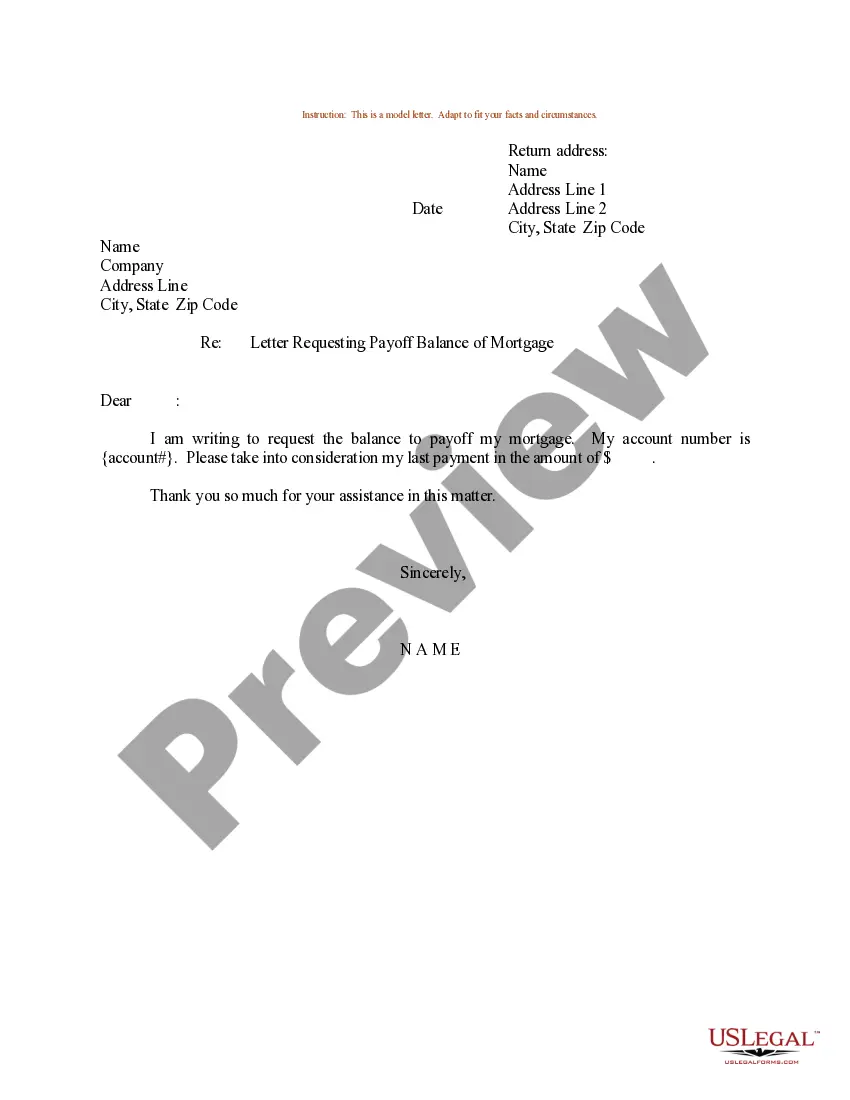
Get your form ready online
Our built-in tools help you complete, sign, share, and store your documents in one place.
Make edits, fill in missing information, and update formatting in US Legal Forms—just like you would in MS Word.
Download a copy, print it, send it by email, or mail it via USPS—whatever works best for your next step.
Sign and collect signatures with our SignNow integration. Send to multiple recipients, set reminders, and more. Go Premium to unlock E-Sign.
If this form requires notarization, complete it online through a secure video call—no need to meet a notary in person or wait for an appointment.
We protect your documents and personal data by following strict security and privacy standards.

Make edits, fill in missing information, and update formatting in US Legal Forms—just like you would in MS Word.

Download a copy, print it, send it by email, or mail it via USPS—whatever works best for your next step.

Sign and collect signatures with our SignNow integration. Send to multiple recipients, set reminders, and more. Go Premium to unlock E-Sign.

If this form requires notarization, complete it online through a secure video call—no need to meet a notary in person or wait for an appointment.

We protect your documents and personal data by following strict security and privacy standards.
Looking for another form?


Form popularity
FAQ
The key components of a letter of appeal for financial support typically include: Introduction. Start with a polite greeting and introduce yourself. Background. Provide context about your situation. Financial Details. Request for Support. Closing. Request Feedback. Explore Alternative Options. Reassess Your Situation.
A letter of explanation is simply a tool that helps your lender's team understand your financial situation more fully. Giving exactly the information they request with the appropriate level of detail helps the team reviewing your application truly understand your financial picture.
The key with this type of essay is being honest and upfront about your financial situation, while avoiding oversharing. Begin by introducing yourself and your financial situation, including relevant financial indicators like family income, number of dependents in your family, and personal expenses.
Tips for Writing a Hardship Letter Keep it original. Be honest. Keep it concise. Don't cast blame or shirk responsibility. Don't use jargon or fancy words. Keep your objectives in mind. Provide the creditor an action plan. Talk to a Financial Counselor.
When you write the hardship letter, don't include anything that would hurt your situation. Here are some examples of things you shouldn't say in the letter: Don't say that your situation is your lender's fault or that their employees are jerks. Don't state that things will likely turn around for you.
As a general rule, creditors consider a financial hardship to be an event or circumstance that is beyond your control, such as: Loss of employment. Reduction of income or work hours. Job transfer. Military transfer or deployment. Divorce or separation. Death of a spouse.
Focus only what has currently happened and how that has impacted your ability to make the payments. List what you have done to try to resolve the hardship. For example, you reduced your expenses, picked up a second job, etc. Explain why you need help from the lender to avoid default.
An inability to meet payments out of disposable income or at all. Examples include: non-payments of essential bills. having to borrow further to repay existing debts.
Your hardship letter should include the following essential steps: Write an introduction. Detail your hardship. Highlight how you're being proactive about your financial situation. State your request. Provide assurance of financial recovery. Submit supporting documentation.

