Loan Payoff Letter Format For Audit In Phoenix
Description
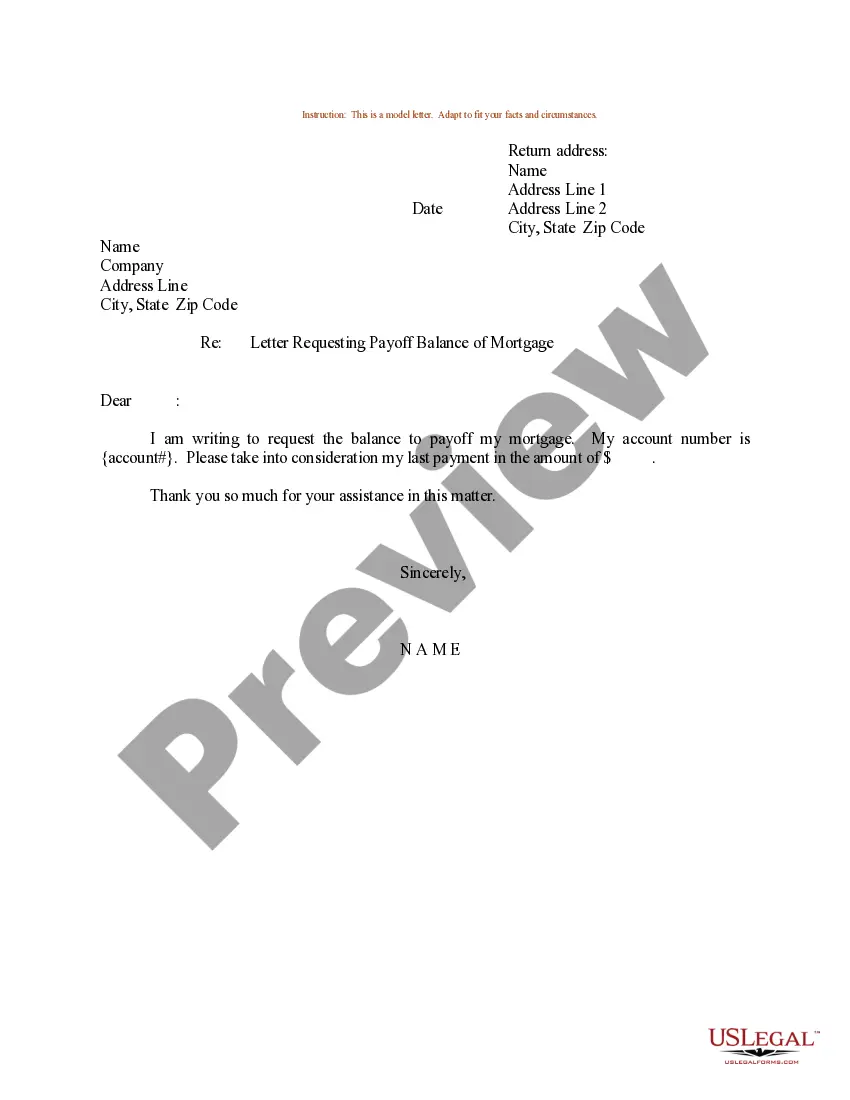
Get your form ready online
Our built-in tools help you complete, sign, share, and store your documents in one place.
Make edits, fill in missing information, and update formatting in US Legal Forms—just like you would in MS Word.
Download a copy, print it, send it by email, or mail it via USPS—whatever works best for your next step.
Sign and collect signatures with our SignNow integration. Send to multiple recipients, set reminders, and more. Go Premium to unlock E-Sign.
If this form requires notarization, complete it online through a secure video call—no need to meet a notary in person or wait for an appointment.
We protect your documents and personal data by following strict security and privacy standards.

Make edits, fill in missing information, and update formatting in US Legal Forms—just like you would in MS Word.

Download a copy, print it, send it by email, or mail it via USPS—whatever works best for your next step.

Sign and collect signatures with our SignNow integration. Send to multiple recipients, set reminders, and more. Go Premium to unlock E-Sign.

If this form requires notarization, complete it online through a secure video call—no need to meet a notary in person or wait for an appointment.

We protect your documents and personal data by following strict security and privacy standards.
Looking for another form?







Form popularity
FAQ
The auditor should check the agreement of balances as shown in the schedules of debtors with those in the ledger accounts. He should also check the agreement of the total of debtor balances with the related control accounts. Any differences in this regard should be examined.
If the IRS sends you an audit letter, it means they need more information or receipts to check your tax filing. Think of the IRS agent as a teacher checking your math; they might need to see your work (or receipts) to give you the full marks you deserve.
To respond to an IRS audit letter, carefully read the letter, gather the requested documentation (such as tax returns and supporting records), and respond by the specified deadline, ensuring your information is accurate and complete. If needed, consider seeking professional assistance.
The auditor should check the agreement of balances as shown in the schedules of debtors with those in the ledger accounts. He should also check the agreement of the total of debtor balances with the related control accounts. Any differences in this regard should be examined.
Representation letters provide audit evidence as part of the auditor's risk assessment procedures under auditing standards. They represent a form of documentary evidence about management's intents, knowledge and accuracy of the financial statements.
The auditor should trace subsequent payments by the customer. The sample should be taken from the list of debtors at the year end and the subsequent receipt traced for that sample. There is a tendency to start with the post-year end bank records and work in reverse.
An audit letter is a written request for information about a person or entity being audited, usually sent to an attorney, banker, or other relevant party. The letter asks for details about pending or threatened litigation that may affect the audit.
Typically, an IRS audit letter will call out that your tax return from a certain year has been flagged for examination. It will then state the main reason for the audit and describe what documentation you need to gather to resolve the matter.
Professional Reply Acknowledge the Email. Start your reply by acknowledging the audit confirmation request. Provide the Requested Information. Clarify Any Discrepancies (If Applicable) ... Offer Further Assistance. End with a Professional Closing.
The notification letter states the objectives to be accomplished in the audit. Preliminary documentation required for the audit, such as written policies, procedures and flowcharts, may also be requested at that time.

