Auto Loan Payoff Letter Template Foreclosure In Philadelphia
Description
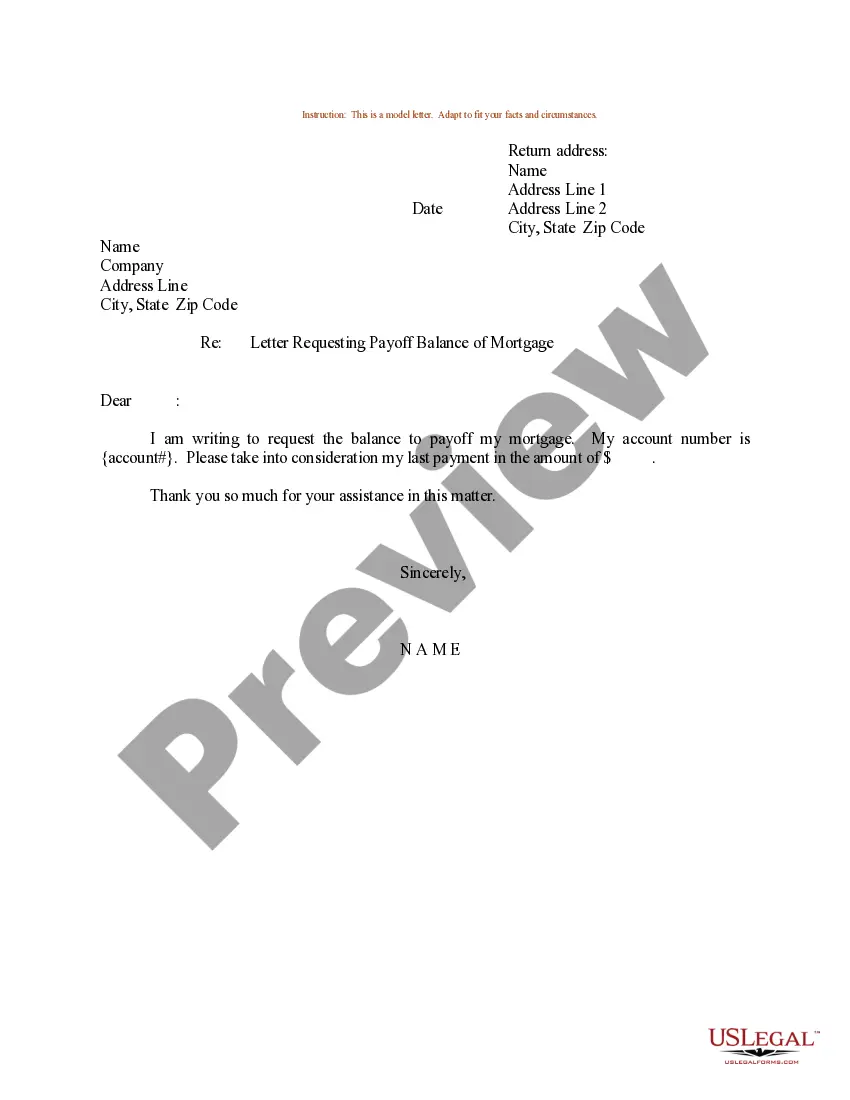
Get your form ready online
Our built-in tools help you complete, sign, share, and store your documents in one place.
Make edits, fill in missing information, and update formatting in US Legal Forms—just like you would in MS Word.
Download a copy, print it, send it by email, or mail it via USPS—whatever works best for your next step.
Sign and collect signatures with our SignNow integration. Send to multiple recipients, set reminders, and more. Go Premium to unlock E-Sign.
If this form requires notarization, complete it online through a secure video call—no need to meet a notary in person or wait for an appointment.
We protect your documents and personal data by following strict security and privacy standards.

Make edits, fill in missing information, and update formatting in US Legal Forms—just like you would in MS Word.

Download a copy, print it, send it by email, or mail it via USPS—whatever works best for your next step.

Sign and collect signatures with our SignNow integration. Send to multiple recipients, set reminders, and more. Go Premium to unlock E-Sign.

If this form requires notarization, complete it online through a secure video call—no need to meet a notary in person or wait for an appointment.

We protect your documents and personal data by following strict security and privacy standards.
Looking for another form?




Form popularity
FAQ
In Pennsylvania, the process of foreclosure commences after you, the borrower, becomes at least 60 days late on their mortgage payments. Before the lender starts foreclosure, they will generally have to send out two letters through the mail to notify you of their intent to begin foreclosure soon.
Second, before a residential mortgage can be foreclosed in Pennsylvania, the lender must give a 30-day notice of intention to foreclose (also known as an Act 6 Notice), giving the borrower an opportunity to cure, and prohibiting the lender from collecting attorneys' fees incurred during the notice period. See Act. No.
A Pennsylvania Notice of Intent to Lien must be served at least 30 days prior to filing a lien. Pennsylvania is one of only a handful of states which require a Notice of Intent to Lien. However, not everyone has to send the notice in orde to preserve their lien rights.
When Can a Pennsylvania Foreclosure Start? Under federal law, the servicer usually can't officially begin a foreclosure until you're more than 120 days past due on payments, subject to a couple of exceptions. (12 C.F.R. § 1024.41 (2024).)
Foreclosures in Pennsylvania don't have a fixed time frame, but depending on your case's specifics and whether you decide to fight the foreclosure, it might take anywhere from a few months to over a year.
Foreclosures in Pennsylvania don't have a fixed time frame, but depending on your case's specifics and whether you decide to fight the foreclosure, it might take anywhere from a few months to over a year.
Tenants who live in recently foreclosed-upon properties can typically stay there until their leases are over in Pennsylvania. If the new owner has standing to evict residents after a sheriff's sale, they must give residents a 90-day notice to vacate.
The average foreclosure process in the US typically takes about 180 to 200 days, but this can vary widely depending on state laws and whether the foreclosure is judicial or non-judicial. Some states have shorter timelines while others can take over a year.
To add, remove, or change a name on a deed, have a lawyer, title company, or other real estate professional prepare the deed. Then, record the new deed with the Department of Records. Note: We recommend that you do not prepare a deed on your own. We also recommend that you get title insurance.
