Sample Loan Payoff Letter Template Foreclosure In Middlesex
Description
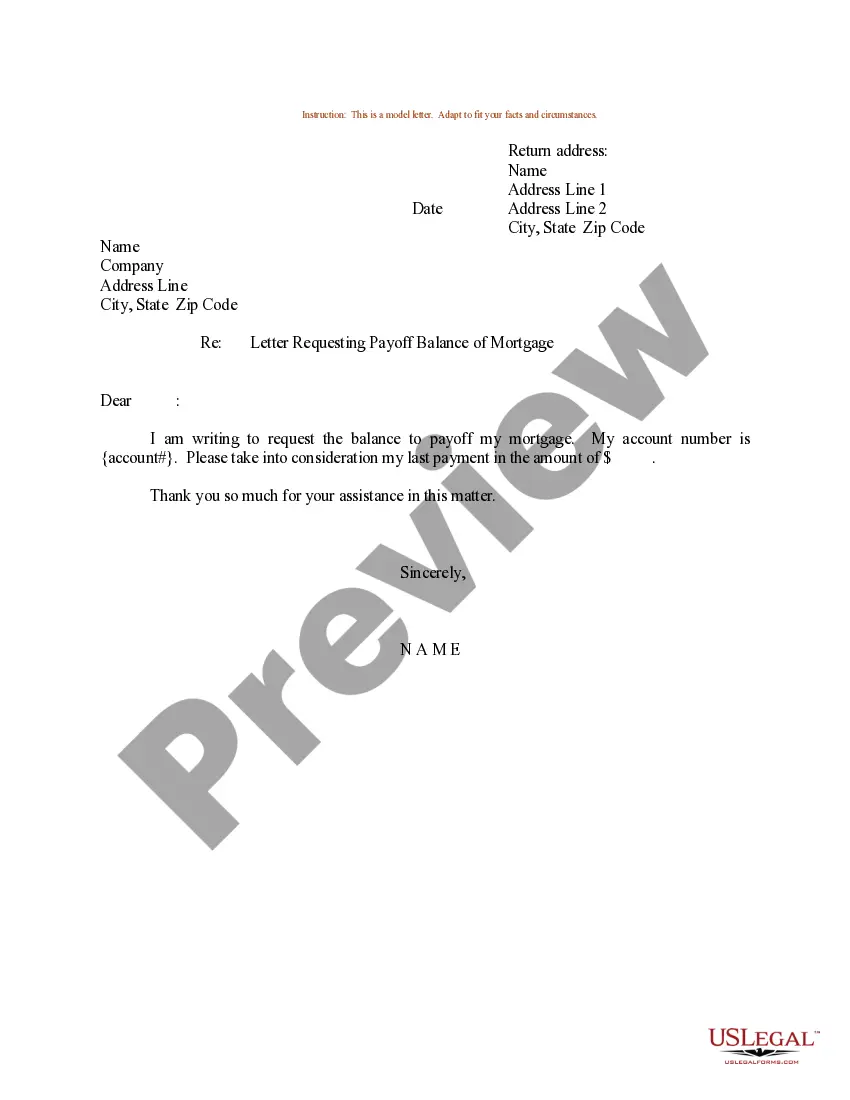
Get your form ready online
Our built-in tools help you complete, sign, share, and store your documents in one place.
Make edits, fill in missing information, and update formatting in US Legal Forms—just like you would in MS Word.
Download a copy, print it, send it by email, or mail it via USPS—whatever works best for your next step.
Sign and collect signatures with our SignNow integration. Send to multiple recipients, set reminders, and more. Go Premium to unlock E-Sign.
If this form requires notarization, complete it online through a secure video call—no need to meet a notary in person or wait for an appointment.
We protect your documents and personal data by following strict security and privacy standards.

Make edits, fill in missing information, and update formatting in US Legal Forms—just like you would in MS Word.

Download a copy, print it, send it by email, or mail it via USPS—whatever works best for your next step.

Sign and collect signatures with our SignNow integration. Send to multiple recipients, set reminders, and more. Go Premium to unlock E-Sign.

If this form requires notarization, complete it online through a secure video call—no need to meet a notary in person or wait for an appointment.

We protect your documents and personal data by following strict security and privacy standards.
Looking for another form?







Form popularity
FAQ
Obtaining a 10-day payoff letter is necessary when paying off loans early, refinancing, or applying for a mortgage, as it provides the accurate payoff amount. The letter contains key information such as the outstanding balance, accrued interest, fees, total payoff amount, and payment instructions.
Under federal law, the servicer must generally send you a payoff statement within seven business days of your request, subject to a few exceptions. (12 C.F.R. § 1026.36.)
How to Write a Payoff Letter: Step-by-Step Guide Step 1: Gather necessary information. Step 2: Format your letter. Step 3: Clearly state your intentions. Step 4: Detail the necessary information. Step 5: Request written confirmation. Step 6: Offer contact information. Step 7: Proofread and submit.
N.J.S.A. 2A:50-56(c)(11), a part of the Fair Foreclosure Act (“FFA”), requires a lender who plans to foreclose on a mortgage to serve a notice of intention on the borrower. The statute requires that the notice of intention state the “name and address of the lender.”
Six years from the date on which the debtor defaulted, which default has not been cured, as to any of the obligations or covenants contained in the mortgage or in the note, bond, or other obligation secured by the mortgage, except that if the date to perform any of the obligations or covenants has been extended by a ...
On January 12th, 2024, New Jersey's Fair Foreclosure Act was amended to include a new foreclosure protection for homeowners. Specifically, the introduction of the Community Wealth Preservation Program gives families facing foreclosure the first chance to buy back their homes at sheriff's sales.
Before the lender is allowed to file a lawsuit for foreclosure in NJ, they must send you a Notice of Intention to foreclose. This Notice must be sent by regular and certified mail, return receipt requested, at least 30 days, but no more than 180 days, before they file the complaint.
Foreclosure Timeline (The Foreclosure Process) EVENTTIME PERIOD 10. Sheriff's Sale Sheriff's sale must happen within 150 days of sheriff's receipt of writ of execution. 3-7 months left in the property. 11. Deed Transfer 2-5 months left in the property. 12. Negotiate Move Out 2-5 months left in the property.11 more rows •

