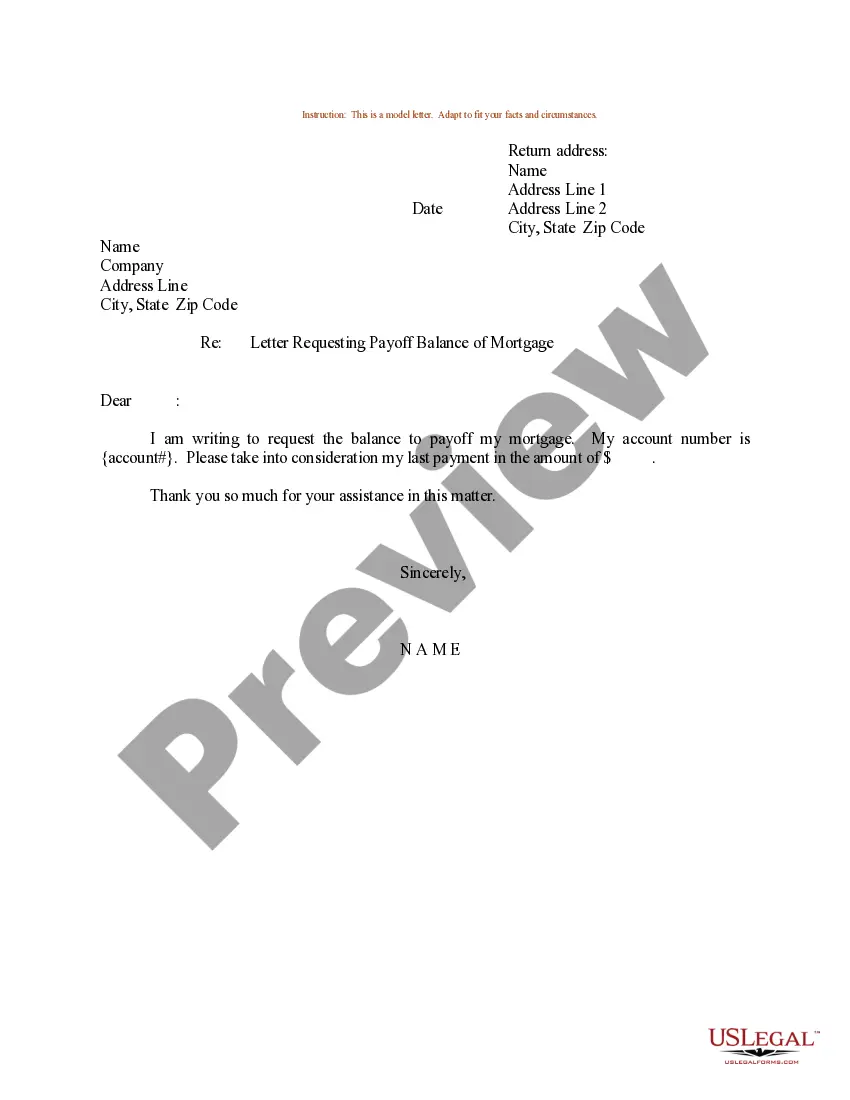
Payoff Letter For Promissory Note In Middlesex
Description
Get your form ready online
Our built-in tools help you complete, sign, share, and store your documents in one place.
Make edits, fill in missing information, and update formatting in US Legal Forms—just like you would in MS Word.
Download a copy, print it, send it by email, or mail it via USPS—whatever works best for your next step.
Sign and collect signatures with our SignNow integration. Send to multiple recipients, set reminders, and more. Go Premium to unlock E-Sign.
If this form requires notarization, complete it online through a secure video call—no need to meet a notary in person or wait for an appointment.
We protect your documents and personal data by following strict security and privacy standards.

Make edits, fill in missing information, and update formatting in US Legal Forms—just like you would in MS Word.

Download a copy, print it, send it by email, or mail it via USPS—whatever works best for your next step.

Sign and collect signatures with our SignNow integration. Send to multiple recipients, set reminders, and more. Go Premium to unlock E-Sign.

If this form requires notarization, complete it online through a secure video call—no need to meet a notary in person or wait for an appointment.

We protect your documents and personal data by following strict security and privacy standards.
Looking for another form?







Form popularity
FAQ
A simple promissory note might be for a lump sum repayment on a certain date. For example, let's say you lend your friend $1,000 and he agrees to repay you by December 1st. The full amount is due on that date, and there is no payment schedule involved.
Cons of a promissory note Limited legal recourse: While a promissory note is a legal document, enforcing repayment can be challenging if the borrower defaults. Interest costs: If the promissory note includes interest terms, the borrower will incur additional costs.
No, a promissory note does not have to be notarized.
You should be able to contact your lender's mortgage department and ask that it send you a copy of the note. If you want to see the original, you may have to make arrangements to travel to the location of your note and review it as lenders will not lose control or possession of the original.
You can check your MPN completion history by logging in to StudentAid using your FSA ID and clicking your name in the top right corner. Then click “My Documents” and select the “Filter By” “MPN” in the “Completed Documents” dropdown menu to make sure you've completed your MPN for your federal student loans.
The first step in enforcing an unsecured promissory note is to file a petition with the courts and get a judgment in your favor. Although this is a powerful legal enforcement of your rights under the promissory note, it does not in and of itself guarantee repayment of the note.
A promissory note must be unconditional. This means that if the note is subject to conditions (for example, if it contains the words 'subject to delivery'), then it will not amount to a valid promissory note. It can, however, contain terms and conditions regarding the payment of the set amount.

