Loan Payoff Letter Form With Collateral In Michigan
Description
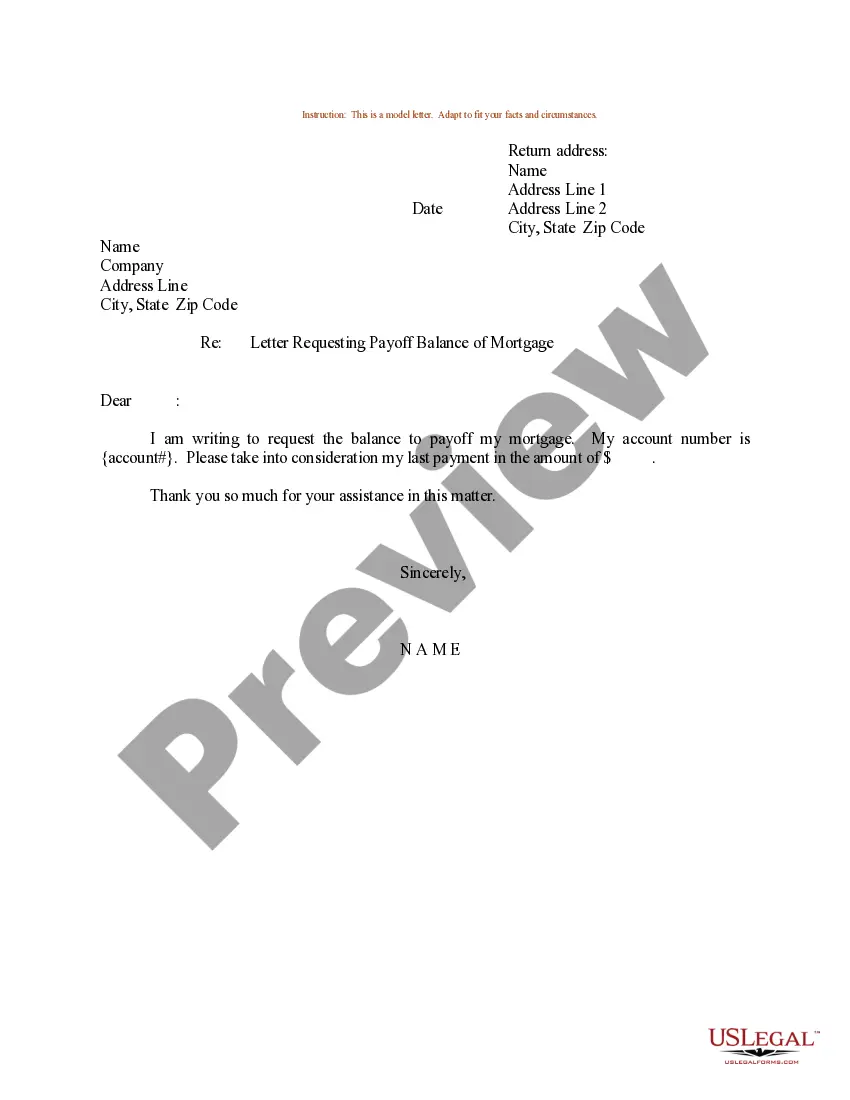
Get your form ready online
Our built-in tools help you complete, sign, share, and store your documents in one place.
Make edits, fill in missing information, and update formatting in US Legal Forms—just like you would in MS Word.
Download a copy, print it, send it by email, or mail it via USPS—whatever works best for your next step.
Sign and collect signatures with our SignNow integration. Send to multiple recipients, set reminders, and more. Go Premium to unlock E-Sign.
If this form requires notarization, complete it online through a secure video call—no need to meet a notary in person or wait for an appointment.
We protect your documents and personal data by following strict security and privacy standards.

Make edits, fill in missing information, and update formatting in US Legal Forms—just like you would in MS Word.

Download a copy, print it, send it by email, or mail it via USPS—whatever works best for your next step.

Sign and collect signatures with our SignNow integration. Send to multiple recipients, set reminders, and more. Go Premium to unlock E-Sign.

If this form requires notarization, complete it online through a secure video call—no need to meet a notary in person or wait for an appointment.

We protect your documents and personal data by following strict security and privacy standards.
Looking for another form?






Form popularity
FAQ
Effective January 1, 2005 Uniform Commercial Code (UCC) Filings are filed with the Michigan Secretary of State.
“UCC” stands for Uniform Commercial Code. The Uniform Commercial Code is a uniform law that governs commercial transactions, including sales of goods, secured transactions and negotiable instruments.
Debtor owns all of the Property, and Secured Party's claim to the Property is ahead of the claims of any other creditor, except as otherwise agreed and disclosed to Secured Party prior to any advance on the Secured Debts.
A person who owes a legal obligation to another person. In the context of financing arrangements, an obligor is usually a debtor (for example, a borrower) or someone who has given security or a guarantee for the payment of a debt or the performance of an obligation.
Uniform Commercial Code (UCC) filings allow creditors to notify other creditors about a debtor's assets used as collateral for a secured transaction. UCC liens filed with Secretary of State offices act as a public notice by the "creditor" of the creditor's interest in the property.
The UCC does not apply to any transaction to buy or sell the real estate itself. More importantly, Article 2 does not cover any service contract like an employment contract for a salesperson. 7 The UCC also does not apply if labor is a “significant part” of a contract.
Article 2 distinguishes between merchants and nonmerchants. In most situations, the U.C.C. holds merchants to a higher standard. Under the U.C.C., a merchant is one who regularly deals in goods of the kind.
The Federal Reserve determines the collateral value of pledged loans as the product of their fair market value estimate and a margin designed to protect the Federal Reserve from financial loss.

