Lien Payoff Letter Template For Car Loan In Maricopa
Description
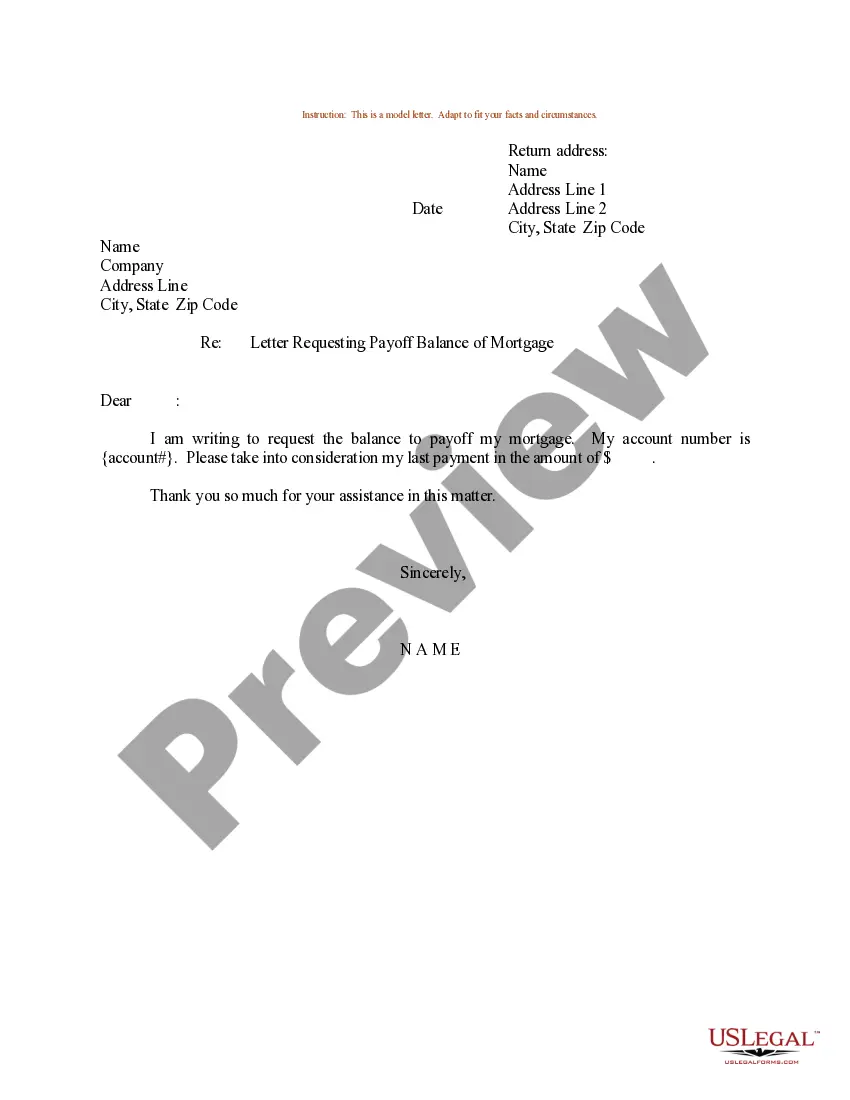
Get your form ready online
Our built-in tools help you complete, sign, share, and store your documents in one place.
Make edits, fill in missing information, and update formatting in US Legal Forms—just like you would in MS Word.
Download a copy, print it, send it by email, or mail it via USPS—whatever works best for your next step.
Sign and collect signatures with our SignNow integration. Send to multiple recipients, set reminders, and more. Go Premium to unlock E-Sign.
If this form requires notarization, complete it online through a secure video call—no need to meet a notary in person or wait for an appointment.
We protect your documents and personal data by following strict security and privacy standards.

Make edits, fill in missing information, and update formatting in US Legal Forms—just like you would in MS Word.

Download a copy, print it, send it by email, or mail it via USPS—whatever works best for your next step.

Sign and collect signatures with our SignNow integration. Send to multiple recipients, set reminders, and more. Go Premium to unlock E-Sign.

If this form requires notarization, complete it online through a secure video call—no need to meet a notary in person or wait for an appointment.

We protect your documents and personal data by following strict security and privacy standards.
Looking for another form?



Form popularity
FAQ
Pretty simple really, you don't. The Title will need to be signed by the seller, owner, regardless of whether the vehicle has a Lien. If there is a Lien, then the seller, owner, will need to satisfy the Lien. He or she will then receive the Title with the Lien satisfied by the lender.
When there's a lien on your car, the lienholder maintains legal control. While you have the right to register the car in your name and legally drive it, you do not have the right to sell that car to another person. Yet there's no need to panic, as it's not impossible to sell a car with a lien on it.
A payoff request allows a third party to receive the current balance due to release a lien or facilitate a business transfer (bulk sale transfer or liquor license). To release a lien or facilitate a bulk sale transfer, businesses must be in good standing to receive a payoff request.
To get a payoff letter, ask your lender for an official payoff statement. Call or write to customer service or make the request online. While logged into your account, look for options to request or calculate a payoff amount, and provide details such as your desired payoff date.
Under federal law, the servicer must generally send you a payoff statement within seven business days of your request, subject to a few exceptions. (12 C.F.R. § 1026.36.)
The lienholder is responsible for filing a release of lien in Arizona. The release of lien must be filed with the Arizona County Recorder's Office in the county where the property is located.
But there is another kind of lien: hidden liens. Hidden liens don't show up on a car title because they are not from a bank or any other financial institution. Instead, you find out that hidden liens are usually tied to some sort of court-ordered obligations and the vehicle is being held as collateral.
The first step to filing a mechanics lien is to record a Notice and Claim of Lien within 60 days after the property owner has recorded a Notice of Completion. If a notice has not been recorded, however, you will have 120 days after the completion of the project to record the claim.
While mechanic's liens can be placed against a financed or owned vehicle, the lien works differently with a financed car. When a motor vehicle is financed, the lender will also have a lien on the car.
Before you can lien the car, you have to file and serve a notice of lien. Then you have to advertise the car for sale, but before you do that you have to send a certified letter to the known title holder. That would be you if the title were filed with DMV but the registered owner has to be notified as well.

