Payoff Statement Template For Self Employed In Illinois
Description
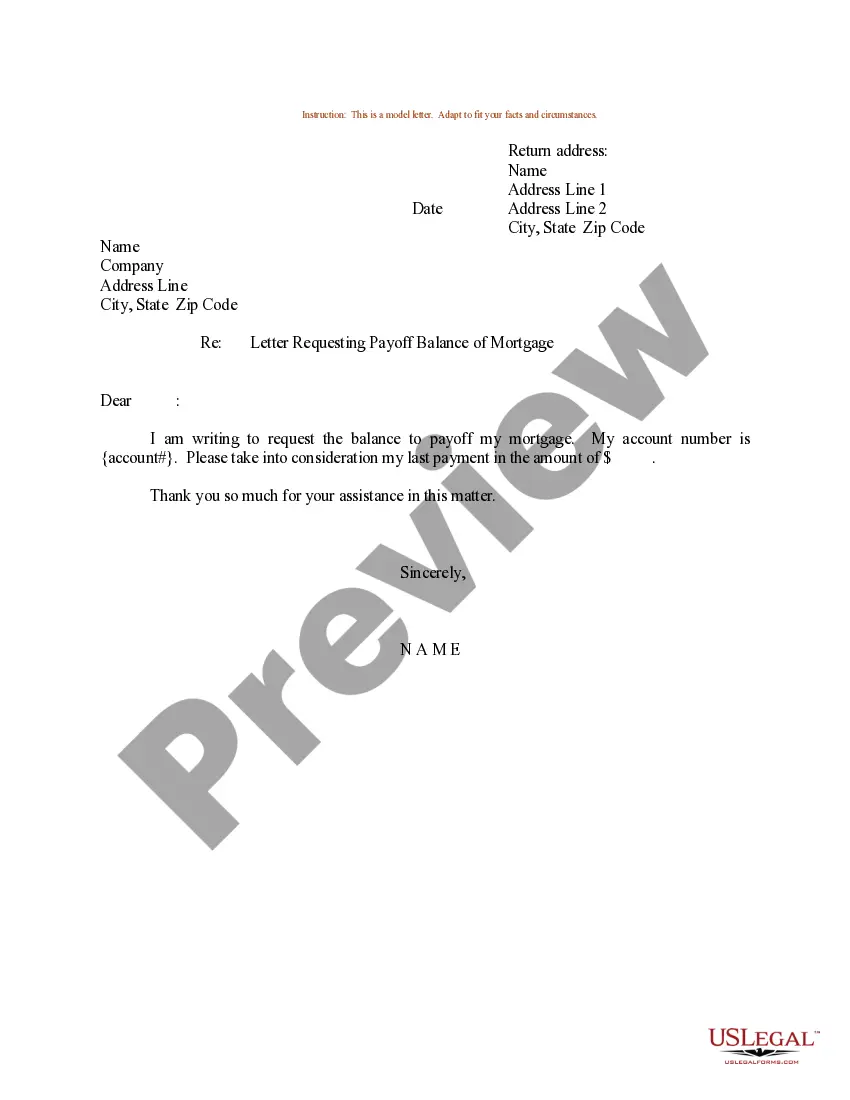
Get your form ready online
Our built-in tools help you complete, sign, share, and store your documents in one place.
Make edits, fill in missing information, and update formatting in US Legal Forms—just like you would in MS Word.
Download a copy, print it, send it by email, or mail it via USPS—whatever works best for your next step.
Sign and collect signatures with our SignNow integration. Send to multiple recipients, set reminders, and more. Go Premium to unlock E-Sign.
If this form requires notarization, complete it online through a secure video call—no need to meet a notary in person or wait for an appointment.
We protect your documents and personal data by following strict security and privacy standards.

Make edits, fill in missing information, and update formatting in US Legal Forms—just like you would in MS Word.

Download a copy, print it, send it by email, or mail it via USPS—whatever works best for your next step.

Sign and collect signatures with our SignNow integration. Send to multiple recipients, set reminders, and more. Go Premium to unlock E-Sign.

If this form requires notarization, complete it online through a secure video call—no need to meet a notary in person or wait for an appointment.

We protect your documents and personal data by following strict security and privacy standards.
Looking for another form?






Form popularity
FAQ
IRS expects all self-employed individuals to keep and retain timely records of all business income and expenses. At this time, the law requires issuance of a Form 1099-NEC in situations of payments of $600, more for services performed for a trade, or business by people not treated as its employees.
By TurboTax• 669• Updated 6 days ago Open or continue your return. Navigate to the Schedule C section. Answer Yes to Did you have any self-employment income or expenses? and answer the questions until you get the Select any expense categories you have screen. Select your expenses, then Continue.
employed profit and loss statement is a report that summarizes your business's revenues, expenses, gains, and losses over a given period. Also commonly referred to as an income statement, it's one of two essential financial statements for selfemployed people, along with the balance sheet.
Yes. A self-employed individual is required to report all income and deduct all expenses.
Report the amount of the self-employment tax deduction on Part I, Section C, line 15, Column A. This deduction is not allowed and should be reported in Part I, Section C, line 15, Column B. Refer to Instructions for Schedule CA (540) and FTB Publication 1001 (coming soon).
Generally this is done with paystubs, tax returns, and a call to the employer. For self-employed people it is usually tax returns and bank statements, maybe 1099's if available.
To file your annual income tax return, you will need to use Schedule C (Form 1040), Profit or Loss from Business (Sole Proprietorship), to report any income or loss from a business you operated or profession you practiced as a sole proprietor, or gig work performed.
Self-employed persons, including direct sellers, report their income on Schedule C (Form 1040), Profit or Loss from Business (Sole Proprietorship). Use Schedule SE (Form 1040), Self-Employment Tax if the net earnings from self-employment are $400 or more.

