Payoff Form Statement For Graduate School In California
Description
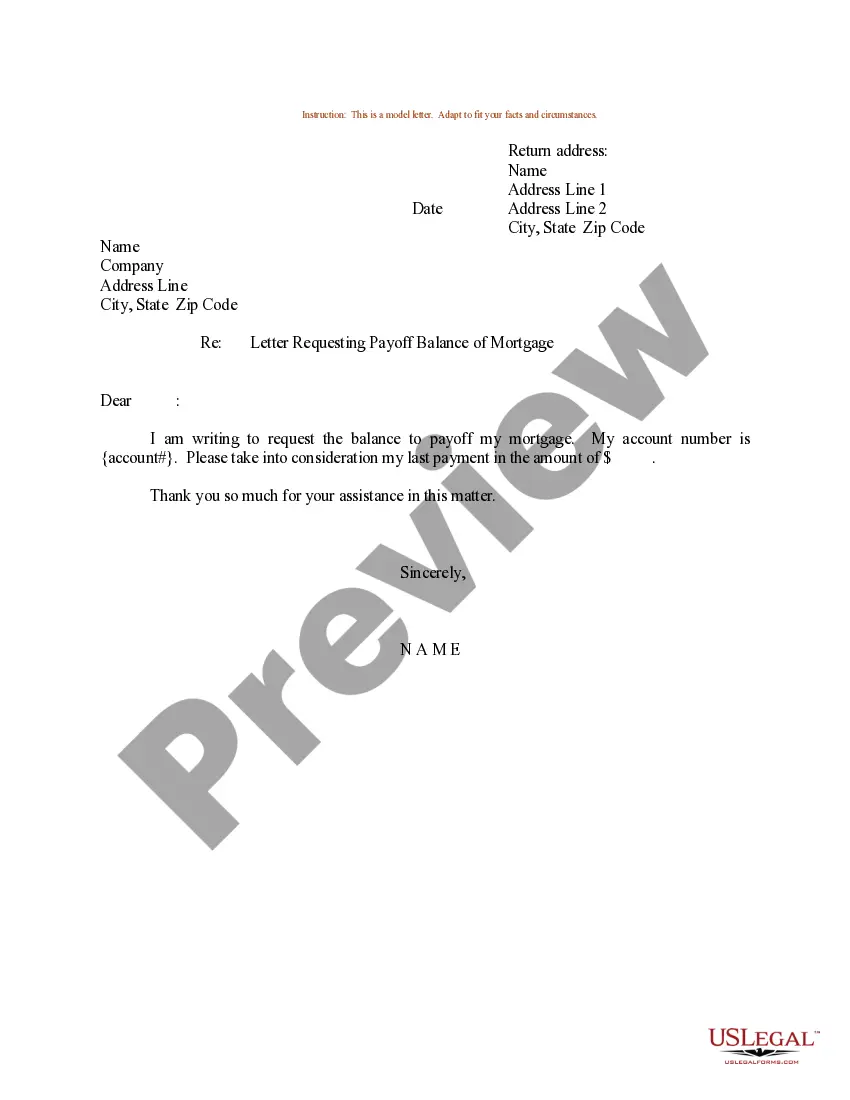
Get your form ready online
Our built-in tools help you complete, sign, share, and store your documents in one place.
Make edits, fill in missing information, and update formatting in US Legal Forms—just like you would in MS Word.
Download a copy, print it, send it by email, or mail it via USPS—whatever works best for your next step.
Sign and collect signatures with our SignNow integration. Send to multiple recipients, set reminders, and more. Go Premium to unlock E-Sign.
If this form requires notarization, complete it online through a secure video call—no need to meet a notary in person or wait for an appointment.
We protect your documents and personal data by following strict security and privacy standards.

Make edits, fill in missing information, and update formatting in US Legal Forms—just like you would in MS Word.

Download a copy, print it, send it by email, or mail it via USPS—whatever works best for your next step.

Sign and collect signatures with our SignNow integration. Send to multiple recipients, set reminders, and more. Go Premium to unlock E-Sign.

If this form requires notarization, complete it online through a secure video call—no need to meet a notary in person or wait for an appointment.

We protect your documents and personal data by following strict security and privacy standards.
Looking for another form?










Form popularity
FAQ
Writing Research Statements Avoid jargon. Make sure that you describe your research in language that many people outside your specific subject area can understand. Write as clearly, concisely, and concretely as you can. Keep it at a summary level; give more detail in the job talk. Ask others to proofread it.
Describe your academic background, preparation, and training Whenever possible, give specific examples and illustrate the points you are making, don't just simply tell them. Research you conducted – project title or focus, research mentor, your specific role, what you learned and the outcome.
Think of a statement of interest more as a reformatted cover letter in which you don't have to use business letter format. Use the space to identify your background, skills, and experience that are relevant to the position for which you are applying.
Your statement of purpose should communicate who you are and why you are interested in a particular program, but it also needs to be positioned in a way that differentiates you from other applicants.
Basically it is your opportunity to tell the graduate program: Your specific area of academic interest (research topic you want to work on) How your past education and other experiences have prepared you to be successful in the graduate program. What you hope to achieve in the graduate program.
These documents tend to follow a straightforward format that includes a header, introduction, explanation of your research interests, what you've accomplished so far (either academically, professionally, or personally), your goals in attending grad school, and a conclusion.
“A statement of purpose should be between 500 and 1,000 words,” Pierce says, noting that it should typically not exceed a single page. He advises that students use a traditional font at a readable size (11 or 12 points) and leave enough white space in the margins to make the statement easy to read.
Start your statement by describing your strengths immediately. Because faculty will be reading many statements, it's important to start off with your strengths and not “bury your lede.” Consider traits of successful graduate students from your informational interviews, and identify which of these traits you have.
I have many qualities which will be ideal for my future career path I am honest, patient and a reflective individual, this is something that I feel is most important when dealing with children and adolescents. I have many hobbies that I carry out in my spare time.
Personal statement example for fresh graduates I am seeking an entry-level role in financial analysis to utilize my academic knowledge and contribute to organizational success." "Highly motivated human resource management graduate who is deeply committed to cultivating positive work environments.

