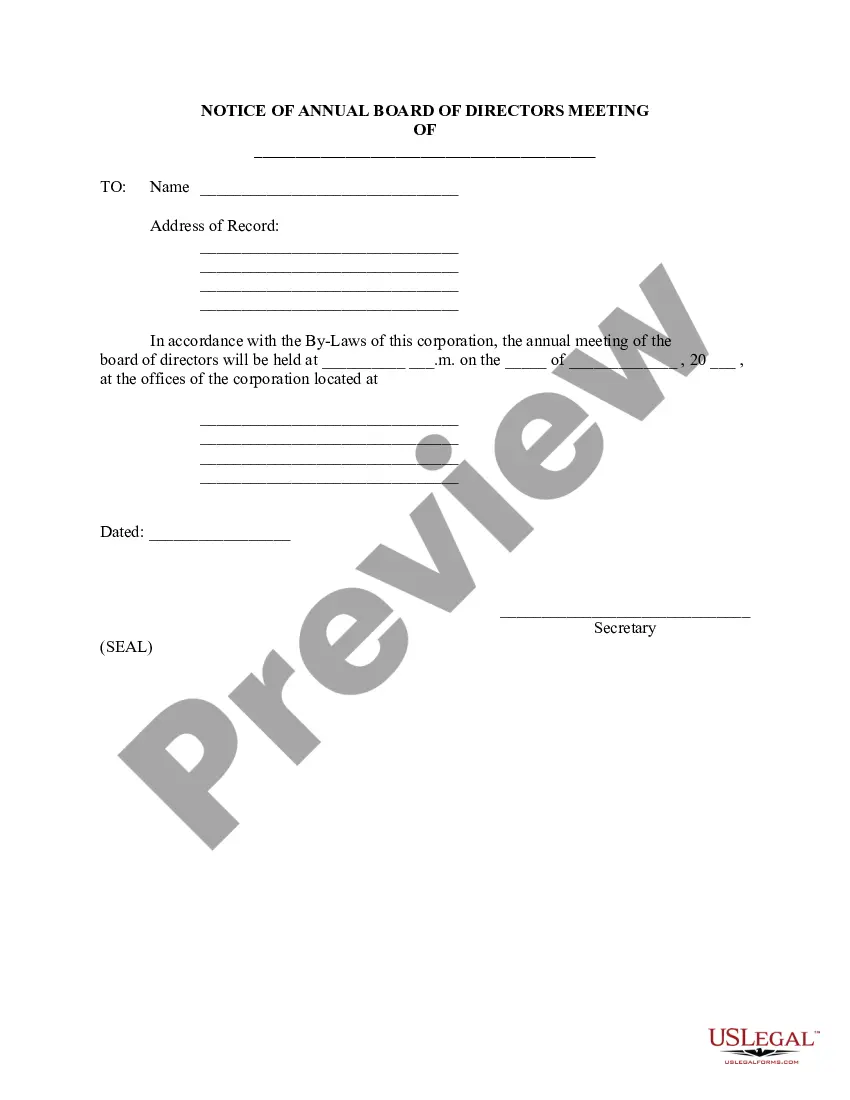
Annual Meeting Do For Nonprofit Organization In Maricopa
Description


Get your form ready online
Our built-in tools help you complete, sign, share, and store your documents in one place.
Make edits, fill in missing information, and update formatting in US Legal Forms—just like you would in MS Word.
Download a copy, print it, send it by email, or mail it via USPS—whatever works best for your next step.
Sign and collect signatures with our SignNow integration. Send to multiple recipients, set reminders, and more. Go Premium to unlock E-Sign.
If this form requires notarization, complete it online through a secure video call—no need to meet a notary in person or wait for an appointment.
We protect your documents and personal data by following strict security and privacy standards.

Make edits, fill in missing information, and update formatting in US Legal Forms—just like you would in MS Word.

Download a copy, print it, send it by email, or mail it via USPS—whatever works best for your next step.

Sign and collect signatures with our SignNow integration. Send to multiple recipients, set reminders, and more. Go Premium to unlock E-Sign.

If this form requires notarization, complete it online through a secure video call—no need to meet a notary in person or wait for an appointment.

We protect your documents and personal data by following strict security and privacy standards.
Looking for another form?







Form popularity
FAQ
Annual meetings are typically required under an organization's governing documents. The annual meeting serves multiple purposes including board elections, evaluating mission progress, affirming company values and culture, reviewing financials, setting the budget, and strategic planning for the upcoming year.
Unless the nonprofit is a governmental entity, there is no obligation to open board meetings to the public. (“Governmental entities” would include school boards, state educational organizations, such as a state university, and quasi-governmental groups such as public libraries.)
The minimum number of board members is set by state statute. Arizona requires one board member.
Nonprofit charities are under the jurisdiction of state and national laws, so they must comply with both legal systems. With that in mind, the federal government requires a minimum of three board members to acquire coveted 501c3 tax-exempt status.
There are legal, ethical, and practical reasons to build a board when a nonprofit is created. These reasons create the foundation for good governance and are explained in-depth in this article from BoardSource. All nonprofit organizations need a board.
You must have at least one director who will serve a term of one year. They don't need to live in Arizona and there are no membership requirements. Be aware that the IRS requires you to have at least three directors over the age of 18 when you apply for tax-exempt status.
Nonprofits must have at least three board members when they form. Many boards have more than the minimum three. Tuple can't tell you who should be on your board, but we can help you prevent and navigate important issues, such as: Board members' legal duties to the organization.
Tips on How to Run a Nonprofit Board Meeting Set clear objectives. Create a focused meeting agenda. Prepare meeting packets. Start and end on time. Set out guidelines or procedures. Encourage input from everyone. Take detailed meeting minutes. Conduct regular post-meeting surveys.
Annual Planning Meetings not only involve setting the stage for the upcoming year and updating 3-year goals but should also include other exercises that help teams focus, align, and thrive. These exercises usually include a SWOT review as well as some quality work on team health.

