Annual Meeting Do For Nonprofit Organization In King
Description



Get your form ready online
Our built-in tools help you complete, sign, share, and store your documents in one place.
Make edits, fill in missing information, and update formatting in US Legal Forms—just like you would in MS Word.
Download a copy, print it, send it by email, or mail it via USPS—whatever works best for your next step.
Sign and collect signatures with our SignNow integration. Send to multiple recipients, set reminders, and more. Go Premium to unlock E-Sign.
If this form requires notarization, complete it online through a secure video call—no need to meet a notary in person or wait for an appointment.
We protect your documents and personal data by following strict security and privacy standards.

Make edits, fill in missing information, and update formatting in US Legal Forms—just like you would in MS Word.

Download a copy, print it, send it by email, or mail it via USPS—whatever works best for your next step.

Sign and collect signatures with our SignNow integration. Send to multiple recipients, set reminders, and more. Go Premium to unlock E-Sign.

If this form requires notarization, complete it online through a secure video call—no need to meet a notary in person or wait for an appointment.

We protect your documents and personal data by following strict security and privacy standards.
Looking for another form?

Form popularity
FAQ
To reduce risk, most nonprofits take special care to enact the 49% rule. That means that the percentage of board members that are considered interested directors is limited to less than half of the total number of members.
Almost all charitable nonprofits that are recognized as tax-exempt by the IRS are required to file an annual report with the IRS, known as the “Form 990.” The IRS Form 990 is a public document that is available on GuideStar, and also from the charitable nonprofit, upon request, in ance with IRS “public disclosure ...
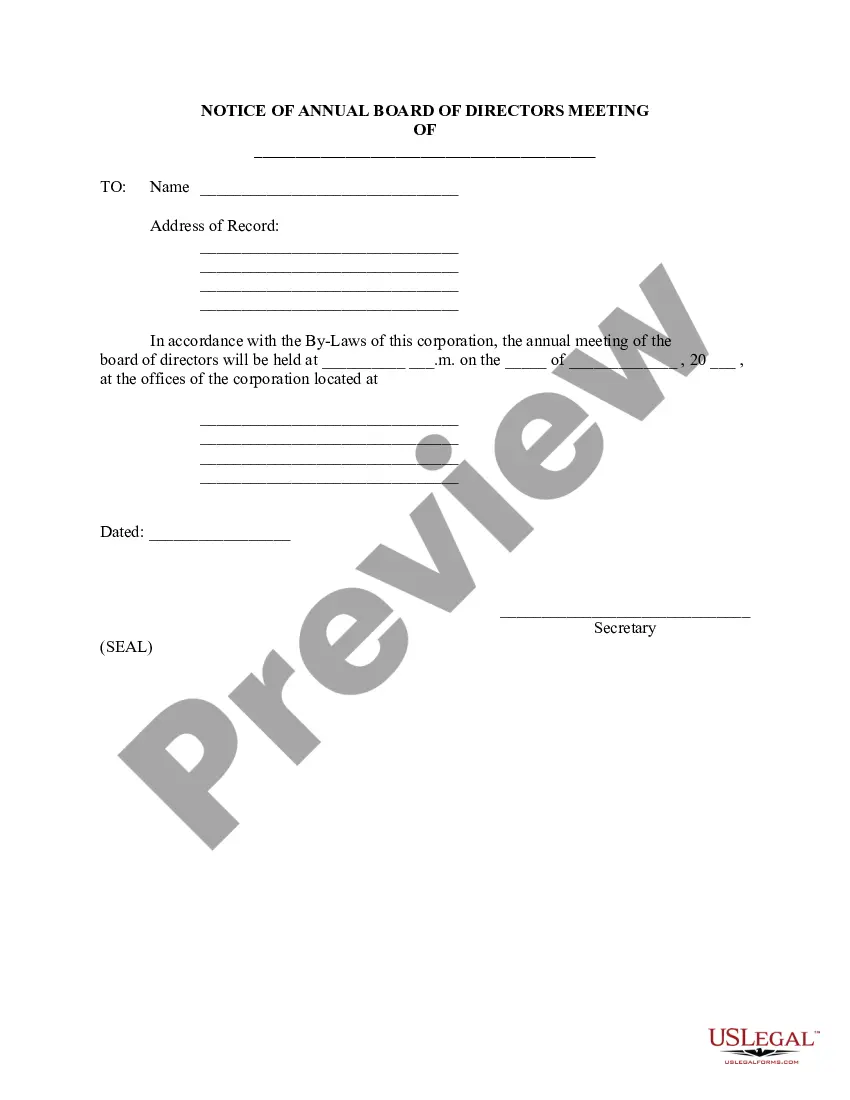
Annual meetings are typically required under an organization's governing documents. The annual meeting serves multiple purposes including board elections, evaluating mission progress, affirming company values and culture, reviewing financials, setting the budget, and strategic planning for the upcoming year.
Annual meetings are typically required under an organization's governing documents. The annual meeting serves multiple purposes including board elections, evaluating mission progress, affirming company values and culture, reviewing financials, setting the budget, and strategic planning for the upcoming year.
In some states there are laws known as “Sunshine laws” that require groups to open their meetings to the public, however, these laws generally only apply to governmental or quasi-governmental groups. Unless the nonprofit is a governmental entity, there is no obligation to open board meetings to the public.
Most corporations, including nonprofit corporations, need to file an annual report. Nonprofit annual reports are a formality for accountability. Stakeholders, board members, donors, beneficiaries, and volunteers with your nonprofit have the right to know what you've done and what you intend to do in the future.
Whatever your industry, there's a housekeeping matter that shouldn't be overlooked if your business is incorporated: holding your annual board meeting. This is a requirement in most states. Typically, these meetings are held near the end of the year to address certain matters for the coming year.
Tips on How to Run a Nonprofit Board Meeting Set clear objectives. Create a focused meeting agenda. Prepare meeting packets. Start and end on time. Set out guidelines or procedures. Encourage input from everyone. Take detailed meeting minutes. Conduct regular post-meeting surveys.
Most charitable nonprofits that are recognized by the IRS as tax-exempt have an obligation to file IRS Form 990, which is an annual information return to be filed with the IRS by the 15th day of the 5th month after the end of the organization's accounting period.

