Extension Time In Pcr In Arizona
Description

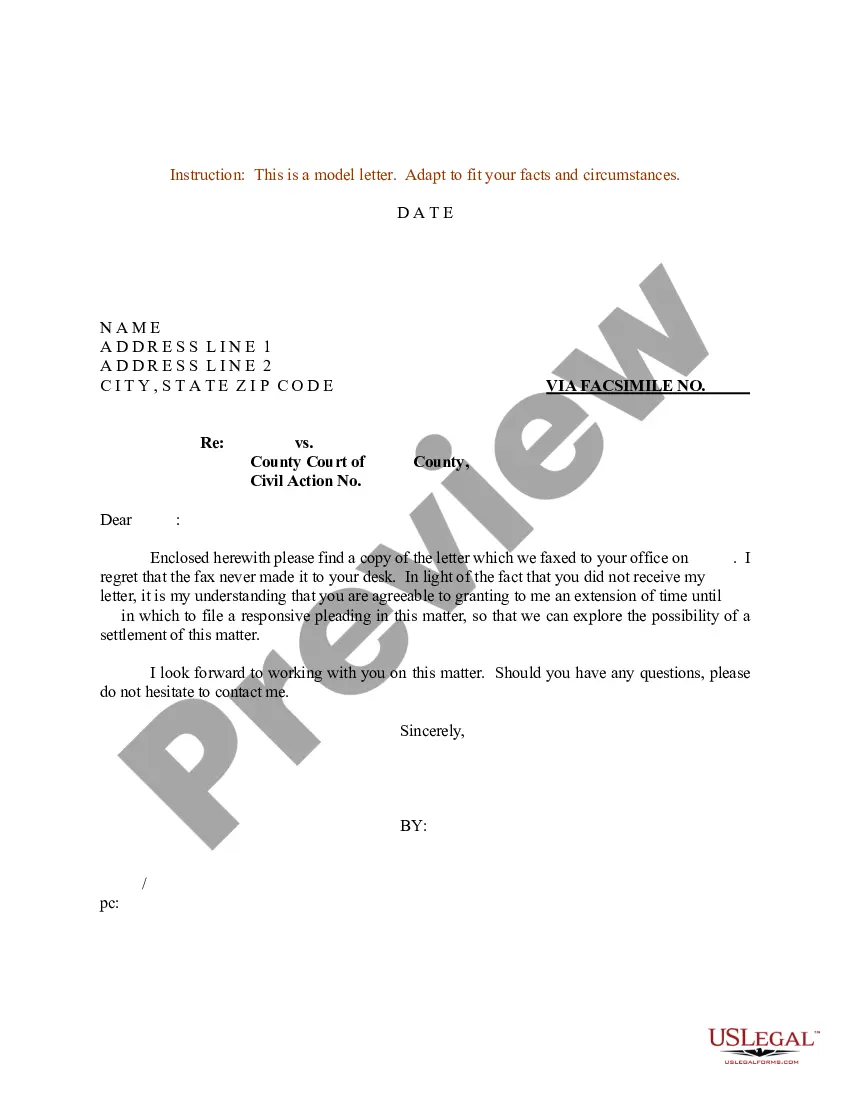


Get your form ready online
Our built-in tools help you complete, sign, share, and store your documents in one place.
Make edits, fill in missing information, and update formatting in US Legal Forms—just like you would in MS Word.
Download a copy, print it, send it by email, or mail it via USPS—whatever works best for your next step.
Sign and collect signatures with our SignNow integration. Send to multiple recipients, set reminders, and more. Go Premium to unlock E-Sign.
If this form requires notarization, complete it online through a secure video call—no need to meet a notary in person or wait for an appointment.
We protect your documents and personal data by following strict security and privacy standards.

Make edits, fill in missing information, and update formatting in US Legal Forms—just like you would in MS Word.

Download a copy, print it, send it by email, or mail it via USPS—whatever works best for your next step.

Sign and collect signatures with our SignNow integration. Send to multiple recipients, set reminders, and more. Go Premium to unlock E-Sign.

If this form requires notarization, complete it online through a secure video call—no need to meet a notary in person or wait for an appointment.

We protect your documents and personal data by following strict security and privacy standards.
Looking for another form?







Form popularity
FAQ
In most cases, a grant of Post-Conviction Relief means redoing a part of the process that was done unlawfully the first time. If a judge denies relief and dismisses the Petition, the defendant can ask the Arizona Court of Appeals or the Arizona Supreme Court to review the judge's decision.
The temperature depends on the DNA polymerase selected for the experiment. For example, Taq DNA polymerase has an optimal elongation temperature of 70 °C to 80 °C and requires 1 minute to elongate the first 2 kb, then requires an extra minute for each additional 1 kb amplified.
In PCR process, DNA polymerase is used for extension of the primer. A copy of a DNA strand is formed in this reaction step. This strand serves as a template for an extension by a second primer in the opposite orientation.
Extension: The recommended extension temperature is 68°C. Extension times are generally 1 minute per kb. A final extension of 5 minutes at 68°C is recommended.
Steps of PCR - Extension. Extension is achieved by using the loosened nucleotides of each base to grow the complementary DNA strand. The end result is two double-stranded products of DNA. The temperature that is used during the extension phase is dependent on the DNA polymerase that is used.
Rule 6 - Computing and Extending Time (a) Computing Time. The following rules apply in computing any time period specified in these rules or in any local rule, court order, or statute: (1)Day of the Event Excluded. Exclude the day of the act, event, or default that begins the period.
Common Forms of Post-Conviction Relief PCR Applications: The most common form of post-conviction relief is the filing of a PCR application. Habeas Corpus Petitions: A habeas corpus petition is another form of post-conviction relief that challenges the legality of an individual's detention.
In law, post conviction refers to the legal process which takes place after a trial results in conviction of the defendant. After conviction, a court will proceed with sentencing the guilty party.
Post-Conviction Relief. Process. A defendant who requests post-conviction relief asks the court to vacate or modify a judgment of conviction, or to reduce or modify a sentence. The process for requesting post-conviction relief is contained in Rules 32 and 33 of the Arizona Rules of Criminal Procedure.

