Sample Nonprofit Gift Acknowledgement Letter Without Name In Maryland
Description



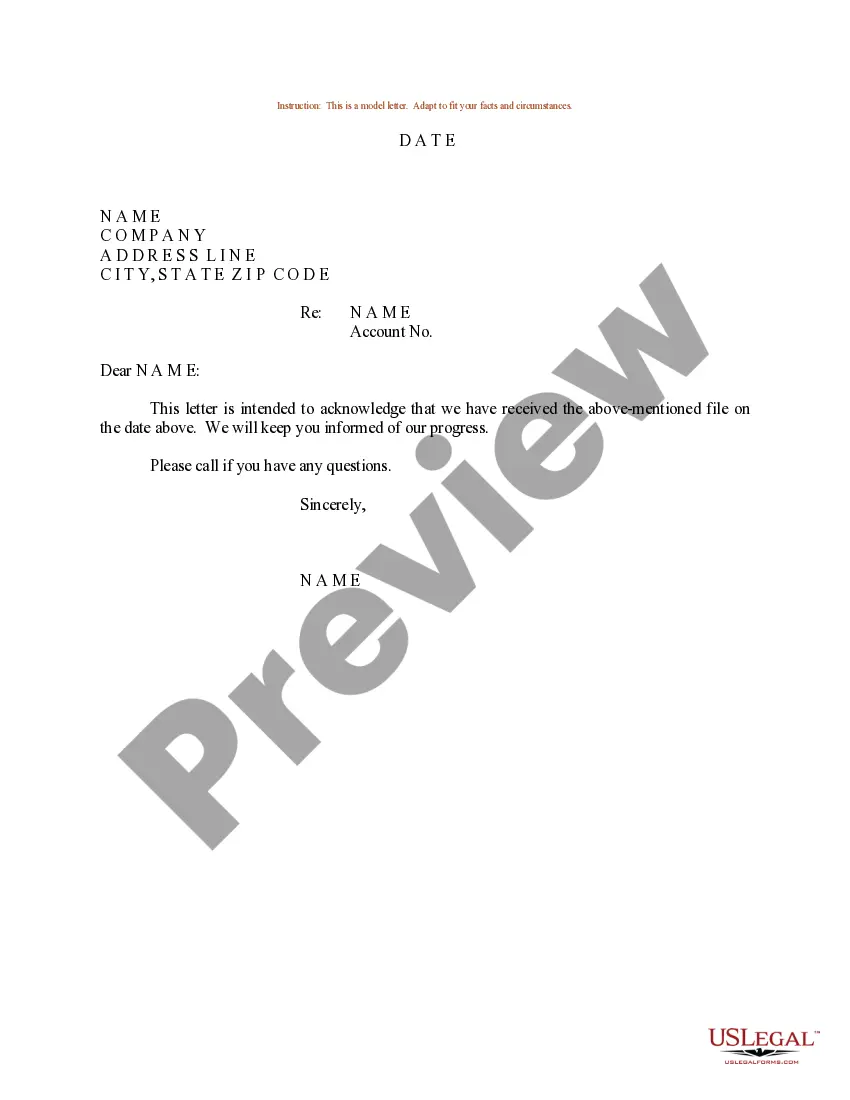
Get your form ready online
Our built-in tools help you complete, sign, share, and store your documents in one place.
Make edits, fill in missing information, and update formatting in US Legal Forms—just like you would in MS Word.
Download a copy, print it, send it by email, or mail it via USPS—whatever works best for your next step.
Sign and collect signatures with our SignNow integration. Send to multiple recipients, set reminders, and more. Go Premium to unlock E-Sign.
If this form requires notarization, complete it online through a secure video call—no need to meet a notary in person or wait for an appointment.
We protect your documents and personal data by following strict security and privacy standards.

Make edits, fill in missing information, and update formatting in US Legal Forms—just like you would in MS Word.

Download a copy, print it, send it by email, or mail it via USPS—whatever works best for your next step.

Sign and collect signatures with our SignNow integration. Send to multiple recipients, set reminders, and more. Go Premium to unlock E-Sign.

If this form requires notarization, complete it online through a secure video call—no need to meet a notary in person or wait for an appointment.

We protect your documents and personal data by following strict security and privacy standards.
Looking for another form?







Form popularity
FAQ
Nonprofits must send a receipt for any single donation of $250 or more.
While we recommend sending donation acknowledgment letters to all donors, you are legally obligated to send documentation to donors who have given a gift of $250 or more.
20 Donation Thank You Quotes to Convey Gratitude to Donors “Thank you so much for your donation. “We know you have a lot of choices when it comes to donating, and we are so grateful that you chose to donate to our cause. “We have a lot of work to do, and your generous donation helps us get that important work done.”
While we recommend sending donation acknowledgment letters to all donors, you are legally obligated to send documentation to donors who have given a gift of $250 or more. The IRS requires nonprofit organizations to provide a formal acknowledgment letter to these donors for tax purposes.
Tax-exempt nonprofits are required, upon request, to provide copies of the three most recently filed annual information returns (IRS Form 990) and the organization's application for tax-exemption (which includes correspondence between the organization and the IRS related to the application).
In your message to the donor, you can acknowledge that you received the gift from their donor advised fund but omit any mention of their ability to claim a tax deduction for the gift. It may be helpful to remind the donor that your acknowledgment is not a tax receipt. But do say thank you!
The following is an example of a written acknowledgment where a charity accepts contributions in the name of one of its activities: "Thank you for your contribution of $250 to (Organization) made in the name of its Kids & Families program. No goods or services were provided in exchange for your donation."
The format is roughly as follows: Dear (So-and-So), Thank you very much for the (name gift). It was just what I needed, as I (explain how you'll use the gift). The point is to express your appreciation for the thoughtfulness of the gift. Thoughtfulness means the gift-giver has chosen something espe...
How do you write a fundraising letter? Key steps Start with a personalized greeting. Explain your mission. Describe your current initiative. Outline your project's needs and what you hope to accomplish. Add meaningful photographs or infographics. Show the tangible impact associated with specific donation amounts.
The Income Tax Department issues no specific donation receipt format. The only requirement is to mention the trust name, address, registration number, PAN, donation amount in words and figures, date of donation, name of the donor, and mode of payment.

