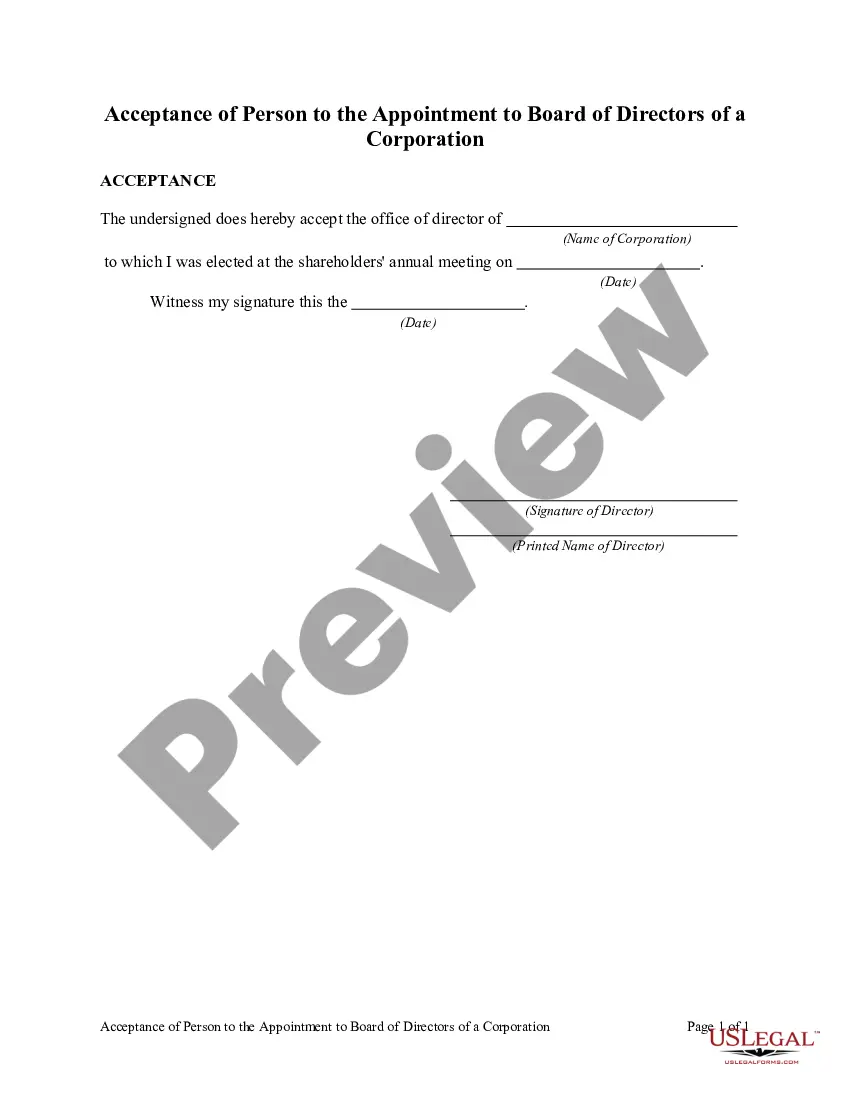
Director Appointment In Egm In Utah
Description

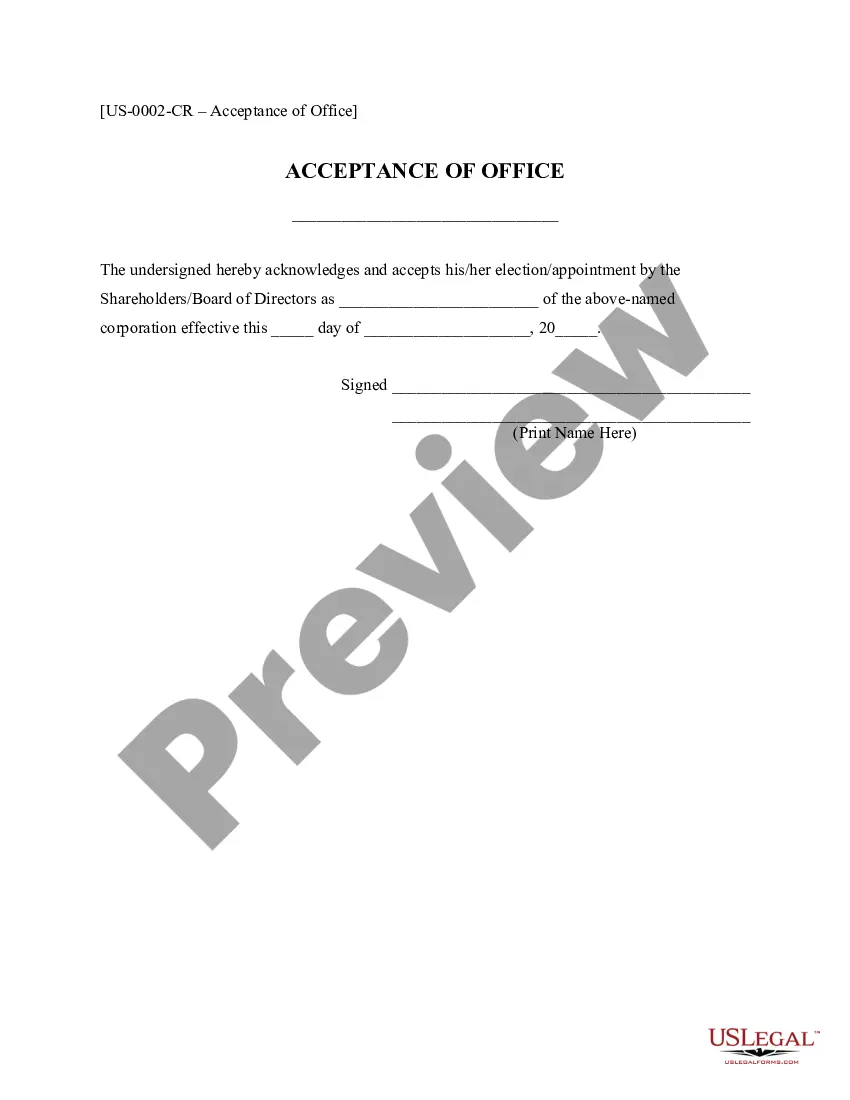

Get your form ready online
Our built-in tools help you complete, sign, share, and store your documents in one place.
Make edits, fill in missing information, and update formatting in US Legal Forms—just like you would in MS Word.
Download a copy, print it, send it by email, or mail it via USPS—whatever works best for your next step.
Sign and collect signatures with our SignNow integration. Send to multiple recipients, set reminders, and more. Go Premium to unlock E-Sign.
If this form requires notarization, complete it online through a secure video call—no need to meet a notary in person or wait for an appointment.
We protect your documents and personal data by following strict security and privacy standards.

Make edits, fill in missing information, and update formatting in US Legal Forms—just like you would in MS Word.

Download a copy, print it, send it by email, or mail it via USPS—whatever works best for your next step.

Sign and collect signatures with our SignNow integration. Send to multiple recipients, set reminders, and more. Go Premium to unlock E-Sign.

If this form requires notarization, complete it online through a secure video call—no need to meet a notary in person or wait for an appointment.

We protect your documents and personal data by following strict security and privacy standards.
Looking for another form?




Form popularity
FAQ
Removal of directors. Directors elected by voting members or directors may be removed as provided in Subsections (1)(a) through (f). The voting members may remove one or more directors elected by them with or without cause unless the bylaws provide that directors may be removed only for cause.
Conduct general meeting If the company decides to appoint a director in the middle of the year, it may appoint a director by passing a resolution in an Extraordinary General Meeting (EGM). In such a case, a company must conduct a board meeting to pass a resolution for conducting an Extraordinary General Meeting (EGM).
The appointment of directors will usually be covered by the company's articles (or possibly a shareholders' agreement) which may provide for appointment by the board, or by the shareholders via a written resolution or at a general meeting.
Directors are appointed through a resolution passed at a General Meeting, either an AGM or an EGM, as per company needs. What is a Director Identification Number (DIN)? DIN is a unique identifier required for anyone looking to be appointed as a director, ensuring legal compliance.
Conduct general meeting If the company decides to appoint a director in the middle of the year, it may appoint a director by passing a resolution in an Extraordinary General Meeting (EGM). In such a case, a company must conduct a board meeting to pass a resolution for conducting an Extraordinary General Meeting (EGM).
The appointment of the independent director must be approved by the company in a general meeting, and the explanatory statement annexed to the general meeting notice should indicate the justification for choosing the proposed person for appointment as independent director.
For example, the board of directors will usually have power to appoint a director to fill a vacancy and to appoint an additional director. A company's articles might also grant an explicit power for directors to be appointed at a general meeting of the company.
If the company decides to appoint a director in the middle of the year, it may appoint a director by passing a resolution in an Extraordinary General Meeting (EGM). In such a case, a company must conduct a board meeting to pass a resolution for conducting an Extraordinary General Meeting (EGM).
Periodically a company will have to appoint a new director. In public companies, directors are appointed by shareholders.
Shareholders appoint a company director to supervise the company's activities, as guided by the Memorandum of Association (MOA) and Articles of Association (AOA). Since a company is a legal entity and cannot act independently, it functions through natural persons, which, in this case, are the directors.