Director Appointment In Egm In Chicago
Description

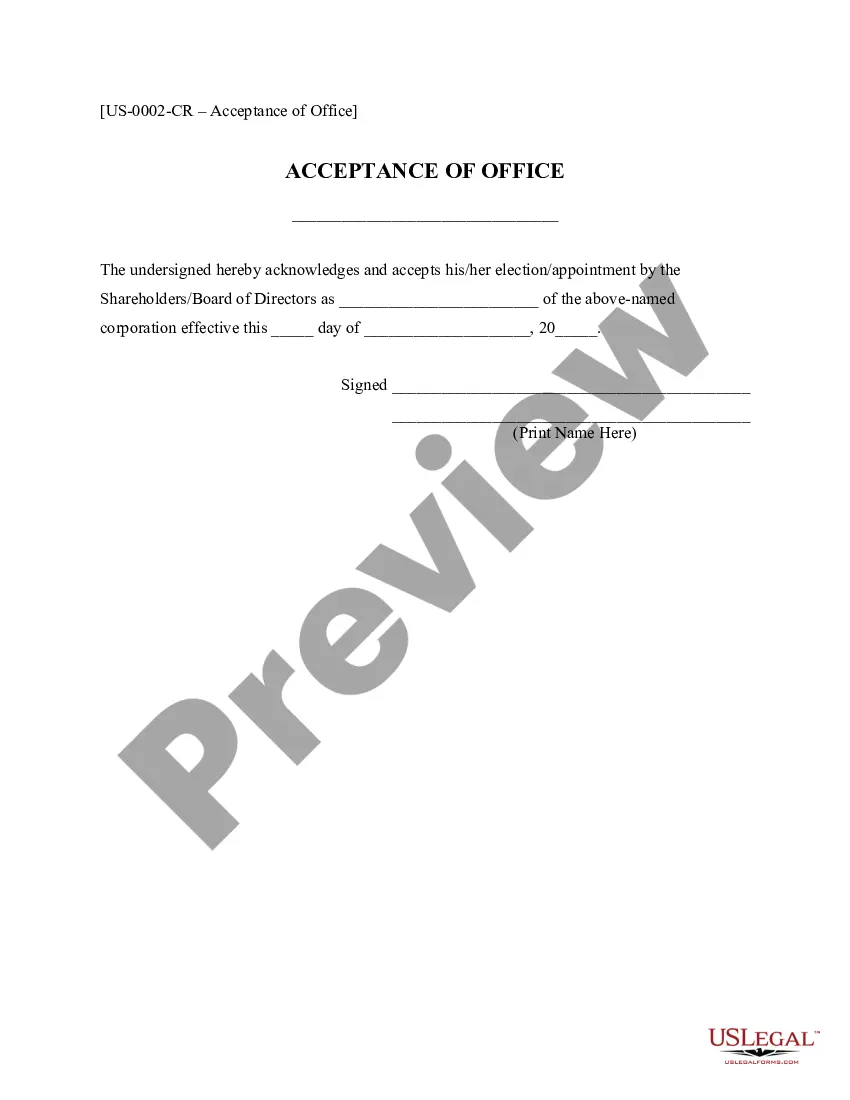

Get your form ready online
Our built-in tools help you complete, sign, share, and store your documents in one place.
Make edits, fill in missing information, and update formatting in US Legal Forms—just like you would in MS Word.
Download a copy, print it, send it by email, or mail it via USPS—whatever works best for your next step.
Sign and collect signatures with our SignNow integration. Send to multiple recipients, set reminders, and more. Go Premium to unlock E-Sign.
If this form requires notarization, complete it online through a secure video call—no need to meet a notary in person or wait for an appointment.
We protect your documents and personal data by following strict security and privacy standards.

Make edits, fill in missing information, and update formatting in US Legal Forms—just like you would in MS Word.

Download a copy, print it, send it by email, or mail it via USPS—whatever works best for your next step.

Sign and collect signatures with our SignNow integration. Send to multiple recipients, set reminders, and more. Go Premium to unlock E-Sign.

If this form requires notarization, complete it online through a secure video call—no need to meet a notary in person or wait for an appointment.

We protect your documents and personal data by following strict security and privacy standards.
Looking for another form?







Form popularity
FAQ
"Public Body" – The Open Meetings Act defines “public body” to include “all legislative, executive, administrative or advisory bodies of the State, counties, townships, cities, villages, incorporated towns, school districts and all other municipal corporations, boards, bureaus, committees or commissions of this State, ...
Sec. 31-3. Obstructing service of process. Whoever knowingly resists or obstructs the authorized service or execution of any civil or criminal process or order of any court commits a Class B misdemeanor.
Subject to the provisions of Section 8-701 of the Code of Civil Procedure, any person may record the proceedings at meetings required to be open by this Act by tape, film or other means.
2.02. Public notice of all meetings, whether open or closed to the public, shall be given as follows: (a) Every public body shall give public notice of the schedule of regular meetings at the beginning of each calendar or fiscal year and shall state the regular dates, times, and places of such meetings.
Civil Penalties: In a civil lawsuit for a violation of OMA, a court may take a number of actions, including (1) ordering a public body to conduct an open meeting, (2) granting an injunction against future violations by the public body, (3) ordering the public body to make available to the public the minutes of a closed ...
What can I do if I think a public body has violated OMA? Within 60 calendar days from when the alleged violation occurred, you can file a Request for Review with the Public Access Counselor at the Office of the Attorney General, or you can bring a civil action in circuit court against the public body.
Sec. 1.05. Training. (a) Every public body shall designate employees, officers, or members to receive training on compliance with this Act.
Lastly, for the appointment of an executive director, a company must file an e- Form DIR-12 (a public company must file an e- Form MR1) within sixty days of the executive director's appointment.
Some organizations appoint an executive director right from the start. Others chose to take on an executive director after the organization is already established. And then, there's always the need for an executive director if your current ED is stepping down.
Conduct general meeting If the company decides to appoint a director in the middle of the year, it may appoint a director by passing a resolution in an Extraordinary General Meeting (EGM). In such a case, a company must conduct a board meeting to pass a resolution for conducting an Extraordinary General Meeting (EGM).

