Warranty Deed Vs Deed In North Carolina
Description


Get your form ready online
Our built-in tools help you complete, sign, share, and store your documents in one place.
Make edits, fill in missing information, and update formatting in US Legal Forms—just like you would in MS Word.
Download a copy, print it, send it by email, or mail it via USPS—whatever works best for your next step.
Sign and collect signatures with our SignNow integration. Send to multiple recipients, set reminders, and more. Go Premium to unlock E-Sign.
If this form requires notarization, complete it online through a secure video call—no need to meet a notary in person or wait for an appointment.
We protect your documents and personal data by following strict security and privacy standards.

Make edits, fill in missing information, and update formatting in US Legal Forms—just like you would in MS Word.

Download a copy, print it, send it by email, or mail it via USPS—whatever works best for your next step.

Sign and collect signatures with our SignNow integration. Send to multiple recipients, set reminders, and more. Go Premium to unlock E-Sign.

If this form requires notarization, complete it online through a secure video call—no need to meet a notary in person or wait for an appointment.

We protect your documents and personal data by following strict security and privacy standards.
Looking for another form?


Form popularity
FAQ
Can I prepare my own deed and have it recorded? North Carolina law allows you to prepare a Deed of Conveyance for any real property to which you have legal title. However, the conveyance of real property is a legal matter that should be given under and with the advise of legal counsel.
"A deed seeking to convey an interest in land "is void unless it contains a description of the land sufficient to identify it or refers to something extrinsic by which land may be identified with certainty." Overton v. Boyce, 289 N.C. 291, 293, 221 S.E.2d 347, 348 (1976).
A traditional deed simply transfers the ownership of a property from one party to another (in other words, the seller to the buyer.) Whoever legally holds the deed is the rightful owner of the property. A warranty deed, on the other hand, contains special assurances that the seller makes to the buyer.
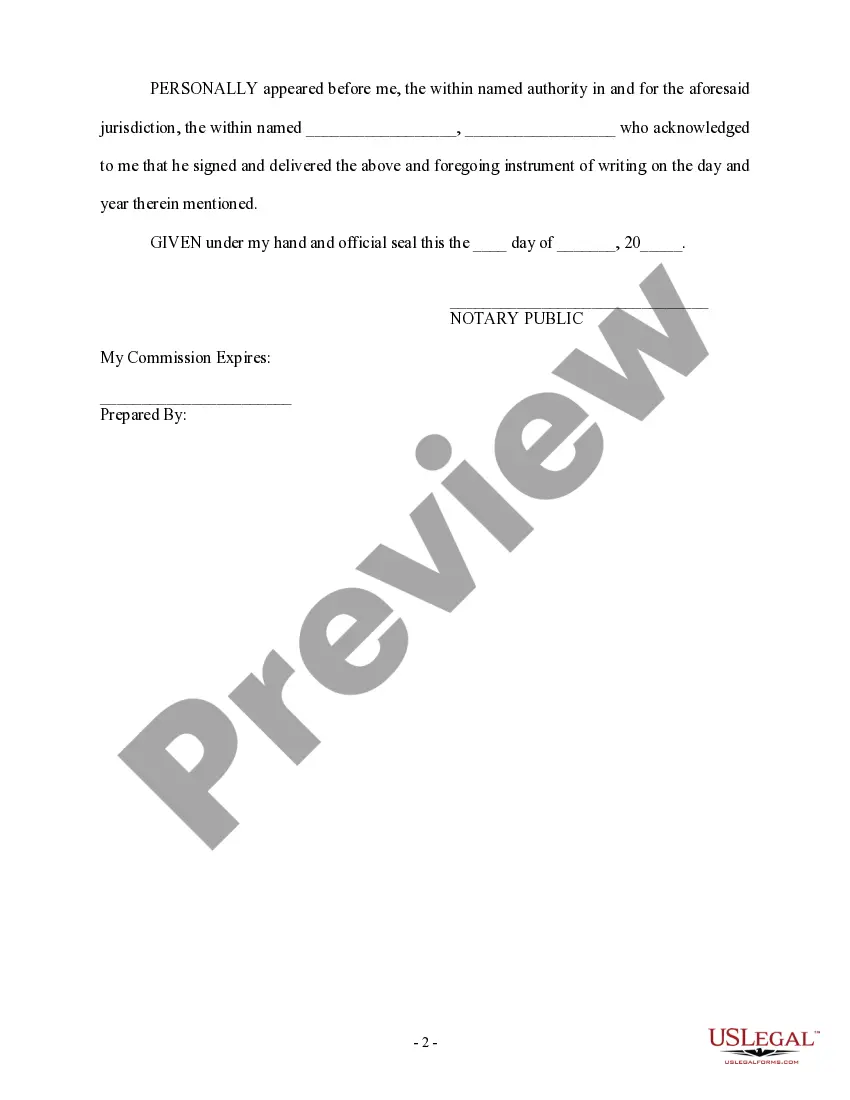
Yes. In almost all cases, signatures on a General Warranty Deed require acknowledgment before a Notary Public or other officer authorized to perform acknowledgments. A few states allow a proof of execution by subscribing witness when the principal grantor is unable to personally appear before a Notary.
This special warranty deed is different than the general warranty deed in a major way. Here, the seller is only stating that they will protect the buyer from any title defects or claims arising during the seller's ownership, not from any point in time before the seller had ownership.
Can I prepare my own deed and have it recorded? North Carolina law allows you to prepare a Deed of Conveyance for any real property to which you have legal title.
You may not need to involve an attorney to create a particular deed if you already have all the information. This is especially true if you are transferring property between family members or into or out of a trust. We provide several real estate forms that can help you transfer property validly in your state.
A general warranty deed must include the following to be valid: The name and address of the seller (called the grantor) The name and address of the buyer (called the grantee) A legal description of the property (found on the previous deed) A statement that the grantor is transferring the property to the grantee.
How do I fill this out? Enter the names and mailing addresses of the Grantor and Grantee. Provide a brief description of the property being conveyed. List any exceptions or reservations concerning the property. Sign the document in designated areas. Obtain notarization to validate the deed.
