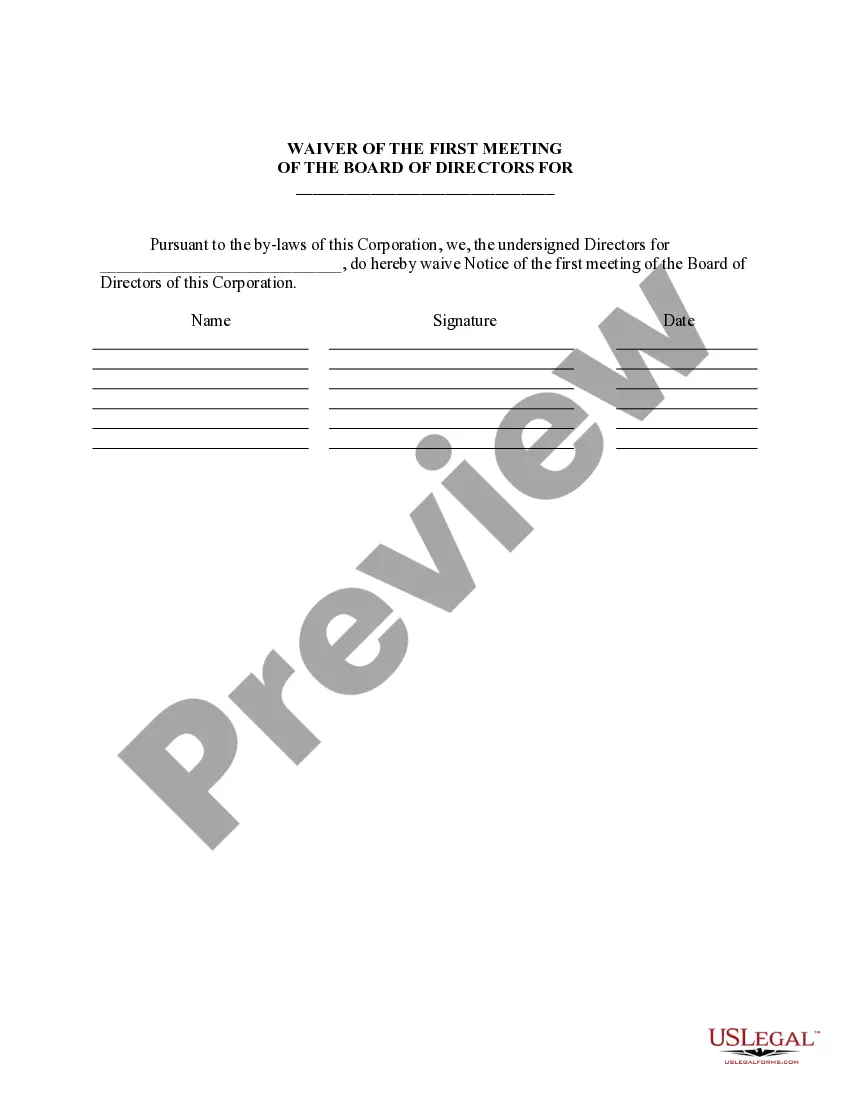
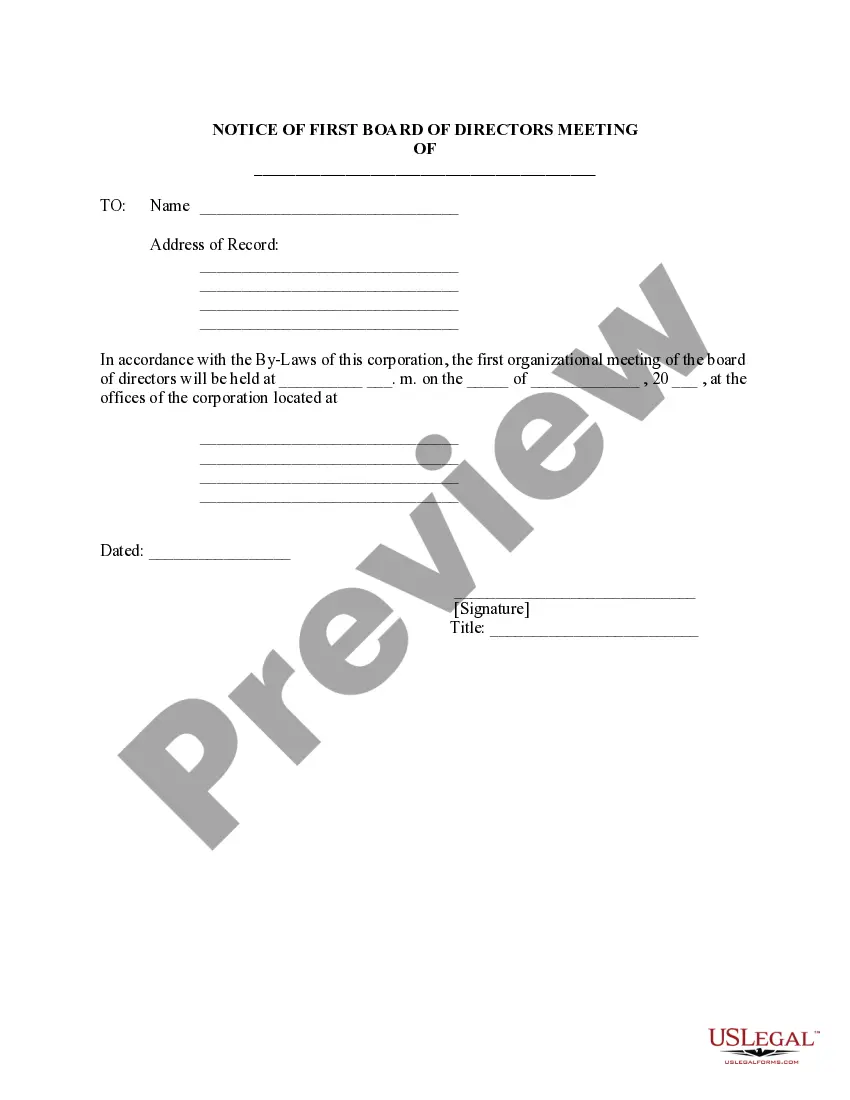
Board Directors Corporate Without Ceo In Tarrant
Description


Get your form ready online
Our built-in tools help you complete, sign, share, and store your documents in one place.
Make edits, fill in missing information, and update formatting in US Legal Forms—just like you would in MS Word.
Download a copy, print it, send it by email, or mail it via USPS—whatever works best for your next step.
Sign and collect signatures with our SignNow integration. Send to multiple recipients, set reminders, and more. Go Premium to unlock E-Sign.
If this form requires notarization, complete it online through a secure video call—no need to meet a notary in person or wait for an appointment.
We protect your documents and personal data by following strict security and privacy standards.

Make edits, fill in missing information, and update formatting in US Legal Forms—just like you would in MS Word.

Download a copy, print it, send it by email, or mail it via USPS—whatever works best for your next step.

Sign and collect signatures with our SignNow integration. Send to multiple recipients, set reminders, and more. Go Premium to unlock E-Sign.

If this form requires notarization, complete it online through a secure video call—no need to meet a notary in person or wait for an appointment.

We protect your documents and personal data by following strict security and privacy standards.
Looking for another form?









Form popularity
FAQ
CEOs as executive directors are common in the corporate sector, where they act as both head of the executive team and also sit on the board as a director.
Unless the issue has to do with the CEO's job, many foundations agree: There is no good reason why a CEO could not or should not serve on the board.
Private companies are not legally required to have a board of directors, but many choose to do so in order to create a structure of accountability and good governance. Having a board can also be helpful in attracting investors and other key stakeholders.
There are several common actions to take to organize your board of directors, though, including these five steps: Register articles of incorporation. Create bylaws. Set up a board of directors agreement. Select your board of directors. Have an initial shareholder meeting.
SUMMARY. While the Chairman technically has higher level powers, the CEO is indeed “the boss” of a company. And yes, the CEO does (by the letter of the law) answer to their board of directors, which is ultimately headed by the chairman.
Those Who Lack Objectivity If you can't take a step back and look at the big picture, you're not going to be an effective board member. You need to be able to objectively assess a company's performance and make decisions that are in the best interests of the company, not just yourself or your friends on the board.
In most legal systems, the appointment and removal of directors is voted upon by the shareholders in general meeting or through a proxy statement. For publicly traded companies in the U.S., the directors which are available to vote on are largely selected by either the board as a whole or a nominating committee.
You can use an executive search firm which specializes in board members or ask your investors, advisors, or other entrepreneurs for suggestions. Your board members are optimally people that you wish you could hire for the company, that are truly out of reach otherwise.
The steps include: Build Relevant Experience. Develop a Strong Professional Network. Develop a Value Proposition. Identify Open Positions. Participate in the Selection Process.
For a smaller board, the process often involves being interviewed, whereas larger organizations tend to have a more formalized review before nominating someone for a seat. In publicly traded companies, board members are approved by shareholders at the recommendation of management.