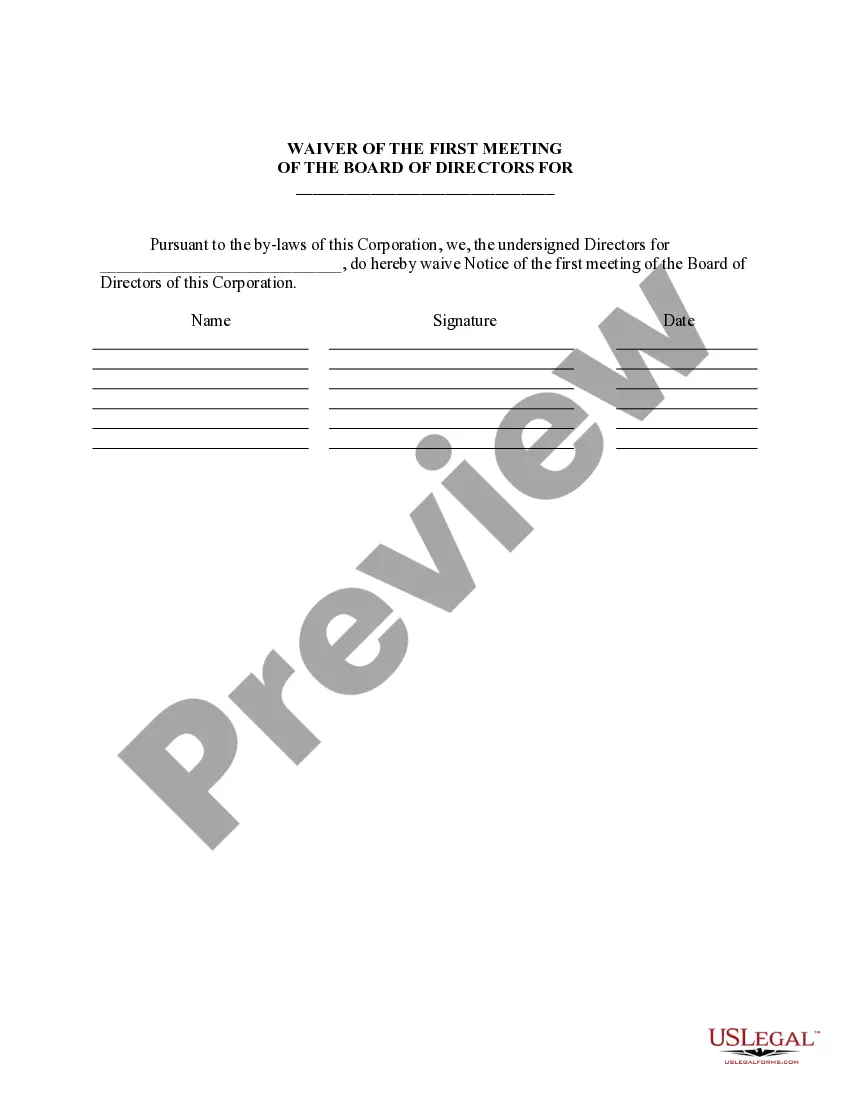
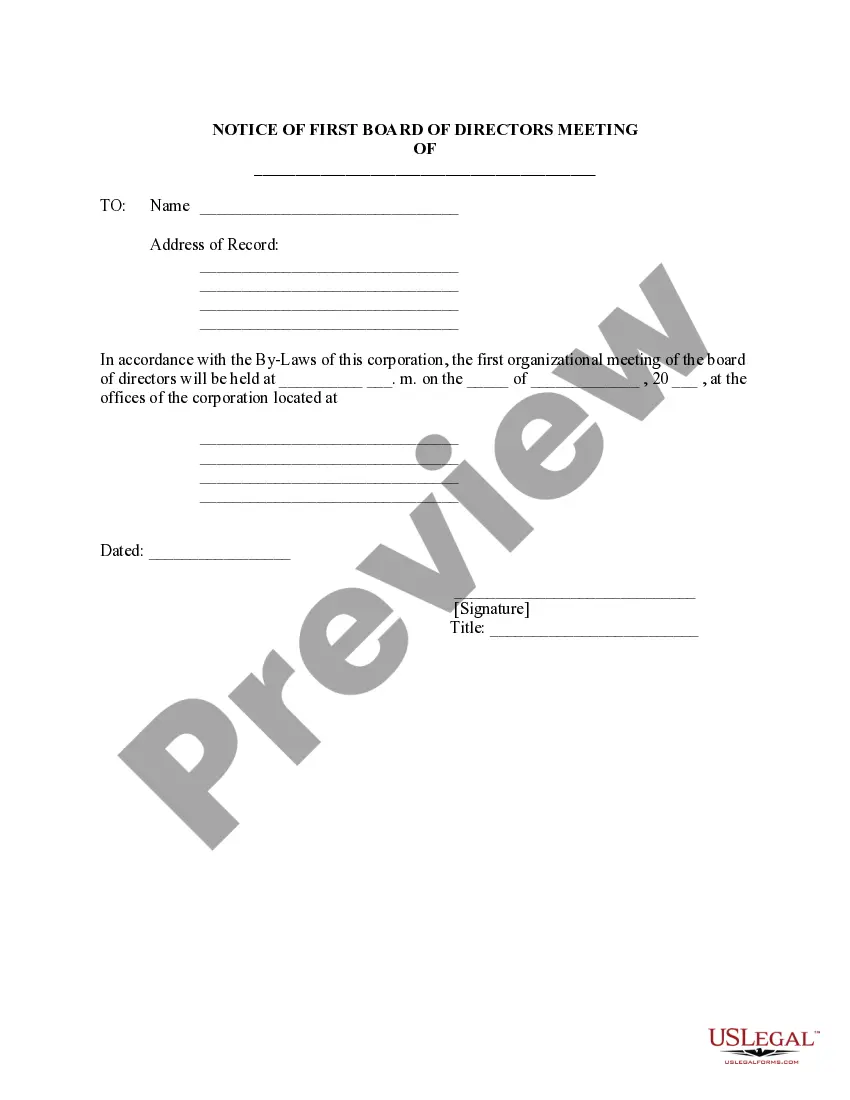
Board Directors Corporate Without In Franklin
Description


Get your form ready online
Our built-in tools help you complete, sign, share, and store your documents in one place.
Make edits, fill in missing information, and update formatting in US Legal Forms—just like you would in MS Word.
Download a copy, print it, send it by email, or mail it via USPS—whatever works best for your next step.
Sign and collect signatures with our SignNow integration. Send to multiple recipients, set reminders, and more. Go Premium to unlock E-Sign.
If this form requires notarization, complete it online through a secure video call—no need to meet a notary in person or wait for an appointment.
We protect your documents and personal data by following strict security and privacy standards.

Make edits, fill in missing information, and update formatting in US Legal Forms—just like you would in MS Word.

Download a copy, print it, send it by email, or mail it via USPS—whatever works best for your next step.

Sign and collect signatures with our SignNow integration. Send to multiple recipients, set reminders, and more. Go Premium to unlock E-Sign.

If this form requires notarization, complete it online through a secure video call—no need to meet a notary in person or wait for an appointment.

We protect your documents and personal data by following strict security and privacy standards.
Looking for another form?









Form popularity
FAQ
How to become a board member of a nonprofit Find organizations. Look into many nonprofit organizations to find something that you are passionate or motivated about. Research to see if it's a good fit. Next, do some preliminary research on one or two groups. Interview process. Learn about expectations. Make final decision.
Steps to Join a Corporate Board Development of Relevant Skills and Expertise. Build a Strong Professional Network. Seek Professional Training and Education. Identify and Pursue Board Opportunities. Prepare for Board Interviews.
The steps include: Build Relevant Experience. Develop a Strong Professional Network. Develop a Value Proposition. Identify Open Positions. Participate in the Selection Process.
An alternative to a formal board of directors is an informal advisory board. Many small businesses assemble a team of expert advisors to provide the same type of high level strategic planning and direction but without being bound by board decisions.
A company that has no directors can be struck off. This would have serious implications for the building, as there would be no management, and it could be hard to sell any flats in the building. The process for striking off does not occur immediately.
Board members are usually appointed by voting members, who cast their votes on who should be selected for a board in an election. If a nonprofit organization chooses to remain unincorporated, they legally do not need to appoint a board of directors to run.
All corporations, regardless of the state, must have a shareholder-elected Board of Directors. An LLC is not required to have a Board of Directors, but can adopt this form of management if the members (the owners of the LLC) choose to do so.
Generally, a corporation must form a named board of directors and hold at least one annual meeting. The board must also maintain written records of items discussed and actions taken at each meeting.
Who Should Not Serve On A Board Of Directors? Those Who Lack Objectivity. People Who Are All Talk And No Action. Those Who Are Conflict-Averse. People Who Don't Play Well With Others. Those Who Are Greedy. People Who Are Resistant To Change. People Who Are Not Team Players. People Who Don't Believe in the Mission.
Central to a 501(c)(3) organization's effective operation is a dedicated board of directors that ensures the nonprofit upholds its tax-exempt status.