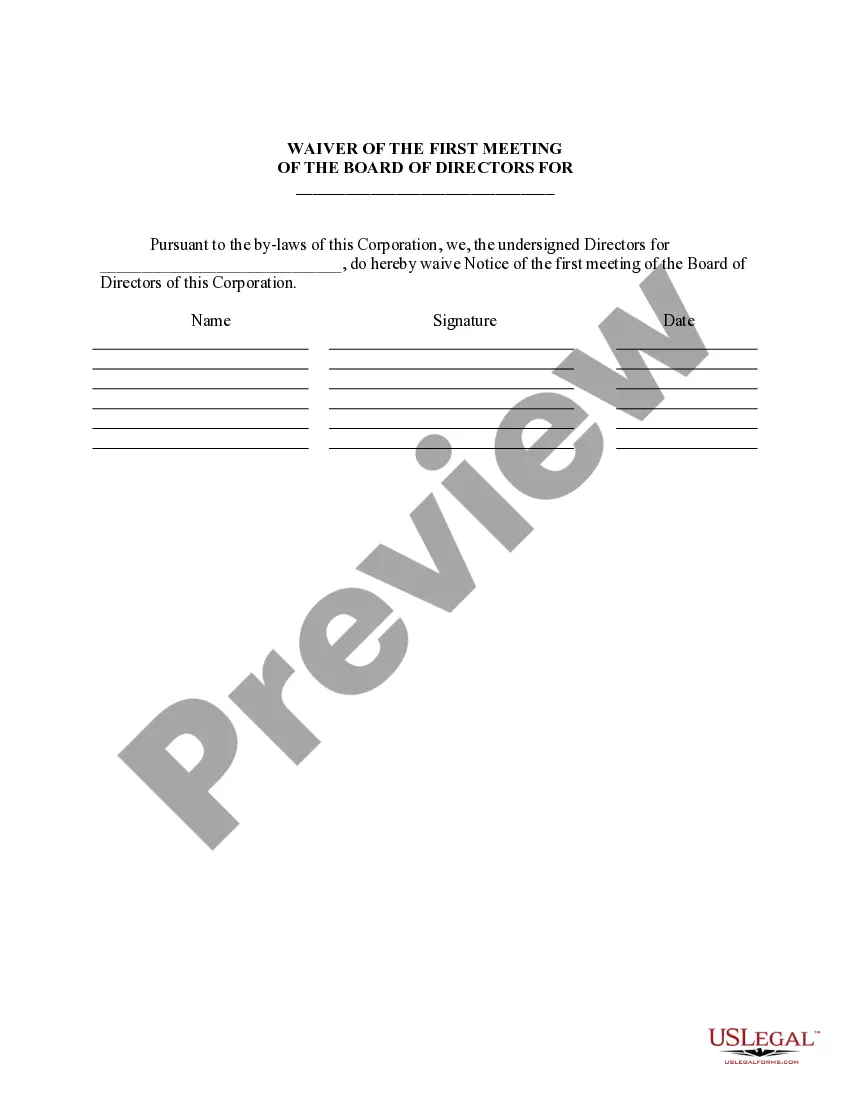
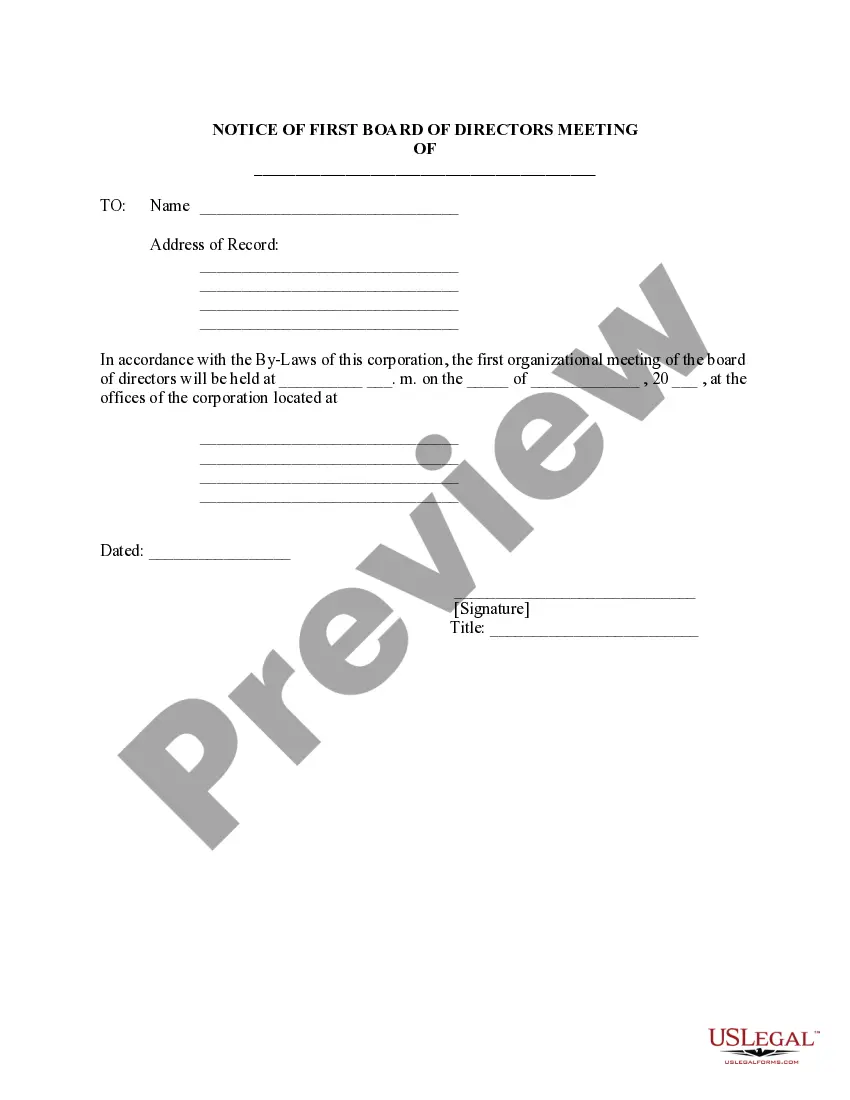
Board Directors Corporate Without In Collin
Description


Get your form ready online
Our built-in tools help you complete, sign, share, and store your documents in one place.
Make edits, fill in missing information, and update formatting in US Legal Forms—just like you would in MS Word.
Download a copy, print it, send it by email, or mail it via USPS—whatever works best for your next step.
Sign and collect signatures with our SignNow integration. Send to multiple recipients, set reminders, and more. Go Premium to unlock E-Sign.
If this form requires notarization, complete it online through a secure video call—no need to meet a notary in person or wait for an appointment.
We protect your documents and personal data by following strict security and privacy standards.

Make edits, fill in missing information, and update formatting in US Legal Forms—just like you would in MS Word.

Download a copy, print it, send it by email, or mail it via USPS—whatever works best for your next step.

Sign and collect signatures with our SignNow integration. Send to multiple recipients, set reminders, and more. Go Premium to unlock E-Sign.

If this form requires notarization, complete it online through a secure video call—no need to meet a notary in person or wait for an appointment.

We protect your documents and personal data by following strict security and privacy standards.
Looking for another form?









Form popularity
FAQ
Who Should Not Serve On A Board Of Directors? Those Who Lack Objectivity. People Who Are All Talk And No Action. Those Who Are Conflict-Averse. People Who Don't Play Well With Others. Those Who Are Greedy. People Who Are Resistant To Change. People Who Are Not Team Players. People Who Don't Believe in the Mission.
Key Difference: The roles of Chairman and CEO hold varying degrees of authority from company to company. The CEO typically has more direct influence over day-to-day operations and strategic corporate decisions, while the Chairman focuses on governance and board leadership.
While the chairman or president is technically above the board of directors, they still need to answer to someone. In most cases, this is the shareholders. The shareholders are the individuals or organizations that have a financial stake in the company.
In simple terms, the CEO is the top senior executive over management, while the board chairperson is the head of the board of directors. The CEO is the company's top decision-maker and oversees the daily operations and logistics. All of the senior management executives report to the CEO.
The board's chair is the highest position on a board of directors. Chairs oversee the work of the board and the organisation's management team.
If your business is a corporation, then you are required by law to have a board of directors. Depending on your particular corporate structure and your state, one or two directors may be all that's legally required.
Officers & Directors Company Web Pages. This should be the first stop for anyone researching the executives and directors. SEC Filings. The Proxy (or DEF14A) is the annual filing that goes with the 10K that lists the officers and directors. LinkedIn. The Internet. Articles.
The chair of the board is voted into his or her position by a majority vote within the board of directors. Because the position has substantial interaction and influence with both the board and management, the chair is arguably the most powerful position in the company.
There are several common actions to take to organize your board of directors, though, including these five steps: Register articles of incorporation. Create bylaws. Set up a board of directors agreement. Select your board of directors. Have an initial shareholder meeting.
Generally, a corporation must form a named board of directors and hold at least one annual meeting. The board must also maintain written records of items discussed and actions taken at each meeting.