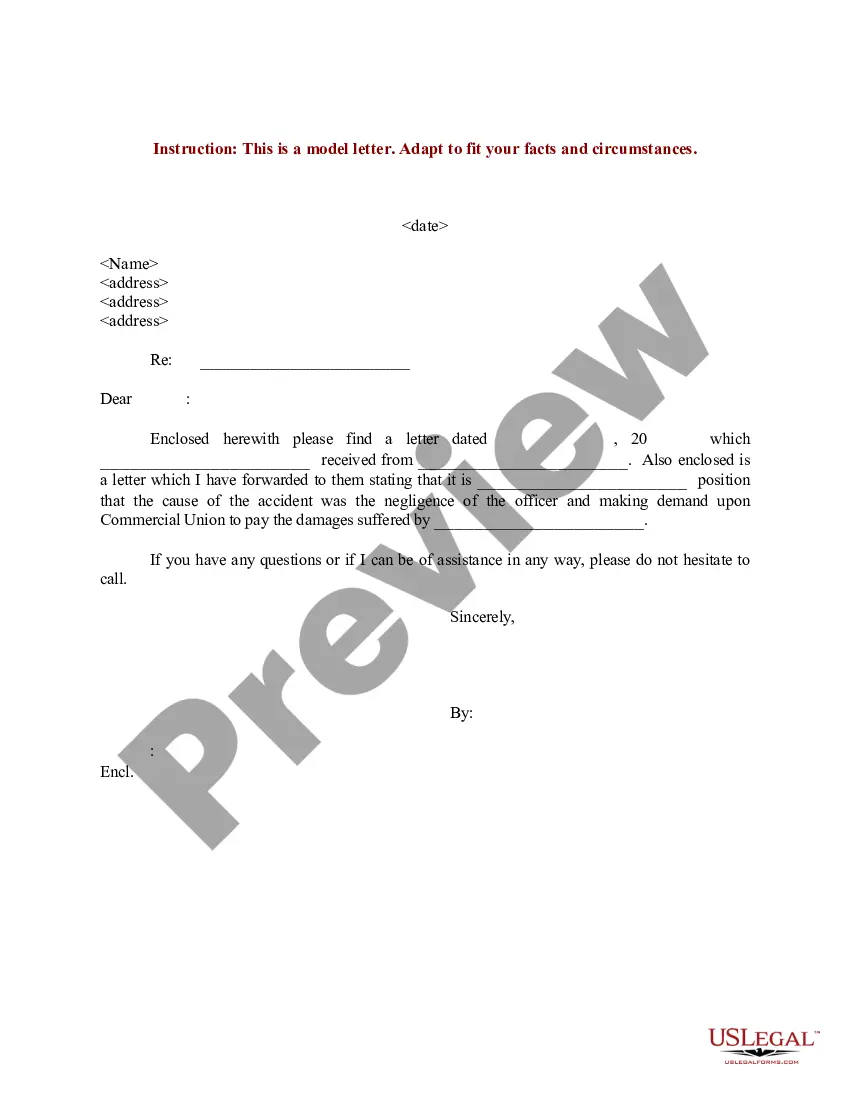
Letter Insurance Form For Claim In Virginia
Description
Get your form ready online
Our built-in tools help you complete, sign, share, and store your documents in one place.
Make edits, fill in missing information, and update formatting in US Legal Forms—just like you would in MS Word.
Download a copy, print it, send it by email, or mail it via USPS—whatever works best for your next step.
Sign and collect signatures with our SignNow integration. Send to multiple recipients, set reminders, and more. Go Premium to unlock E-Sign.
If this form requires notarization, complete it online through a secure video call—no need to meet a notary in person or wait for an appointment.
We protect your documents and personal data by following strict security and privacy standards.

Make edits, fill in missing information, and update formatting in US Legal Forms—just like you would in MS Word.

Download a copy, print it, send it by email, or mail it via USPS—whatever works best for your next step.

Sign and collect signatures with our SignNow integration. Send to multiple recipients, set reminders, and more. Go Premium to unlock E-Sign.

If this form requires notarization, complete it online through a secure video call—no need to meet a notary in person or wait for an appointment.

We protect your documents and personal data by following strict security and privacy standards.
Looking for another form?

Form popularity
FAQ
Does Your Employer Have to Hold Your Job for You? The simple answer to this question is no. If you are claiming workers' compensation, your employer does not have to legally hold your job for you until you recover and can come back to work. In fact, they can lay you off or even terminate your employment.
Virginia workers' compensation laws are complicated. Still, it's necessary to report your injury to your employer as soon as possible. You have two years from the date of the accident to file your claim with the commission. This time limit also applies from the date a doctor diagnoses your occupational injury.
How To Notify Your Employer of Work Injury Step-By-Step Basic Information. Explain How You Were Injured On The Job. Talk About Your Injury. Clarify That You Had No Pre-Existing Injuries. Include Medical Information From Your Doctor. Request a List of Approved Doctors. Remind Your Employer To Take the Next Steps.
Proof of coverage shall include the name and address of the insured, the insured's federal employer identification number (FEIN), the policy number, dates of insurance coverage, the name and address of the insurer, and the insurer's identification number.
Virginia law requires that most employers carry workers' compensation insurance in order to cover their workers in the event of a work injury. Workers' compensation provides a tradeoff for both employers and employees. For the employer, it provides an exclusive remedy, shielding the employer from civil suit.
You may file the claim: In person: Complete the Claim for Benefits Form and deliver it to any of our office locations. By mail: Complete the Claim for Benefits Form and mail it to: Virginia Workers' Compensation Commission, 333 E. By fax: Complete the Claim for Benefits Form and fax it to: 804-823-6956.
If your doctor says you cannot work because of your work-related injury or illness, you may be entitled to compensation equaling 66 2/3% of your regular wages based upon earnings for the 52 weeks prior to your injury. This amount is subject to a statewide maximum reimbursement amount.
Depending on how acute your injuries are and the extent of your recovery, you may be eligible for benefits ranging from a few weeks to several months, years, or even for the rest of your life. Normally, the maximum period to receive workers' compensation wage-loss benefits in Virginia is 500 weeks.
One thing that helps do this is an “insurance claim letter.” Essentially, this is a letter that explains to the insurance company why you believe you are entitled to coverage and includes a description of the car crash, your injuries, and why you believe the defendant is at fault.
A “Notice of Insurance Claim” is a formal written notice that the claimant (you) sends to an insurance company (the “insurer”). It informs the insurer about your intention to file an insurance claim for an injury caused by their policyholder (the “insured”).