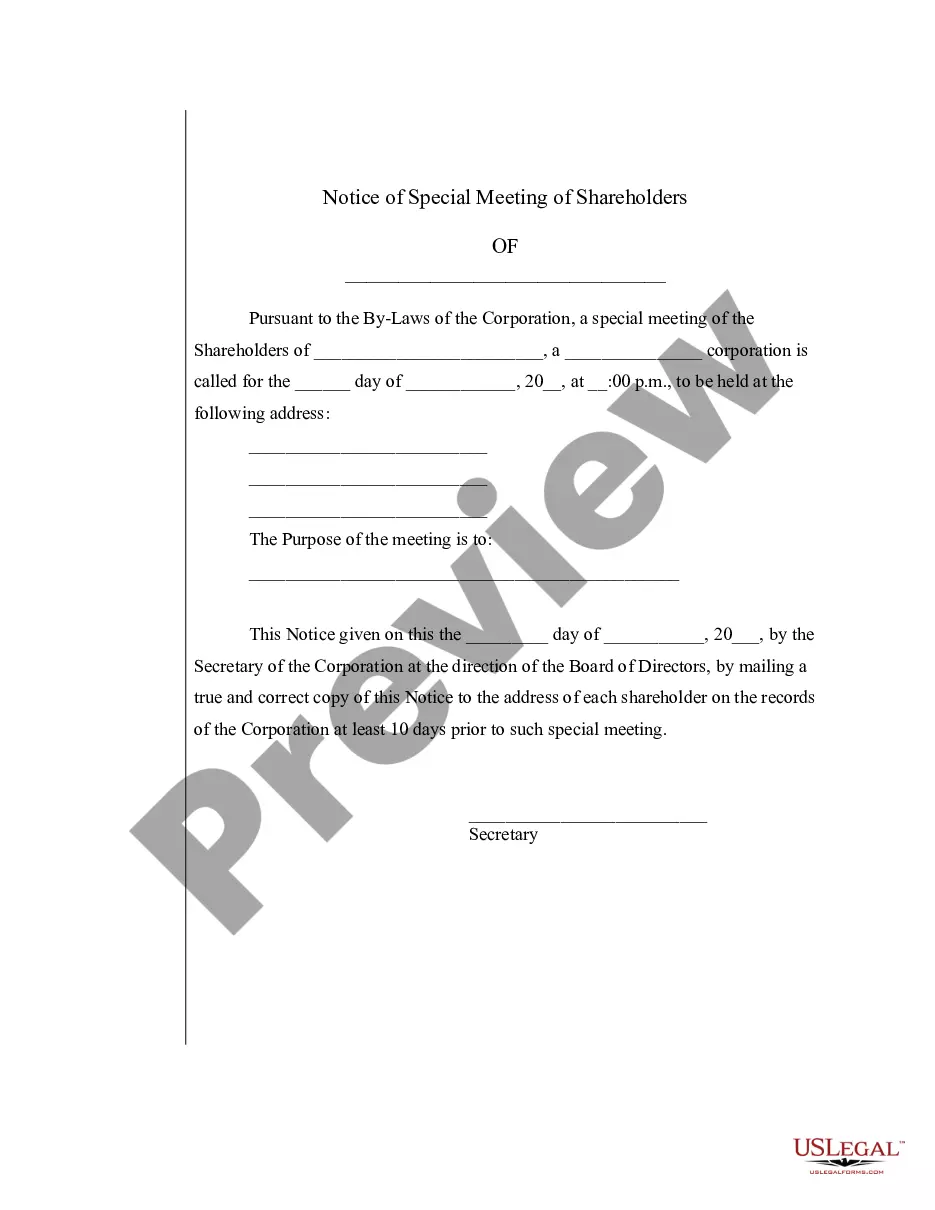
Special Meeting Sample For Hoa In Texas
Description



Get your form ready online
Our built-in tools help you complete, sign, share, and store your documents in one place.
Make edits, fill in missing information, and update formatting in US Legal Forms—just like you would in MS Word.
Download a copy, print it, send it by email, or mail it via USPS—whatever works best for your next step.
Sign and collect signatures with our SignNow integration. Send to multiple recipients, set reminders, and more. Go Premium to unlock E-Sign.
If this form requires notarization, complete it online through a secure video call—no need to meet a notary in person or wait for an appointment.
We protect your documents and personal data by following strict security and privacy standards.

Make edits, fill in missing information, and update formatting in US Legal Forms—just like you would in MS Word.

Download a copy, print it, send it by email, or mail it via USPS—whatever works best for your next step.

Sign and collect signatures with our SignNow integration. Send to multiple recipients, set reminders, and more. Go Premium to unlock E-Sign.

If this form requires notarization, complete it online through a secure video call—no need to meet a notary in person or wait for an appointment.

We protect your documents and personal data by following strict security and privacy standards.
Looking for another form?







Form popularity
FAQ
Since there is no expectation of privacy in the open portion of the HOA meeting, and since Texas is a one-party consent state for recording even private conversations, it is not unlawful for a person attending a board meeting to record the meeting.
The new law will require that homeowners association policies must include general categories of restrictive covenants for which the association may assess fines, a schedule of fines for each category of violation, and information on hearings.
Other rules apply to the use of the facilities and the adherence to certain architectural guidelines. Anyone who doesn't comply with these laws may be subject to fines, but the HOA can't evict them. These fines, along with unpaid HOA fees, can lead to the removal of non-compliant homeowners from a community.
Your meeting minutes should include: Motions: who made them, who seconded them and if they were approved or not. Voting: who voted in favor, dissented and abstained. Old business and if it was resolved. New business and when it will be addressed in the future. Actions that were taken during the meeting.
HOA Rights in Texas The Collection of Fees Known as "Assessments" or "Dues" ... Enforcing Community Rules and Regulations. Access to Common Areas and Shared Facilities. The Right to Create Bylaws. Host Meetings. Property Owners' Associations Must Be Transparent. Fair and Consistent Enforcement of Rules and Regulations.
Special Committee Meetings – Urgent meetings of the committee are called Special Committee Meetings and are usually called to deal with a dispute or grievance or other matters of urgency. Minutes from the committee meeting are not available to the members. General Meetings - General meetings are for all members.
If the time and place of a directors' meeting is fixed by the bylaws or the board of directors, the meeting is a regular meeting. All other meetings are special meetings.
Noun. : a meeting held for a special and limited purpose. specifically : a corporate meeting held occasionally in addition to the annual meeting to conduct only business described in a notice to the shareholders.
In contrast, a special board meeting is a meeting that is not scheduled well in advance and is called by someone – authorized either under the law or the organization's bylaws – for a special purpose.

