Special Meeting Sample With No Experience In Pennsylvania
Description



Get your form ready online
Our built-in tools help you complete, sign, share, and store your documents in one place.
Make edits, fill in missing information, and update formatting in US Legal Forms—just like you would in MS Word.
Download a copy, print it, send it by email, or mail it via USPS—whatever works best for your next step.
Sign and collect signatures with our SignNow integration. Send to multiple recipients, set reminders, and more. Go Premium to unlock E-Sign.
If this form requires notarization, complete it online through a secure video call—no need to meet a notary in person or wait for an appointment.
We protect your documents and personal data by following strict security and privacy standards.

Make edits, fill in missing information, and update formatting in US Legal Forms—just like you would in MS Word.

Download a copy, print it, send it by email, or mail it via USPS—whatever works best for your next step.

Sign and collect signatures with our SignNow integration. Send to multiple recipients, set reminders, and more. Go Premium to unlock E-Sign.

If this form requires notarization, complete it online through a secure video call—no need to meet a notary in person or wait for an appointment.

We protect your documents and personal data by following strict security and privacy standards.
Looking for another form?








Form popularity
FAQ
Minutes should start with the attendance and continue through the motion to close the meeting (opening and closing of the meeting should have times attached.) Each topic that is discussed should have a brief paragraph summarizing what was discussed.
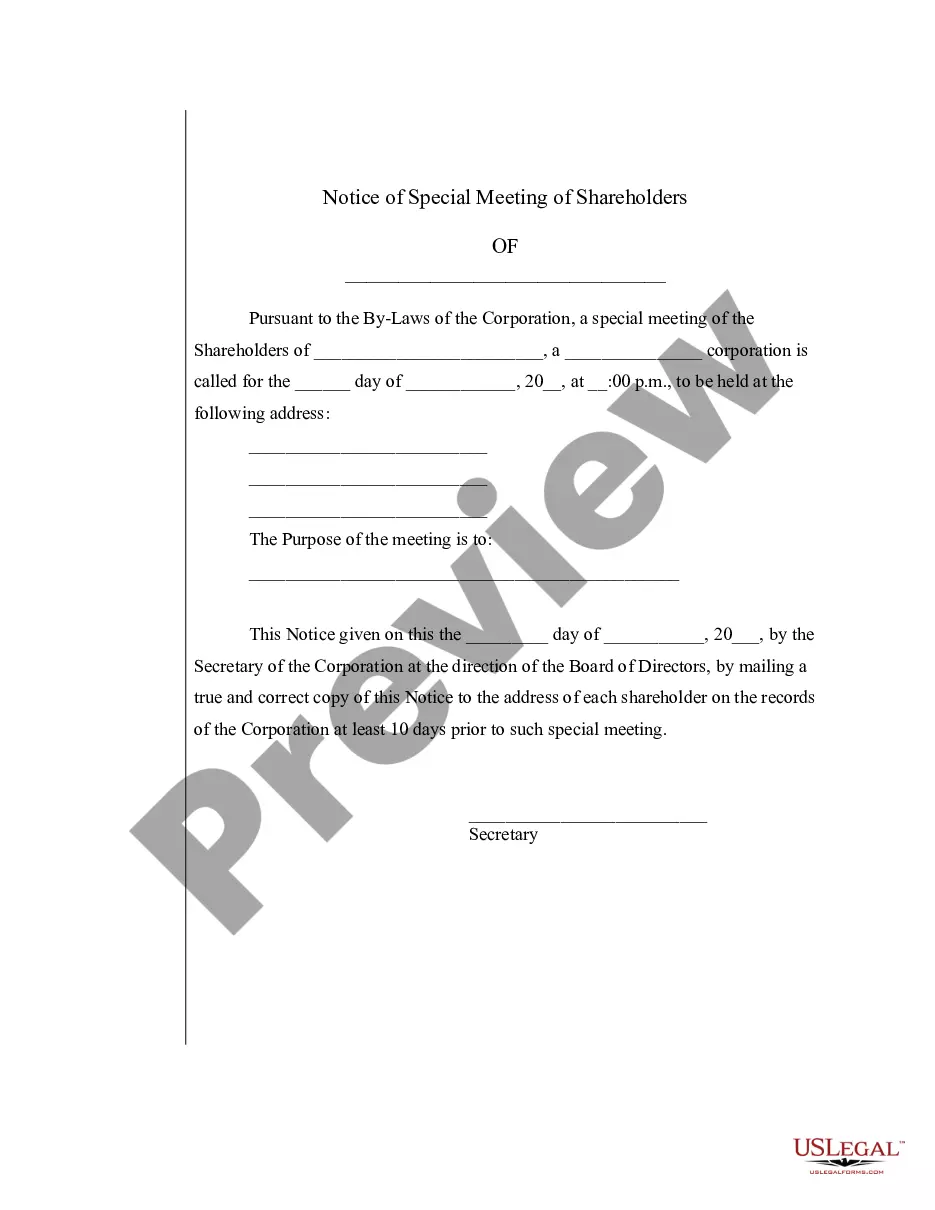
The notice must provide directors with the date, time, and location of the meeting. Although technically, the purpose of the meeting does not have to be provided, it is generally a good idea to include an agenda or similar information so directors know what to expect and why it is important to attend.
A meeting notice should include the following key details: Name and contact information of the meeting chair. Name and role of the sender of the meeting notice. Names and roles of all the invitees. Type of meeting — regular, annual, or special. Date, time and location of the meeting (the notice should also be dated)
Sample of a previous notice for a meeting ing to section () of the bylaws of the organization, the board of directors hereby gives notice of a special meeting which will take place on (date) at (time) at (meeting location). Board members are encouraged to attend.
The “call to meeting” needs to include all the necessary details, obviously – time, date, and location. But you must also say generally what topics will be discussed, including a clear indication of what's open for discussion and what's not (see #3 below). You don't have to state the precise motions that will be made.
Your notice must follow state and company guidelines, but it should have your company name , the date and time of the meeting, the location of the meeting, an agenda , and notes . For more information about how to prepare a notice of meeting, read this article.
A proper meeting notice should include: Date, Time, and Venue: Clear details on when and where the meeting will take place. Purpose of the Meeting: A brief description of the meeting's objectives. Agenda: An outline of topics to be discussed; this helps attendees prepare for the meeting.
Ing to Robert's Rules of Order, special meetings always require previous notice. Here are a few valid reasons for calling a special meeting: An urgent matter needs to be dealt with before the next regular meeting. There is a proposal to amend bylaws.
A Special General Meeting may be summoned within a month of the official written request date, accompanied by the signature of at least one-fifth of the Society's Members. The Chairman can direct the summoning of an SGM, or it can be initiated by a majority vote of the Committee.
Special board meetings may be called by the chair of the board, the president, any vice president, the secretary, or any two directors.

