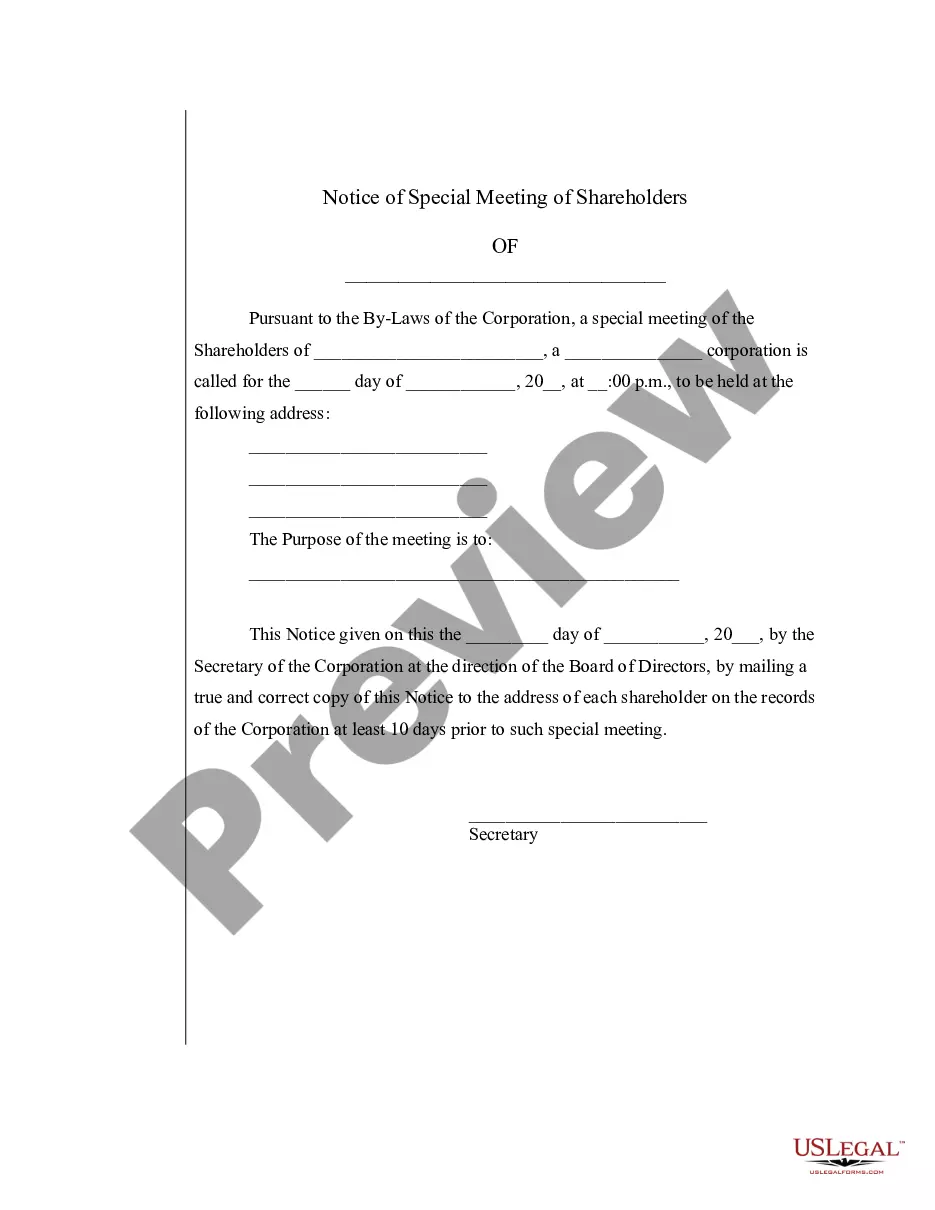
Special Meeting Sample With Replacement In Los Angeles
Description



Get your form ready online
Our built-in tools help you complete, sign, share, and store your documents in one place.
Make edits, fill in missing information, and update formatting in US Legal Forms—just like you would in MS Word.
Download a copy, print it, send it by email, or mail it via USPS—whatever works best for your next step.
Sign and collect signatures with our SignNow integration. Send to multiple recipients, set reminders, and more. Go Premium to unlock E-Sign.
If this form requires notarization, complete it online through a secure video call—no need to meet a notary in person or wait for an appointment.
We protect your documents and personal data by following strict security and privacy standards.

Make edits, fill in missing information, and update formatting in US Legal Forms—just like you would in MS Word.

Download a copy, print it, send it by email, or mail it via USPS—whatever works best for your next step.

Sign and collect signatures with our SignNow integration. Send to multiple recipients, set reminders, and more. Go Premium to unlock E-Sign.

If this form requires notarization, complete it online through a secure video call—no need to meet a notary in person or wait for an appointment.

We protect your documents and personal data by following strict security and privacy standards.
Looking for another form?








Form popularity
FAQ
Content of Notice A proper meeting notice should include: Date, Time, and Venue: Clear details on when and where the meeting will take place. Purpose of the Meeting: A brief description of the meeting's objectives. Agenda: An outline of topics to be discussed; this helps attendees prepare for the meeting.
7 steps for writing a resolution Put the date and resolution number at the top. Give the resolution a title that relates to the decision. Use formal language. Continue writing out each critical statement. Wrap up the heart of the resolution in the last statement.
How to write meeting minutes Organization name. Meeting purpose. Start and end times. Date and location. List of attendees and absentees, if necessary. Space for important information like motions passed or deadlines given. Space for your signature and the meeting leader's signature.
California professional corporations must file an annual Statement of Information, hold annual shareholder and director meetings, document meeting minutes, maintain accurate records, and ensure they comply with all applicable state regulations.
The minutes must include the name of the attendees at the meeting, the time and day of the meeting, as well as the focus and decisions made at the meeting. The minutes must record what happened at the meeting, even if nothing of importance occurred.
There are no hard and fast rules for what to include in meeting minutes. Robert's Rules of Order rules for meeting minutes recommends focusing on what's done in the meeting — not who says what — but many boards don't follow those rules, and they aren't a comprehensive guide.
California corporations need to maintain a corporate minute book. In the minute book, you're required to keep originals or copies of all the signed and approved minutes or actions by unanimous written consent. All records from special or annual meetings must be included in the minute book.
Periodic meetings of the Security Council called for in Article 28 (2) of the Charter shall be held twice a year, at such times as the Security Council may decide. Meetings of the Security Council shall normally be held at the seat of the United Nations.
(a) All meetings of the legislative body of a local agency shall be open and public, and all persons shall be permitted to attend any meeting of the legislative body of a local agency, except as otherwise provided in this chapter.
The Council adopts or modifies the budget proposed by the Mayor and provides the necessary funds, equipment, and supplies for the budgetary departments. The Council confirms or rejects appointments proposed by the Mayor and prescribes duties of boards and officers not defined by Charter. Council Rules are procedural.
