Special Meeting Sample With Board Members In Fairfax
Description



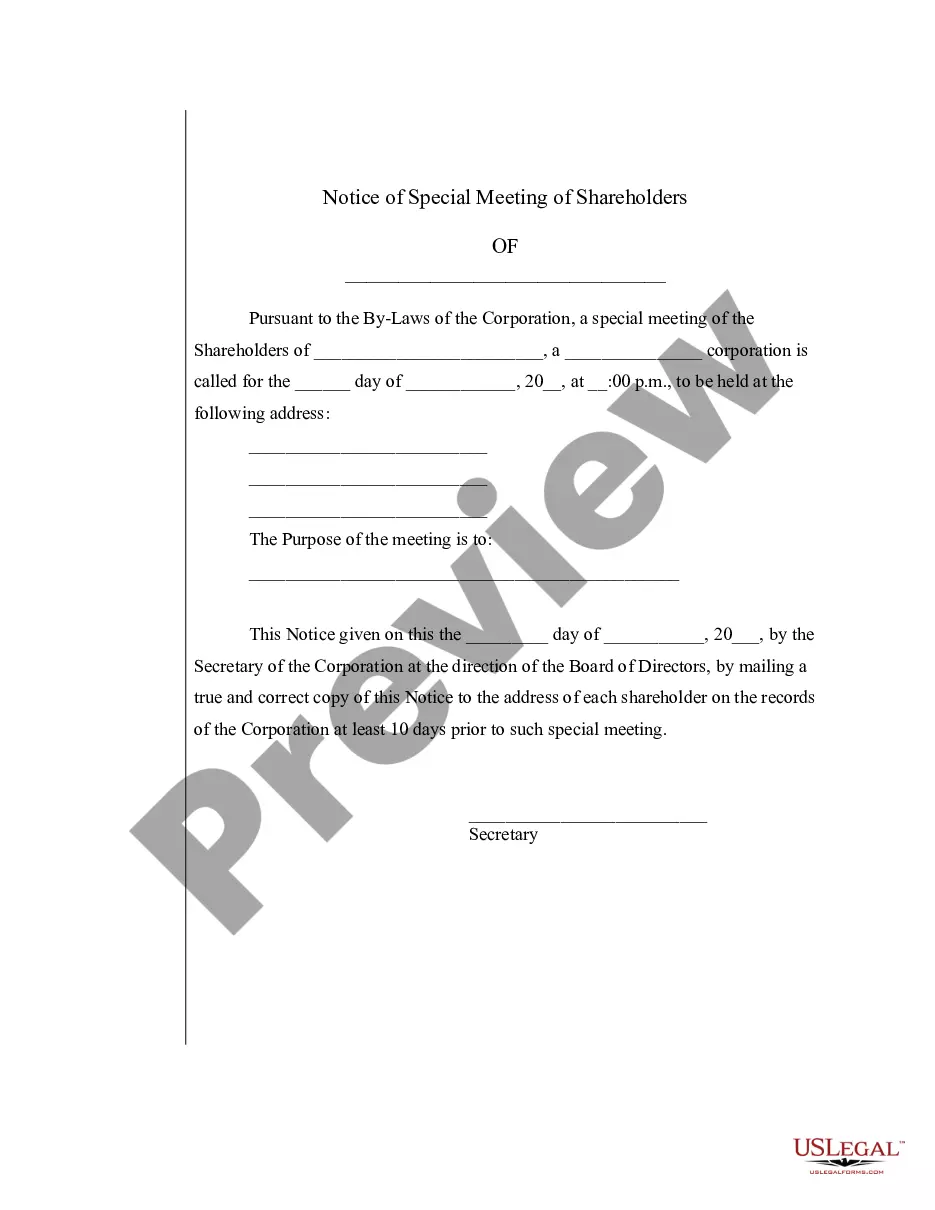
Get your form ready online
Our built-in tools help you complete, sign, share, and store your documents in one place.
Make edits, fill in missing information, and update formatting in US Legal Forms—just like you would in MS Word.
Download a copy, print it, send it by email, or mail it via USPS—whatever works best for your next step.
Sign and collect signatures with our SignNow integration. Send to multiple recipients, set reminders, and more. Go Premium to unlock E-Sign.
If this form requires notarization, complete it online through a secure video call—no need to meet a notary in person or wait for an appointment.
We protect your documents and personal data by following strict security and privacy standards.

Make edits, fill in missing information, and update formatting in US Legal Forms—just like you would in MS Word.

Download a copy, print it, send it by email, or mail it via USPS—whatever works best for your next step.

Sign and collect signatures with our SignNow integration. Send to multiple recipients, set reminders, and more. Go Premium to unlock E-Sign.

If this form requires notarization, complete it online through a secure video call—no need to meet a notary in person or wait for an appointment.

We protect your documents and personal data by following strict security and privacy standards.
Looking for another form?










Form popularity
FAQ
Here are the steps in making a motion, ing to Robert's Rules of Order for meetings: Obtain the floor. Members must be recognized by the Chair. State the motion. State the motion in a clear and concise manner. Secure a second. Discuss or debate the motion. Call for a vote on the motion. Announcement of the vote result.
The following steps to running a board meeting are: Recognizing a quorum. Calling the meeting to order. Approving the agenda and minutes. Allowing for communication and reports. Addressing old/new/other business. Closing the meeting.
“Good morning/evening, everyone! It's state the date and time, and I'd like to call the meeting of organization name to order.” The officer then addresses any items of personal or perfunctory nature. This could include welcoming new members, thanking retiring members, and welcoming visitors.
Occasionally, special meetings need to be called because of an urgent or special matter. ing to Robert's Rules of Order, special meetings always require previous notice. Here are a few valid reasons for calling a special meeting: An urgent matter needs to be dealt with before the next regular meeting.
The chair calls the meeting to order with a simple statement. They should say something along the lines of: “Good morning/evening, everyone! It's state the date and time, and I'd like to call the meeting of organization name to order.”
What to include in your template. Logistics: Include the date, time, location, and list of attendees. A call to order: This signals the official start of the meeting. Approval of minutes: Review and approve the minutes from your last meeting. Old business: Close the loop on any unresolved issues from previous meetings.
Your meeting agenda should outline the specific items to be discussed, the person responsible for leading each agenda item, and any supporting information to be reviewed. President: I will now call this meeting to order. The time is ____ pm. We also do/do not have a quorum today with which we can conduct business.
Best practices of running a board meeting script: 12 steps to include Craft the agenda. The agenda is a meeting plan. Create the board pack. Distribute pre-meeting materials. Start a meeting properly. Recognize a quorum. Call the meeting to order. Approve agenda and minutes. Encourage communication and reports.
A Special Meeting may also be referred to as a 'General Meeting' or 'Meeting of Members'. Despite the different names associated with these, the sole key distinction between an Annual Meeting (or Semi-Annual Meeting) and a Special Meeting is that Special Meetings are not regularly scheduled.
