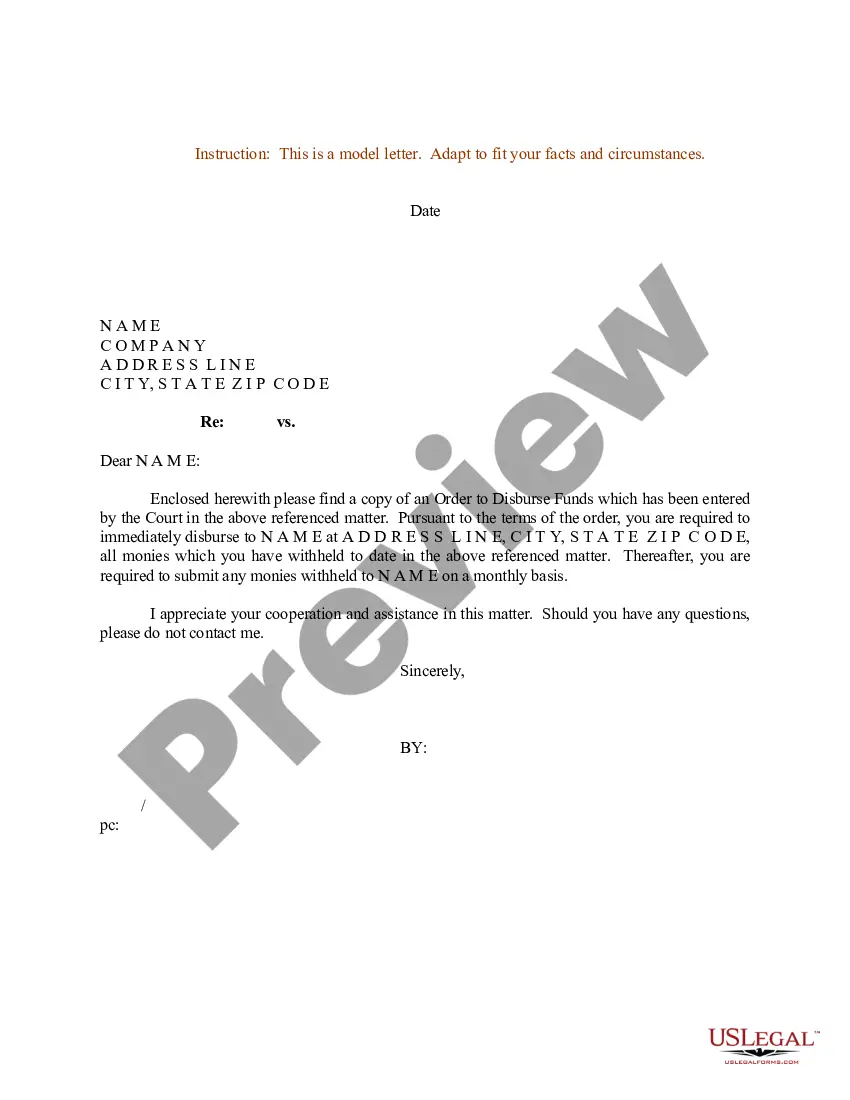
Letter With Money In Wake
Description
Get your form ready online
Our built-in tools help you complete, sign, share, and store your documents in one place.
Make edits, fill in missing information, and update formatting in US Legal Forms—just like you would in MS Word.
Download a copy, print it, send it by email, or mail it via USPS—whatever works best for your next step.
Sign and collect signatures with our SignNow integration. Send to multiple recipients, set reminders, and more. Go Premium to unlock E-Sign.
If this form requires notarization, complete it online through a secure video call—no need to meet a notary in person or wait for an appointment.
We protect your documents and personal data by following strict security and privacy standards.

Make edits, fill in missing information, and update formatting in US Legal Forms—just like you would in MS Word.

Download a copy, print it, send it by email, or mail it via USPS—whatever works best for your next step.

Sign and collect signatures with our SignNow integration. Send to multiple recipients, set reminders, and more. Go Premium to unlock E-Sign.

If this form requires notarization, complete it online through a secure video call—no need to meet a notary in person or wait for an appointment.

We protect your documents and personal data by following strict security and privacy standards.
Looking for another form?







Form popularity
FAQ
In most funeral practices, the gesture of sympathy is extended to the bereaved through giving of abuloy, it can be dropped in boxes, biscuit cans, or in a glass jar glassed near the coffin (Hays, 2017).
Flowers, sympathy cards, custom keepsakes, and donations are all appropriate gifts to bring to a funeral. While a gift is certainly not required, it can be a thoughtful way to communicate your love for those grieving. Flower and plant arrangements can often be sent to the funeral home prior to the service.
Here are some general guidelines: Close friends or family: $50 to $100 or more. Acquaintances or colleagues: $20 to $50. Ultimately, the gesture of support is what matters most, so choose an amount that feels right for you.
If you're addressing a sympathy card to a friend or relative, it's just like addressing a normal card or letter. In the center of the envelope, write the recipient's first and last name on the first line, followed by their street address on the second line, and their city, state, and zip code on the third line.
Generally no, it's an opportunity to bring a card if you wanted to and usually there'll be a basket to put it in, but no need to bring anything.
If you're trying to follow proper etiquette, it's best to send a note, gift or flowers within two weeks of the funeral. However, you can do it later, as long as you feel it would be helpful rather than painful. If you found out about the death too late to respond in a timely fashion, you can explain that in your note.
You should send the Sympathy Card to the closest relative of the person who has died (i.e. the widow or eldest child). In the case where you are familiar with the person grieving, but not the deceased themselves, you can address your Sympathy card to your acquaintance.
In most funeral practices, the gesture of sympathy is extended to the bereaved through giving of abuloy, it can be dropped in boxes, biscuit cans, or in a glass jar glassed near the coffin (Hays, 2017).
Instead merely start the final paragraph of the obituary with the words "Memorial donations may be made to" and then state the charity's name. If you wish, send the obituary to newspapers in other cities or towns where the deceased may have resided previously.
How to ask for funeral donations from friends and family. Keep the tone conversational while explaining why and how any donation for funeral expenses will help. Including an itemized list of expenses for the funeral service will help donors understand exactly how their donations will be used.
