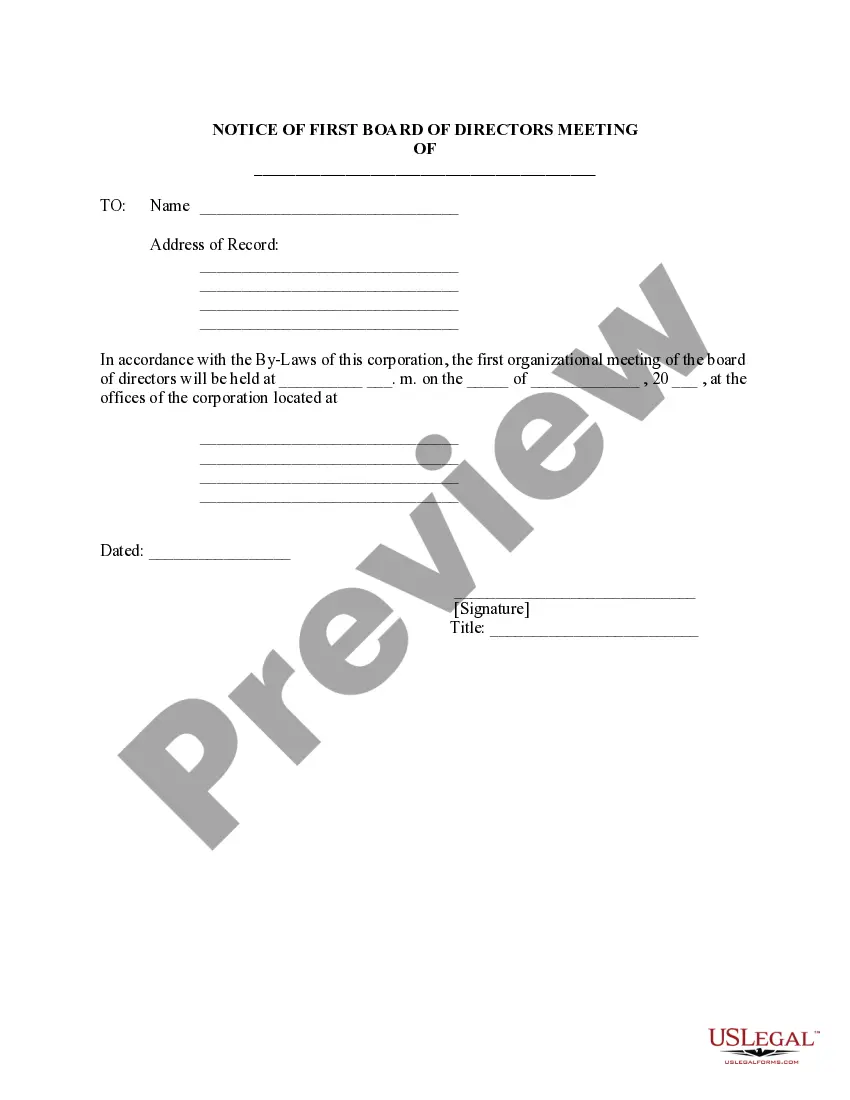
Notice Stockholders Meeting For Pta In Travis
Description


Get your form ready online
Our built-in tools help you complete, sign, share, and store your documents in one place.
Make edits, fill in missing information, and update formatting in US Legal Forms—just like you would in MS Word.
Download a copy, print it, send it by email, or mail it via USPS—whatever works best for your next step.
Sign and collect signatures with our SignNow integration. Send to multiple recipients, set reminders, and more. Go Premium to unlock E-Sign.
If this form requires notarization, complete it online through a secure video call—no need to meet a notary in person or wait for an appointment.
We protect your documents and personal data by following strict security and privacy standards.

Make edits, fill in missing information, and update formatting in US Legal Forms—just like you would in MS Word.

Download a copy, print it, send it by email, or mail it via USPS—whatever works best for your next step.

Sign and collect signatures with our SignNow integration. Send to multiple recipients, set reminders, and more. Go Premium to unlock E-Sign.

If this form requires notarization, complete it online through a secure video call—no need to meet a notary in person or wait for an appointment.

We protect your documents and personal data by following strict security and privacy standards.
Looking for another form?






Form popularity
FAQ
Shareholder is an ordinary person 1. A proxy form which is completely filled and signed by the proxy grantor and the proxy; and 2. A copy of valid ID card or passport certified true copy by the proxy grantor; and 3. A copy of valid ID card or passport certified true copy by the proxy.
Every shareholder is given the opportunity to vote and attend meetings, but it's not a requirement. Institutional investors or those with a large position in the company may attend and vote in person. Those who choose not to attend in person but still want to make their opinion known can vote by proxy.
Notification of the meeting's date and time will include a copy of the meeting's agenda, which is often centered around the election of members to the board of directors, approval of an accounting firm to review the company's financial records, and an opportunity to vote on any proposals that are put before the board, ...
Prepare copies of the meeting agenda and any relevant reports (financial statements, proxy statements, etc.) for attendees, either in physical form or through a secure online portal. Determine the voting method (electronic voting platform, paper ballots, etc.) and ensure everyone understands the process.
Notification to Shareholders Annual shareholder meetings require a notice period of at least 21 days. The notice period can be shortened with the expressed consent of all shareholders. The notice should include all the basic meeting details and other important pieces of documentation, such as the meeting agenda.
Key Takeaways Shareholders own either voting or non-voting stock, and that determines whether they can weigh in on big-picture issues the company is considering. Someone with voting stock has the right, but not the obligation, to vote on the company's board of directors or other business matters.
Notice. The notice of a meeting of shareholders must be sent to (i) each shareholder entitled to vote at the meeting; (ii) each director; and (iii) the auditor of the corporation. For privately held companies (non-public), notice must be sent not less than 10 days and not more than 50 days before the meeting.
While shareholders' meetings represent ownership, board meetings embody the company's leadership. The board of directors, acting as a bridge between management and shareholders, is responsible for making strategic decisions, overseeing management, and safeguarding the company's long-term interests.
