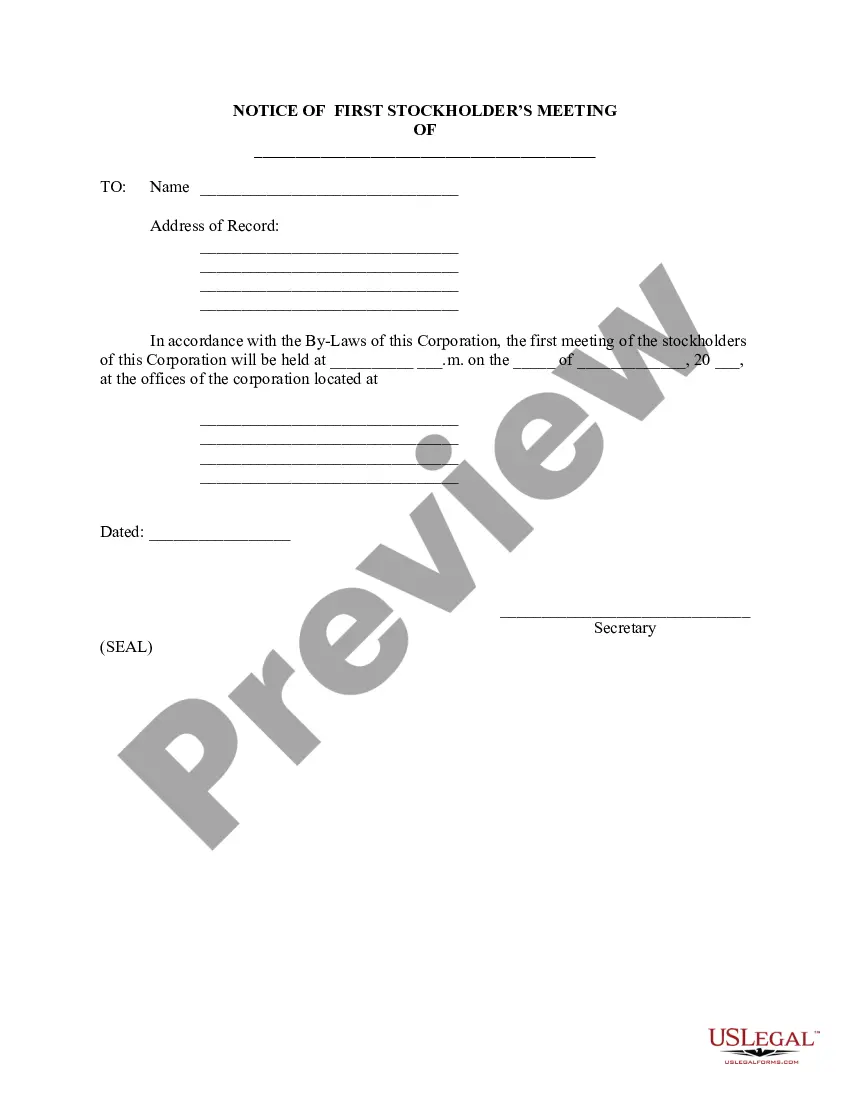
Notice Stockholders Meeting For Board In Minnesota
Description
Get your form ready online
Our built-in tools help you complete, sign, share, and store your documents in one place.
Make edits, fill in missing information, and update formatting in US Legal Forms—just like you would in MS Word.
Download a copy, print it, send it by email, or mail it via USPS—whatever works best for your next step.
Sign and collect signatures with our SignNow integration. Send to multiple recipients, set reminders, and more. Go Premium to unlock E-Sign.
If this form requires notarization, complete it online through a secure video call—no need to meet a notary in person or wait for an appointment.
We protect your documents and personal data by following strict security and privacy standards.

Make edits, fill in missing information, and update formatting in US Legal Forms—just like you would in MS Word.

Download a copy, print it, send it by email, or mail it via USPS—whatever works best for your next step.

Sign and collect signatures with our SignNow integration. Send to multiple recipients, set reminders, and more. Go Premium to unlock E-Sign.

If this form requires notarization, complete it online through a secure video call—no need to meet a notary in person or wait for an appointment.

We protect your documents and personal data by following strict security and privacy standards.
Looking for another form?

Form popularity
FAQ
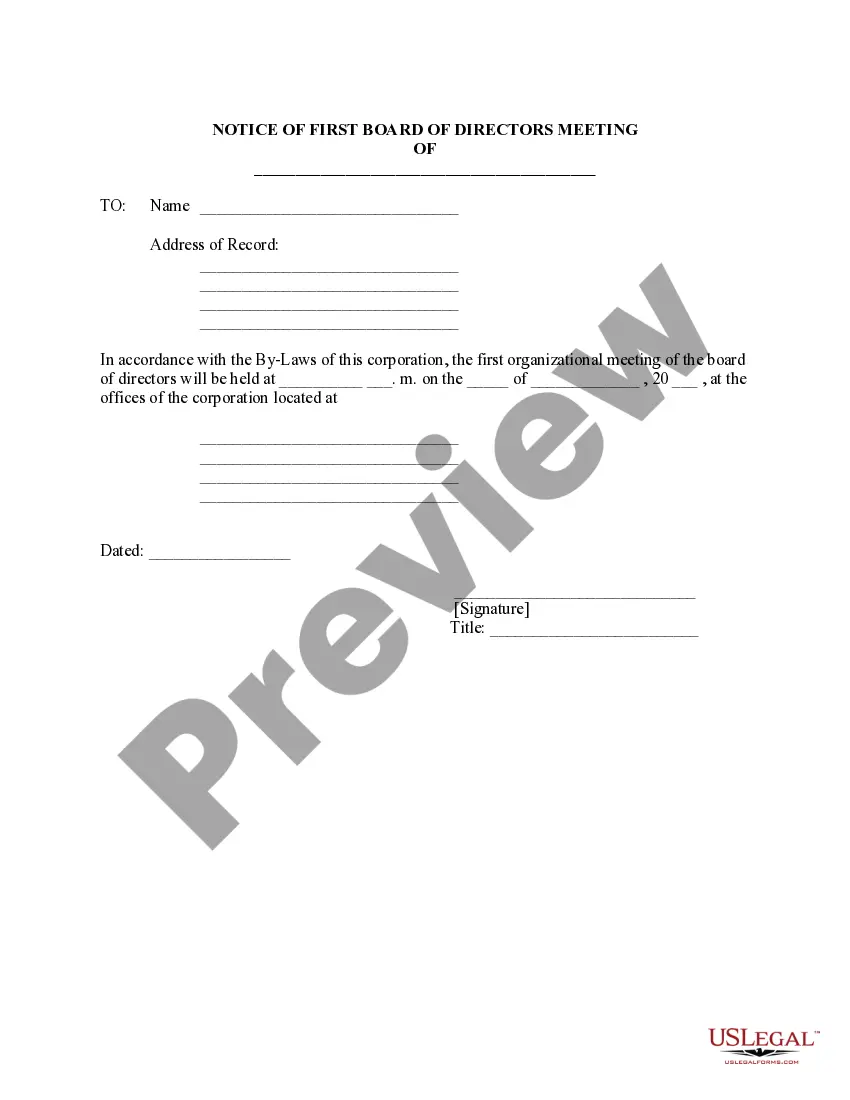
While shareholders' meetings represent ownership, board meetings embody the company's leadership. The board of directors, acting as a bridge between management and shareholders, is responsible for making strategic decisions, overseeing management, and safeguarding the company's long-term interests.
While shareholders' meetings represent ownership, board meetings embody the company's leadership. The board of directors, acting as a bridge between management and shareholders, is responsible for making strategic decisions, overseeing management, and safeguarding the company's long-term interests.
A company organizes a general meeting of shareholders to debate and resolve important business matters. Here are some key facts about general meetings. The general meeting is essential to a company's governance. It is the most important corporate event of the year for shareholders.
(a) initially, no more than 18 months after the company's date of incorporation; and. (b) thereafter, once in every calendar year, but no more than 15 months after the date of the previous annual general meeting, or within an extended time allowed by the Companies Tribunal, on good cause shown.
A general meeting can be called by the company directors or shareholders.
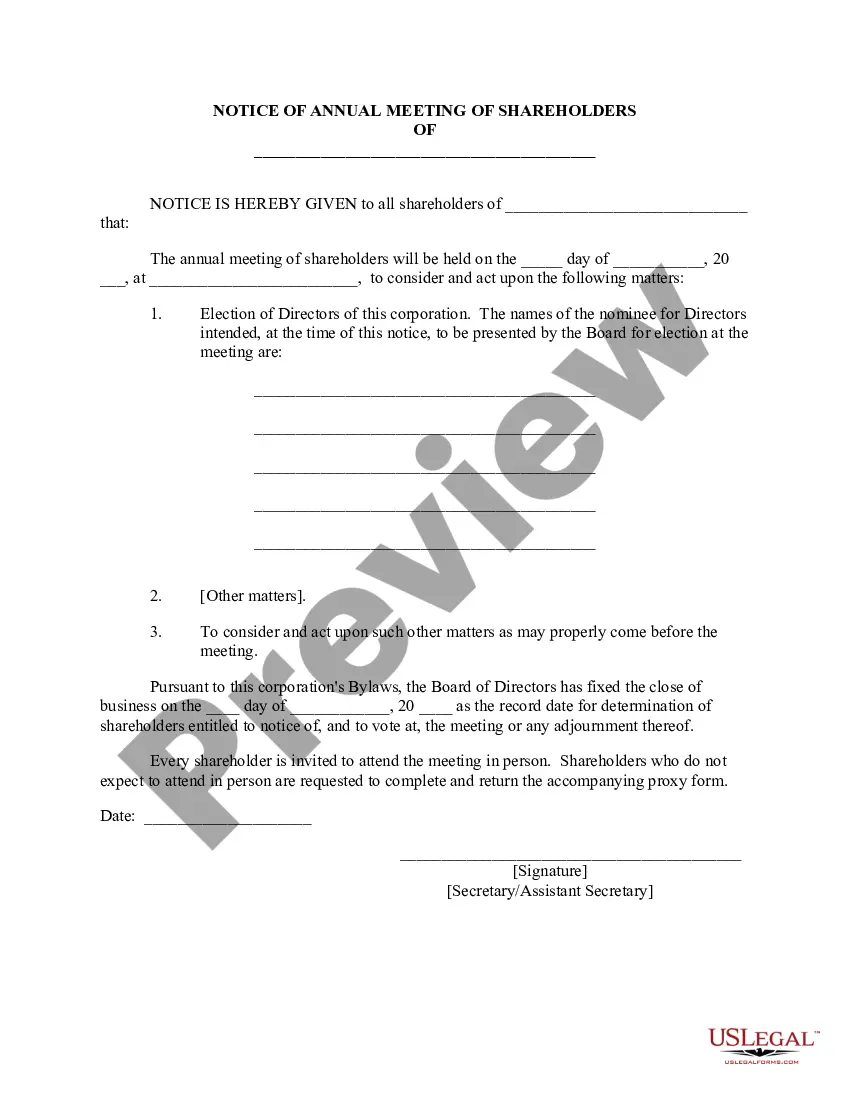
Notice Requirements for Shareholder Meetings This notice must specify the date, time, and location of the meeting and be delivered within a specific timeframe, typically no less than 10 days and no more than 60 days before the meeting.
Shareholder power depends on the level of ownership As such, a shareholder with only 10% of the voting rights and no influence over other shareholders would in practice have much less power over the company than its board of directors.
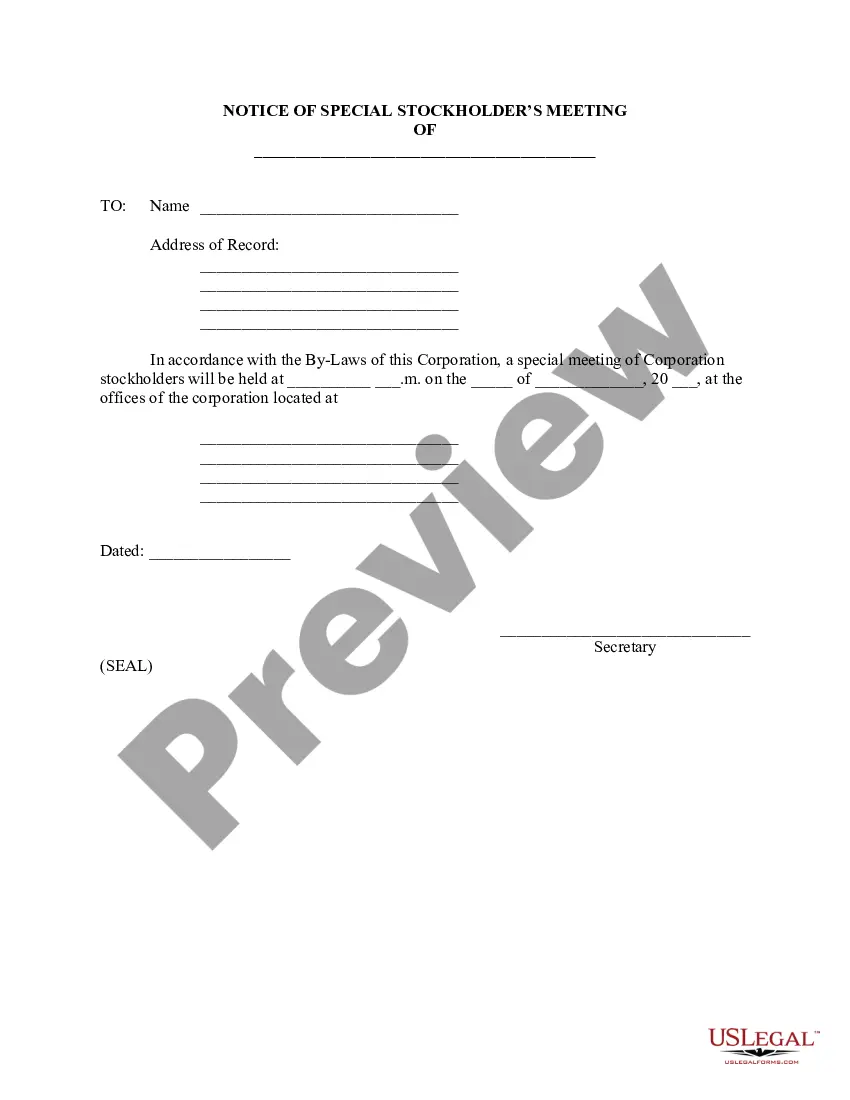
A corporation's bylaws or certificate of incorporation may allow the board, executives, or qualifying shareholders to call a special meeting. Notice requirements vary by state but often require 10–60 days' advance notice, with Delaware and California offering clear statutory guidelines.
(i) Date, time and place of meeting; (ii) Purpose of the meeting; (iii) Notice of any special business to be conducted; (iv) Nature of special business in sufficient details; (v) The text of any special resolution or by-law to be submitted to the meeting; and (vi) Any additional details required by the by-laws or ...
The posted notice must include the date, time, and place of the special meeting. The notice must also include the purpose of the meeting, so that what can be discussed or decided at the meeting is limited to that purpose.