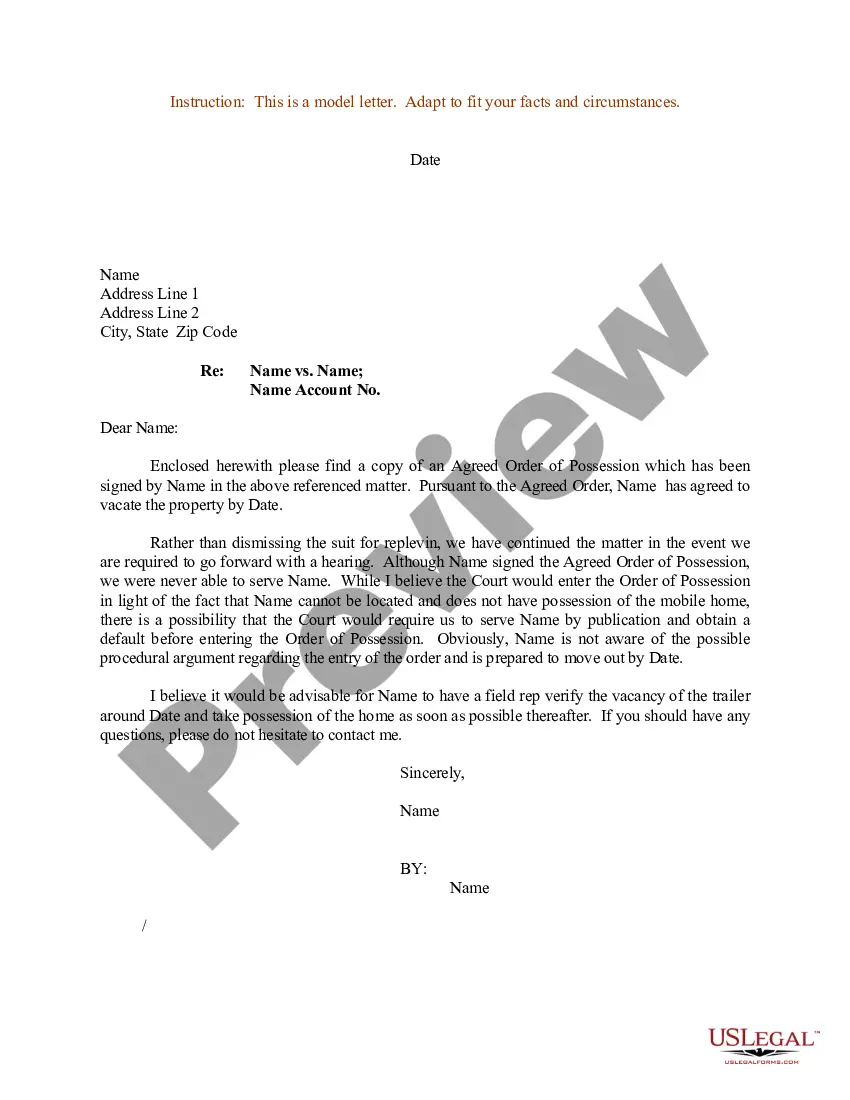
Court Letter Sample With Reason In Utah
Description



Get your form ready online
Our built-in tools help you complete, sign, share, and store your documents in one place.
Make edits, fill in missing information, and update formatting in US Legal Forms—just like you would in MS Word.
Download a copy, print it, send it by email, or mail it via USPS—whatever works best for your next step.
Sign and collect signatures with our SignNow integration. Send to multiple recipients, set reminders, and more. Go Premium to unlock E-Sign.
If this form requires notarization, complete it online through a secure video call—no need to meet a notary in person or wait for an appointment.
We protect your documents and personal data by following strict security and privacy standards.

Make edits, fill in missing information, and update formatting in US Legal Forms—just like you would in MS Word.

Download a copy, print it, send it by email, or mail it via USPS—whatever works best for your next step.

Sign and collect signatures with our SignNow integration. Send to multiple recipients, set reminders, and more. Go Premium to unlock E-Sign.

If this form requires notarization, complete it online through a secure video call—no need to meet a notary in person or wait for an appointment.

We protect your documents and personal data by following strict security and privacy standards.
Looking for another form?









Form popularity
FAQ
Under the My Court Case user agreement, My Court Case (sometimes called "MyCase) is an "electronic filing service provider" under Utah Rule of Civil Procedure 5(b)(3)(A).
Small claims court is worth it when you know you are deterring someone from potentially harming others the same way they harmed you. You may also want to help others determine whether to do business with that person or corporation in the future, as court decisions are part of the public record.
For more information, call us at 801.530. 7359.
You can also reach out to local legal entities. This could be the court's clerk office. Simply ask if there are any legal documents with your name on them that haven't been delivered yet. This is like calling customer service to check if they've dispatched that order you forgot you made.
A: It usually takes at least 45 days to get a judgment in Small Claims Court. The plaintiff files an affidavit with the court clerk. The clerk schedules a hearing and writes that date on the plaintiff's affidavit. Then the affidavit with that hearing date must be served on the defendant.
Rule 7 – Pleadings allowed (b) Motions and Other Papers. (1) In General. A request for a court order must be made by motion. The motion must: (A) be in writing unless made during a hearing or trial; (B) state with particularity the grounds for seeking the order; and (C) state the relief sought.
In some circumstances, you file a petition or a motion. The court has several complaint forms that you may use in drafting your complaint. The forms are available online and at the Pro Se Intake Unit. You may also write your own complaint without using a court form.
Rule 7B. - (b) Probable cause determination. If from the evidence the magistrate finds probable cause to believe that the crime charged has been committed and that the defendant has committed it, the magistrate must order that the defendant be bound over for trial.
Motion to enforce order and for sanctions.
(a) Pleadings. Only these pleadings are allowed: (1) a complaint; (2) an answer to a complaint; (3) an answer to a counterclaim designated as a counterclaim; (4) an answer to a crossclaim; (5) a third-party complaint; (6) an answer to a third-party complaint; and (7) if the court orders one, a reply to an answer.

