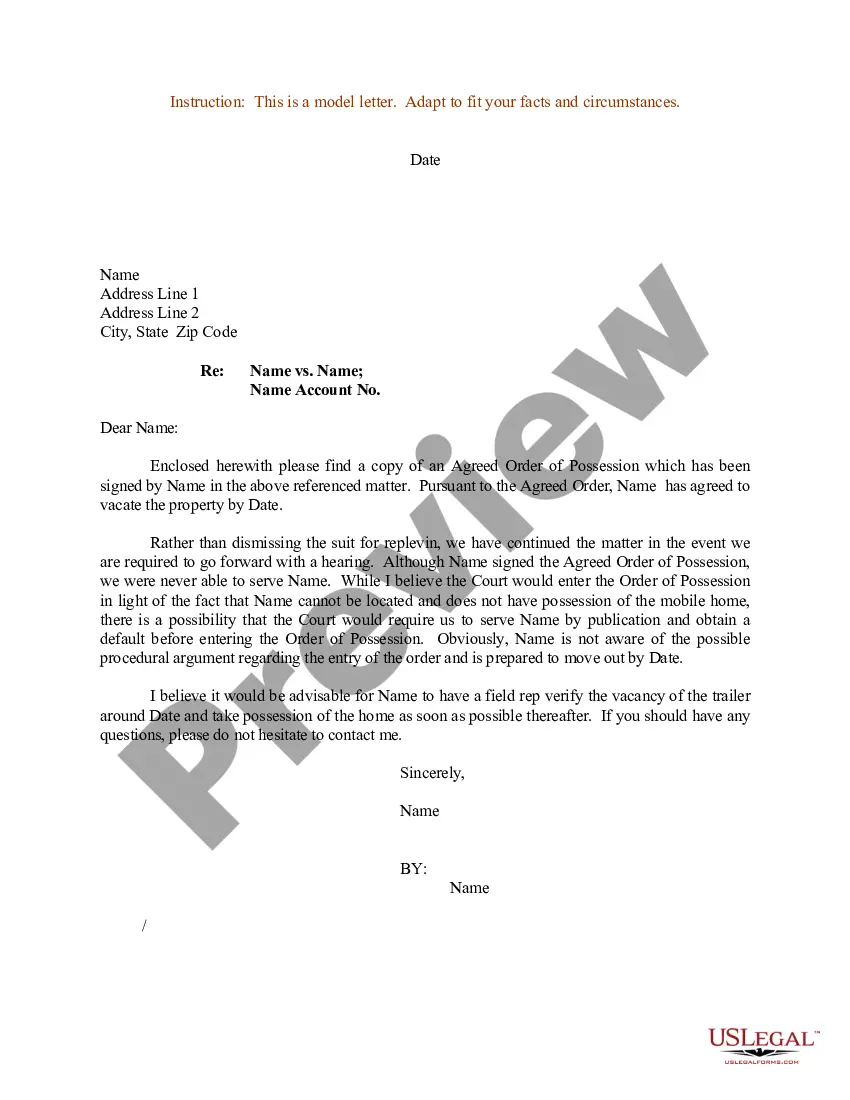
Court Letter Template With Address In Riverside
Description



Get your form ready online
Our built-in tools help you complete, sign, share, and store your documents in one place.
Make edits, fill in missing information, and update formatting in US Legal Forms—just like you would in MS Word.
Download a copy, print it, send it by email, or mail it via USPS—whatever works best for your next step.
Sign and collect signatures with our SignNow integration. Send to multiple recipients, set reminders, and more. Go Premium to unlock E-Sign.
If this form requires notarization, complete it online through a secure video call—no need to meet a notary in person or wait for an appointment.
We protect your documents and personal data by following strict security and privacy standards.

Make edits, fill in missing information, and update formatting in US Legal Forms—just like you would in MS Word.

Download a copy, print it, send it by email, or mail it via USPS—whatever works best for your next step.

Sign and collect signatures with our SignNow integration. Send to multiple recipients, set reminders, and more. Go Premium to unlock E-Sign.

If this form requires notarization, complete it online through a secure video call—no need to meet a notary in person or wait for an appointment.

We protect your documents and personal data by following strict security and privacy standards.
Looking for another form?
Form popularity
FAQ
Be polite and professional start your letter with a formal salutation. Such as dear clerk of courtsMoreBe polite and professional start your letter with a formal salutation. Such as dear clerk of courts or Dear Mr Ms Clerk's. Last name maintain a respectful tone throughout the letter 6.
Write the Salutation If you are addressing it to a member of the court staff, type "Dear Ms. Smith:" and include a colon after the person's name. If you are addressing the letter generally, type "Dear Clerk of Court:" and include a colon after the last word.
Magistrate Judges should have this title after their name (“The Honorable First M. Last, Magistrate Judge”). It will still be “Dear Judge Last” after that. Commissioners should also have this title after their name (“The Honorable First M.
Court clerks and deputy sheriffs should be addressed without the use of pronouns. Instead of “madam/Mr. deputy sheriff or court clerk”, they should be addressed as “deputy sheriff/sheriff or court clerk”.
Pursuant to Code of Civil Procedure §1010.6 and the California Rules of Court, rule 2.253(b)(2), the Civil Division of the Riverside Superior Court is implementing electronic filing (eFiling). You can eFile documents 24/7 through an approved Electronic Filing Service Provider (EFSP).
Start the body of your letter with enthusiasm for the position. Continue with an interesting statement about how your professional abilities closely match the prospective job. This is your opportunity to make a positive first impression and set yourself apart from other applicants with experience in the courtroom.
Be polite and professional start your letter with a formal salutation. Such as dear clerk of courtsMoreBe polite and professional start your letter with a formal salutation. Such as dear clerk of courts or Dear Mr Ms Clerk's. Last name maintain a respectful tone throughout the letter 6.
Follow the order of this format, leaving a space in between each section: Your Information (first thing that goes on the inside of the letter) Name. The Date. The Judge's Information. Honorable Judge First Name Last Name. What the Letter Is Going to Address. Salutation. Body. Signature.
Follow the order of this format, leaving a space in between each section: Your Information (first thing that goes on the inside of the letter) Name. The Date. The Judge's Information. Honorable Judge First Name Last Name. What the Letter Is Going to Address. Salutation. Body. Signature.
The best bet is, ``Your Honor'' and if they ask you a question (any lawyer, any officer of the court), always address your answer to the judge, so, answer ``Yes, sir'' or ``Yes, ma'am'' or ``Yes, Your Honor.'' Sounds archaic, but really, this formal address is showing respect for the authority of the judge.

