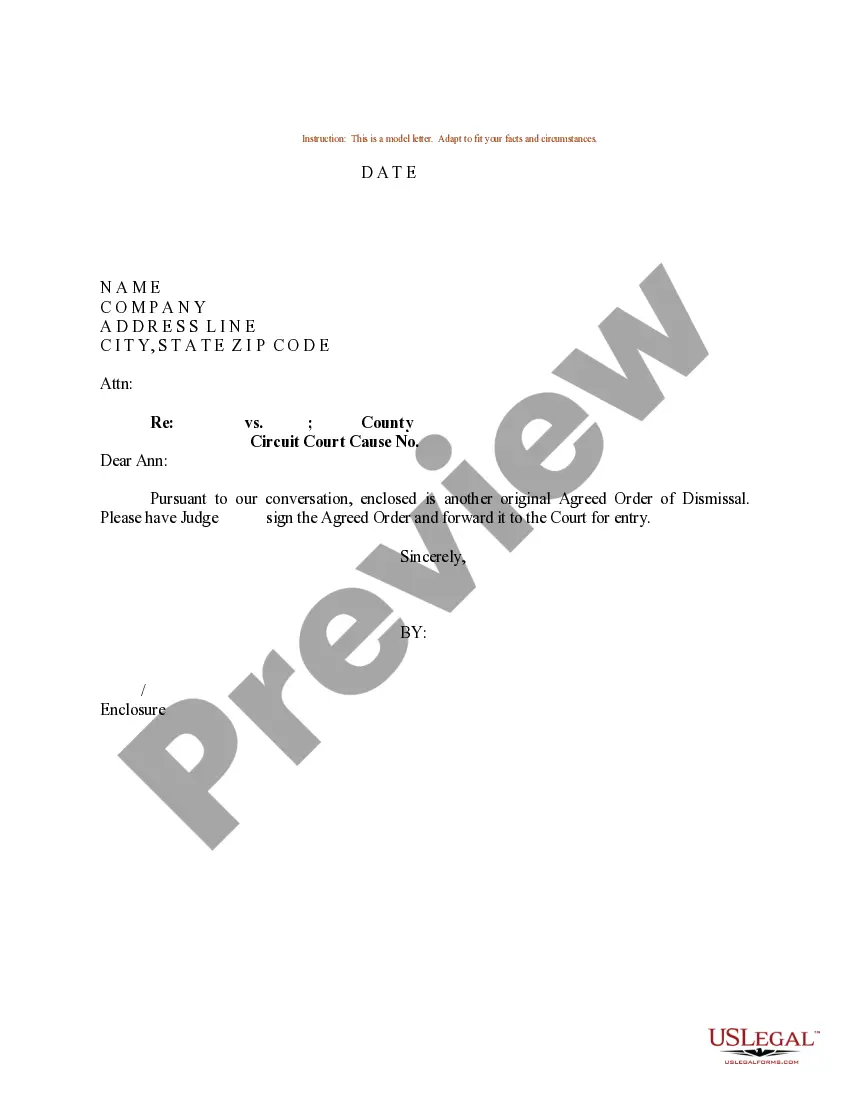
Court Letter Sample For School In Collin
Description


Get your form ready online
Our built-in tools help you complete, sign, share, and store your documents in one place.
Make edits, fill in missing information, and update formatting in US Legal Forms—just like you would in MS Word.
Download a copy, print it, send it by email, or mail it via USPS—whatever works best for your next step.
Sign and collect signatures with our SignNow integration. Send to multiple recipients, set reminders, and more. Go Premium to unlock E-Sign.
If this form requires notarization, complete it online through a secure video call—no need to meet a notary in person or wait for an appointment.
We protect your documents and personal data by following strict security and privacy standards.

Make edits, fill in missing information, and update formatting in US Legal Forms—just like you would in MS Word.

Download a copy, print it, send it by email, or mail it via USPS—whatever works best for your next step.

Sign and collect signatures with our SignNow integration. Send to multiple recipients, set reminders, and more. Go Premium to unlock E-Sign.

If this form requires notarization, complete it online through a secure video call—no need to meet a notary in person or wait for an appointment.

We protect your documents and personal data by following strict security and privacy standards.
Looking for another form?








Form popularity
FAQ
Introduce yourself in the opening paragraph. Outline your relationship with the person who is the subject of the legal proceedings. Acknowledge the charges that have been brought against the person. State your opinion of the person's general character.
7 Keys to drafting a strong statement of the case Accuracy. Accuracy is the cornerstone of a good statement of facts. Clarity. A good statement of facts and procedural history should be clear and easy to read. Chronological order. Relevant facts. Organization. Objectivity. Relevant citations.
Be sure to include the case name and case number on both the letter and the envelope. The salutation (opener) is either ``May it please the Court'' (preferred) or ``May it please Your Honour'' (``Your Honor'') -- this wording works for any jurisdiction in the world in a letter from a non-lawyer.
Drafting Legal Letters 1. Start by giving readers context so they immediately understand the letter's purpose. for example: “This letter addresses the impact of recent tax legislation changes on your estate planning.”
An Introduction: Attorney identifies themself (or not) ... A brief overview (story) of what the evidence will show. Presented from your side's perspective. A brief explanation of what has to be proved. Identify the witnesses. Tell what the key testimony of each witness will be. A conclusion.
The letter should be addressed to the Judge, but mailed to the defendant's attorney. Who are you? ... Make it personal when describing the defendant's characteristics. Only talk about what you know. Be truthful. Never attack the victims or law enforcement. Never allow the defendant to write the letter for you.
Open with a respectful greeting Regardless of the content of your letter, try to begin with a friendly and respectful greeting. Use the recipient's full name and open with a salutation such as “dear Miss. Adkins”, followed by “I hope this letter finds you well.”

