Meeting Annual Consider For Llc In Collin
Description


Get your form ready online
Our built-in tools help you complete, sign, share, and store your documents in one place.
Make edits, fill in missing information, and update formatting in US Legal Forms—just like you would in MS Word.
Download a copy, print it, send it by email, or mail it via USPS—whatever works best for your next step.
Sign and collect signatures with our SignNow integration. Send to multiple recipients, set reminders, and more. Go Premium to unlock E-Sign.
If this form requires notarization, complete it online through a secure video call—no need to meet a notary in person or wait for an appointment.
We protect your documents and personal data by following strict security and privacy standards.

Make edits, fill in missing information, and update formatting in US Legal Forms—just like you would in MS Word.

Download a copy, print it, send it by email, or mail it via USPS—whatever works best for your next step.

Sign and collect signatures with our SignNow integration. Send to multiple recipients, set reminders, and more. Go Premium to unlock E-Sign.

If this form requires notarization, complete it online through a secure video call—no need to meet a notary in person or wait for an appointment.

We protect your documents and personal data by following strict security and privacy standards.
Looking for another form?





Form popularity
FAQ
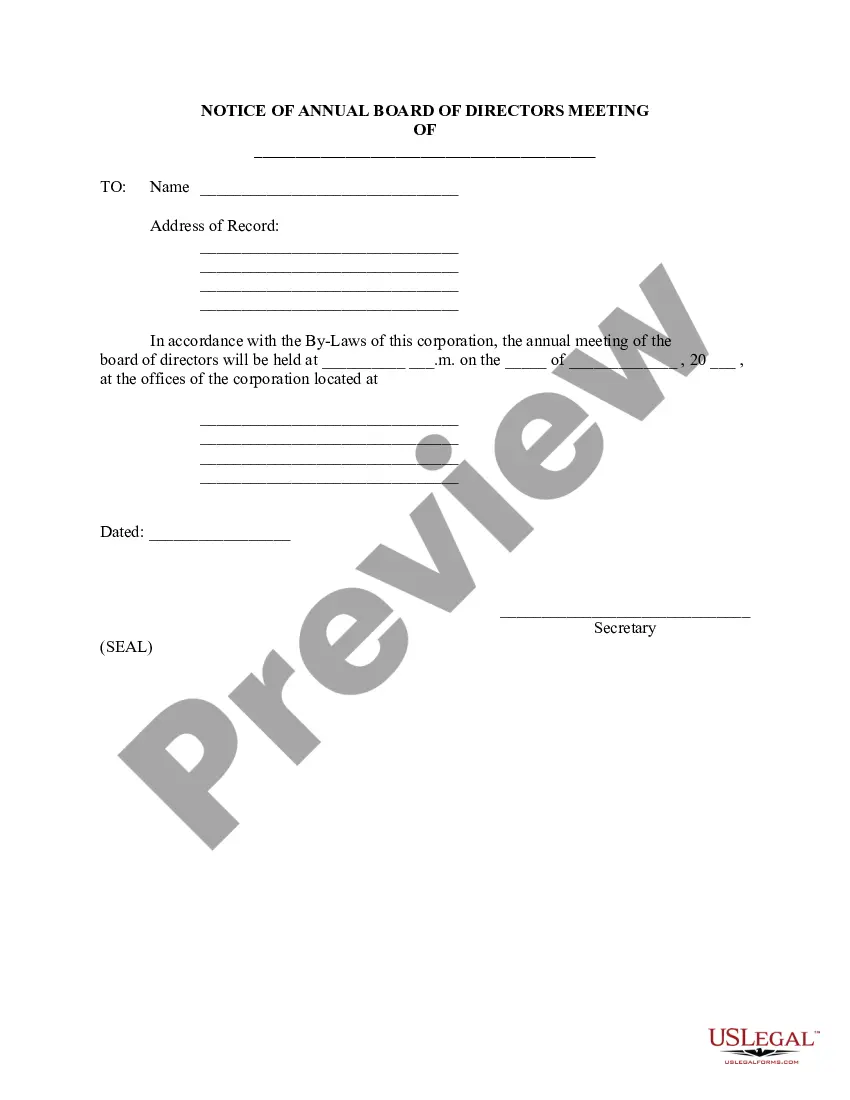
Member and Manager Meetings in Limited Liability Companies Unlike corporations, neither Texas nor Delaware law require LLCs to hold annual meetings or maintain minutes of meetings if they are held – this holds true for members and managers (FYI, LLCs don't always have managers).
Having an annual meeting and keeping a record of what was discussed helps validate that business owners are treating the limited liability company as a separate legal entity. That measure reinforces the corporate veil that protects LLC members' personal assets from the company's legal and financial liabilities.
Information captured in an LLC's annual meeting minutes usually includes: The meeting's date, time, and location. Who wrote the minutes. The names of the members in attendance. Brief description of the meeting agenda. Details about what the members discussed. Decisions made or voting actions taken.
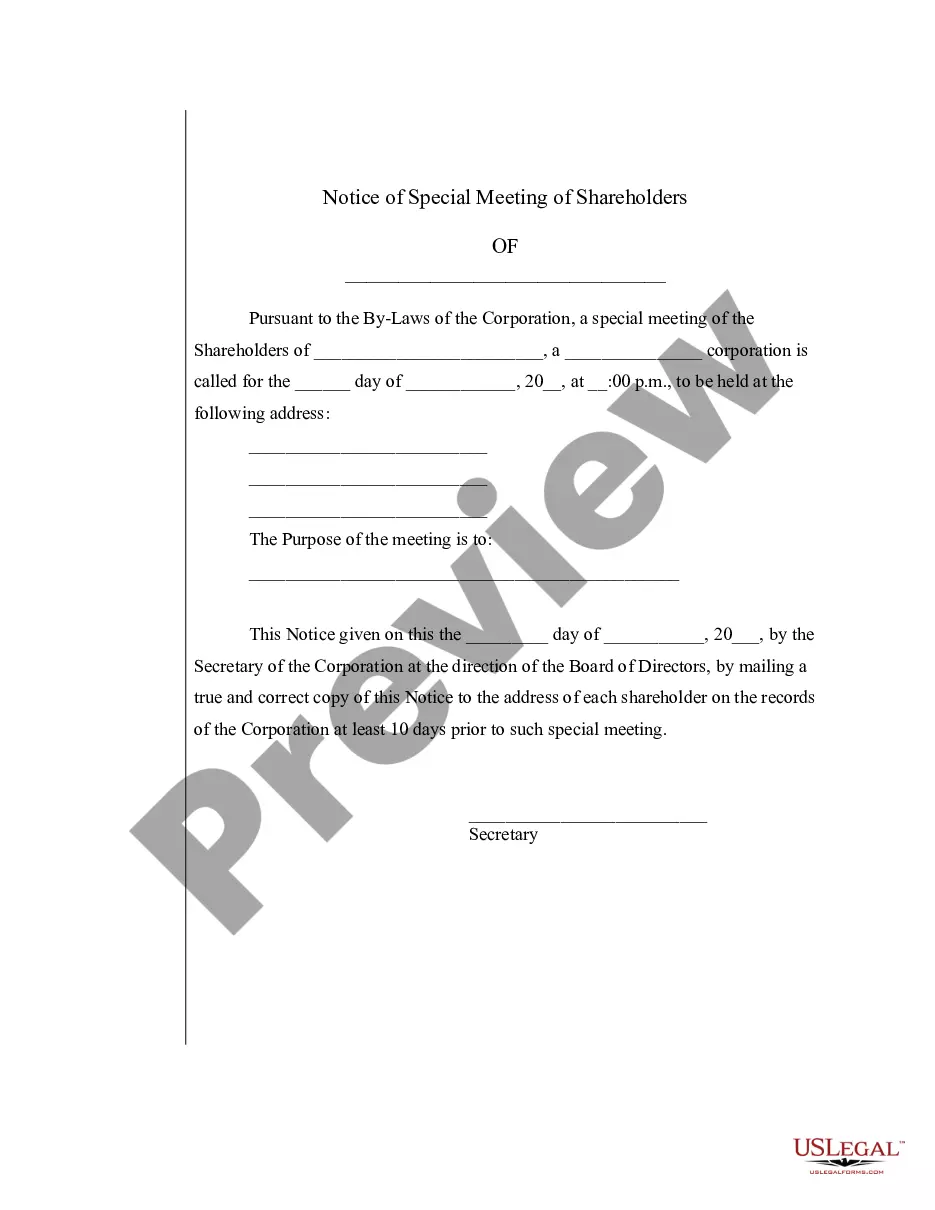
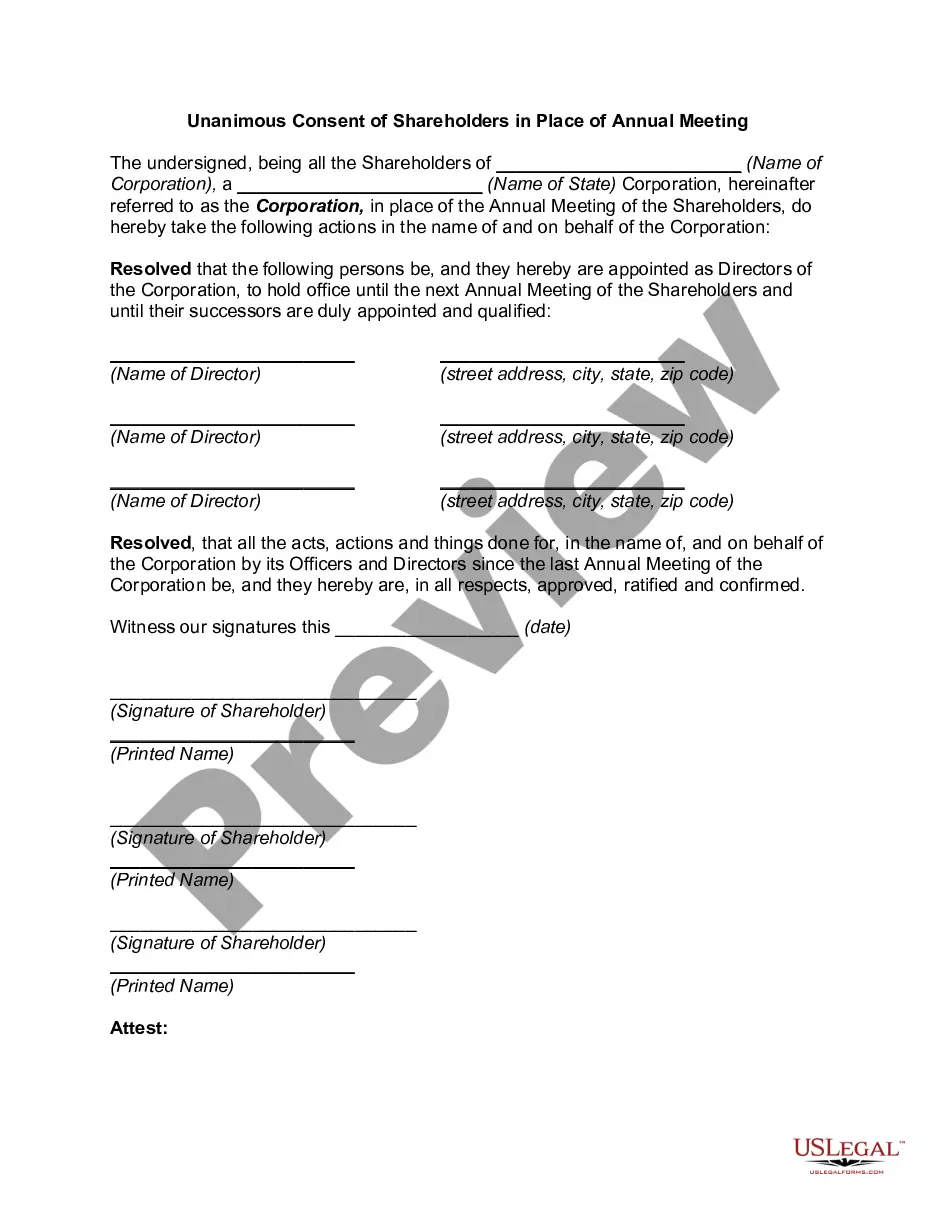
Most states require S-corporations and C-corporations to take meeting minutes whenever the company's shareholders or board of directors meet, usually once a year for shareholder's meetings and once a year for director's meetings. (Delaware, Kansas, Nevada, North Dakota, and Oklahoma don't require minutes.)
Other Items of Business: The template includes space to record any additional items of business conducted at the meeting. Signatures: Members sign the meeting minutes. The secretary who recorded the minutes also provides a final signature.
They provide a legal record of the meeting members' actions and decisions, and taking corporate minutes is also a legal and regulatory requirement. There are various laws regarding which types of meetings require minute-taking.
Write down your LLC's name, the date, and address where the meeting was held. Write down the names of the members and indicate who was present and who was absent at the meeting. And if there's other people who aren't members but are present at the meeting, write their names down as well.
Greeting: Start with a friendly welcome. - ``Good morning/afternoon, everyone!'' Introductions: If there are new participants, introduce them. - ``Let's go around the room and introduce ourselves.'' Purpose of the Meeting: Briefly state why you're meeting. Agenda Overview: Outline the agenda to set expectations.
12 Ways to Create a Successful Annual Company Meeting Throw away the template. Most meetings start with last year's agenda and script then update it. Know thy audience. Involve everyone. Keep it short. Tell stories. Avoid death by PowerPoint. Offer a takeaway. Acknowledge mistakes.

