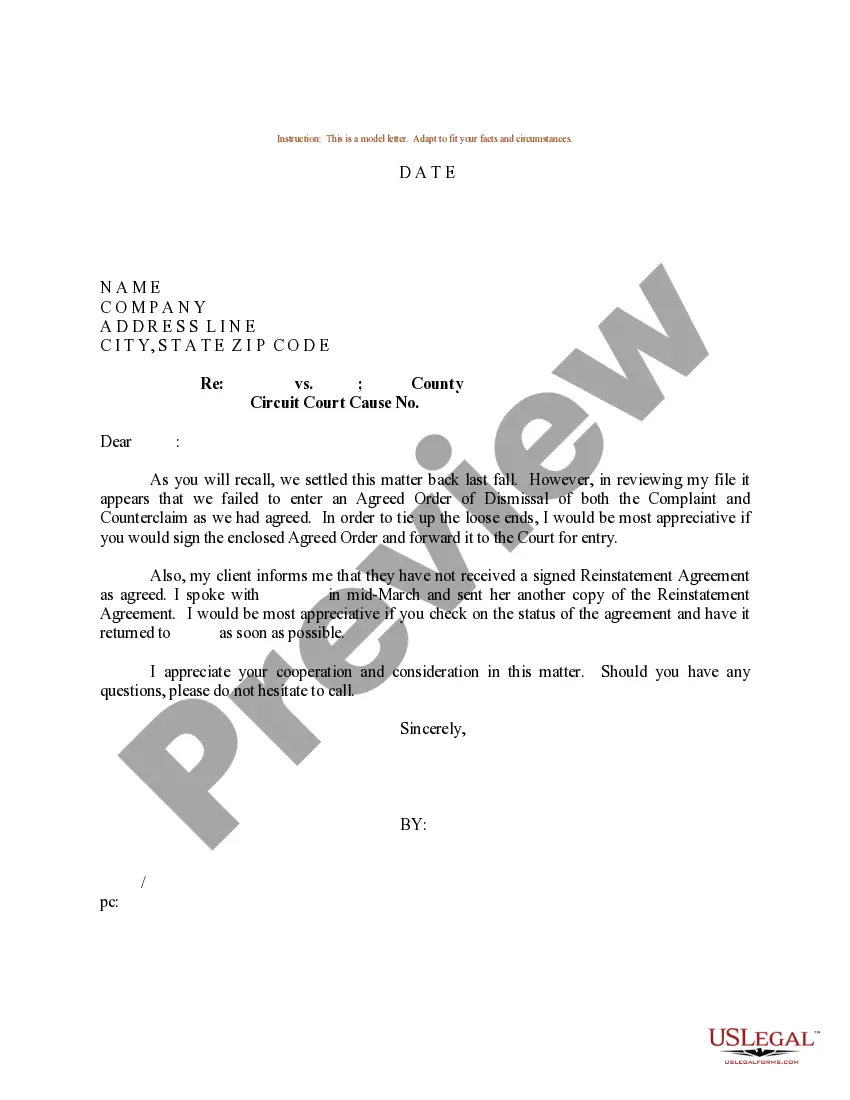
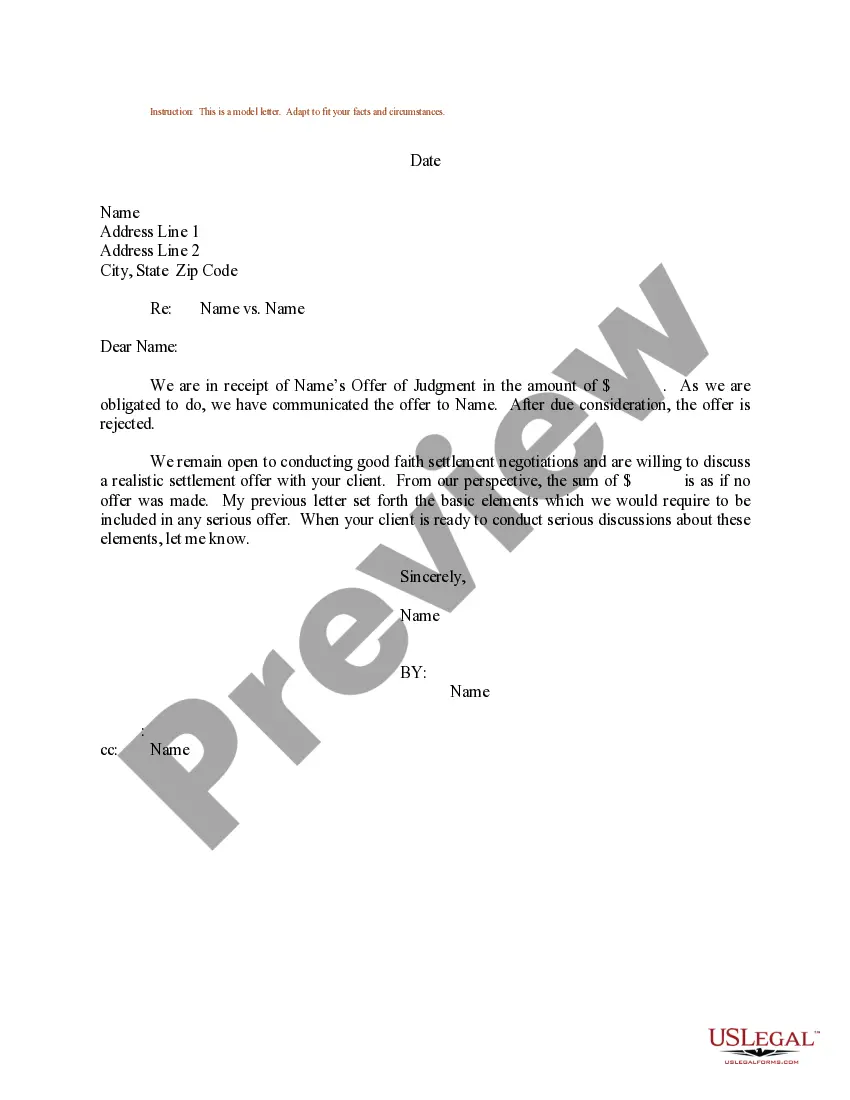
Settlement Offer Rejection Letter Sample For Collection Agency In Utah
Description

Get your form ready online
Our built-in tools help you complete, sign, share, and store your documents in one place.
Make edits, fill in missing information, and update formatting in US Legal Forms—just like you would in MS Word.
Download a copy, print it, send it by email, or mail it via USPS—whatever works best for your next step.
Sign and collect signatures with our SignNow integration. Send to multiple recipients, set reminders, and more. Go Premium to unlock E-Sign.
If this form requires notarization, complete it online through a secure video call—no need to meet a notary in person or wait for an appointment.
We protect your documents and personal data by following strict security and privacy standards.

Make edits, fill in missing information, and update formatting in US Legal Forms—just like you would in MS Word.

Download a copy, print it, send it by email, or mail it via USPS—whatever works best for your next step.

Sign and collect signatures with our SignNow integration. Send to multiple recipients, set reminders, and more. Go Premium to unlock E-Sign.

If this form requires notarization, complete it online through a secure video call—no need to meet a notary in person or wait for an appointment.

We protect your documents and personal data by following strict security and privacy standards.
Looking for another form?





Form popularity
FAQ
I am writing in response to the settlement offer you presented on Settlement Offer Date, related to claim number Claim Number for the incident that occurred on Incident Date. After careful consideration, I must reject this offer as it does not meet my needs based on the severity and ongoing nature of my injuries.
After careful consideration of my financial situation, I am offering to settle this debt for (Proposed Settlement Amount), which is (Specify the Percentage, eg, 50%) of the total outstanding balance. I believe this is a fair and reasonable offer given my circumstances.
What Percentage Should I Offer to Settle Debt? Some collectors want 75%–80% of what you owe. Others will take 50%, while others might settle for one-third or less. So, it makes sense to start low with your first offer and see what happens.
However, refusing a settlement offer does extend the life of your claim and delays when you receive compensation. If you have pressing medical bills or other expenses, this is a factor to consider. You'll also need to invest more time and energy into your case, including providing more documentation of your damages.
Be sure you send your letter to the appropriate person, whether that be an insurance adjuster or an attorney. Make it clear that you are rejecting their initial offer and include your reasons for doing so. If they provided written reasons for their low initial figure, you should also respond to those in writing.
Extended Claims Process: Declining an offer can lengthen the resolution process, which may be challenging if immediate financial needs are pressing. Possible Legal Action: If negotiations don't yield a satisfactory offer, a lawsuit may become necessary, requiring additional time and resources.
Be sure you send your letter to the appropriate person, whether that be an insurance adjuster or an attorney. Make it clear that you are rejecting their initial offer and include your reasons for doing so. If they provided written reasons for their low initial figure, you should also respond to those in writing.
Within the letter, you can indicate that you reject the offer and highlight why you deserve a higher settlement amount. You should also counter their reasons for offering the lowball initial offer. Your explanation behind these reasons can be critical in getting a better second offer from the claims adjuster.
