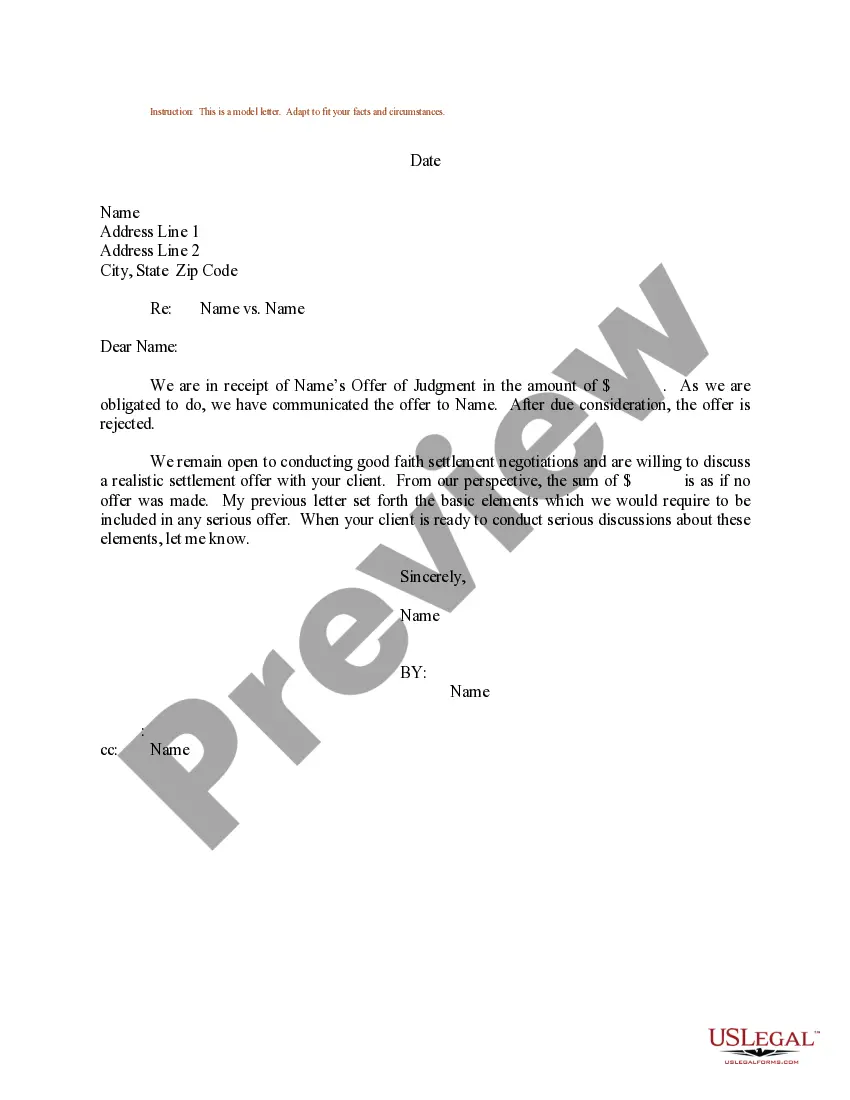
Settlement Offer Rejection Letter Sample For Collection Agency In San Diego
Description


Get your form ready online
Our built-in tools help you complete, sign, share, and store your documents in one place.
Make edits, fill in missing information, and update formatting in US Legal Forms—just like you would in MS Word.
Download a copy, print it, send it by email, or mail it via USPS—whatever works best for your next step.
Sign and collect signatures with our SignNow integration. Send to multiple recipients, set reminders, and more. Go Premium to unlock E-Sign.
If this form requires notarization, complete it online through a secure video call—no need to meet a notary in person or wait for an appointment.
We protect your documents and personal data by following strict security and privacy standards.

Make edits, fill in missing information, and update formatting in US Legal Forms—just like you would in MS Word.

Download a copy, print it, send it by email, or mail it via USPS—whatever works best for your next step.

Sign and collect signatures with our SignNow integration. Send to multiple recipients, set reminders, and more. Go Premium to unlock E-Sign.

If this form requires notarization, complete it online through a secure video call—no need to meet a notary in person or wait for an appointment.

We protect your documents and personal data by following strict security and privacy standards.
Looking for another form?
Form popularity
FAQ
If you're behind on a large balance and try to send a smaller payment, the debt collector might reject it. That's especially true if the agency handling your debt has a policy against accepting anything less than a full payoff.
Debt collectors cannot harass or abuse you. They cannot swear, threaten to illegally harm you or your property, threaten you with illegal actions, or falsely threaten you with actions they do not intend to take.
Your creditors do not have to accept your offer of payment or freeze interest. If they continue to refuse what you are asking for, carry on making the payments you have offered anyway. Keep trying to persuade your creditors by writing to them again.
name of claims adjuster, I received your letter dated date of written settlement offer. I have reviewed your letter very carefully, including your settlement offer. Unfortunately, I cannot accept your offer for the reasons discussed below.
Negotiating with debt collectors is a four-step process. Verify the legitimacy of both the debt and the collector. Review your finances and choose your most affordable payment option. Negotiate with the debt collector. Get agreements in writing.
Always reject a settlement offer in writing. Type a letter to your contact at the insurance company listing the reasons you think that their offer is too low. Back up these reasons with concrete evidence attached to the letter. Finally, provide a counteroffer of a sum you think is more reasonable.
Before you suggest a lump-sum amount, determine the maximum amount you can afford and don't budge. Start with a low offer, such as 25% of the debt you owe, and work toward a middle ground. Your debt collector may accept a lump—sum repayment amount between 25% and 50% of the full debt, but that is no guarantee.
This letter should clearly state the reasons for rejecting the offer, such as it not providing maximum compensation for the damages incurred. Provide specific reasons for your rejection, highlighting the damages and losses not covered by the proposed settlement.
Your settlement letter should begin with a heading that clearly identifies it as a settlement proposal. Be sure to include your contact information, such as your name, address and phone number so that the recipient can get in touch with you if necessary.
Tip for Drafting an Effective Settlement Letter Be concise. Your letter might be 20-30 pages long if your claim is complex. Be organized. Reread your letter to make sure you haven't said anything that the opposing party can twist around to use against you. Be polite and professional.

