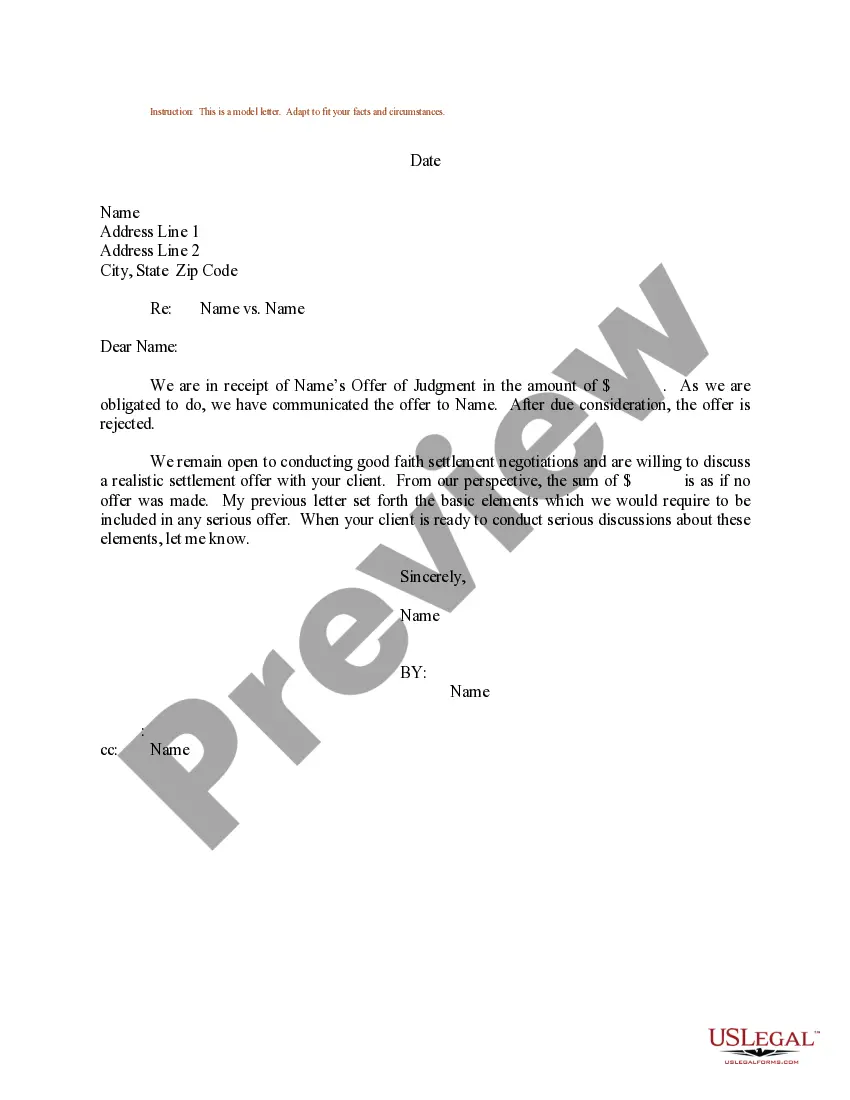
Sample Letter Rejecting Settlement Offer Without Prejudice Template In North Carolina
Description


Get your form ready online
Our built-in tools help you complete, sign, share, and store your documents in one place.
Make edits, fill in missing information, and update formatting in US Legal Forms—just like you would in MS Word.
Download a copy, print it, send it by email, or mail it via USPS—whatever works best for your next step.
Sign and collect signatures with our SignNow integration. Send to multiple recipients, set reminders, and more. Go Premium to unlock E-Sign.
If this form requires notarization, complete it online through a secure video call—no need to meet a notary in person or wait for an appointment.
We protect your documents and personal data by following strict security and privacy standards.

Make edits, fill in missing information, and update formatting in US Legal Forms—just like you would in MS Word.

Download a copy, print it, send it by email, or mail it via USPS—whatever works best for your next step.

Sign and collect signatures with our SignNow integration. Send to multiple recipients, set reminders, and more. Go Premium to unlock E-Sign.

If this form requires notarization, complete it online through a secure video call—no need to meet a notary in person or wait for an appointment.

We protect your documents and personal data by following strict security and privacy standards.
Looking for another form?








Form popularity
FAQ
Countering a Low Insurance Settlement Offer State that the offer you received is unacceptable. Refute any statements in the adjustor's letter that are inaccurate and damaging to your claim. Re-state an acceptable figure. Explain why your counteroffer is appropriate, including the reasons behind your general damage demands.
If you disagree with the offer, you can decline it. However, rejecting a settlement offer isn't as simple as saying, “Sorry, I won't accept it.” Instead, before rejecting a settlement offer, it's important to think through this decision.
Possible Legal Action: If negotiations don't yield a satisfactory offer, a lawsuit may become necessary, requiring additional time and resources. Risk of Lower Final Settlement: In some cases, litigation may lead to a settlement lower than the initial offer, depending on the court's decision.
A significant misconception needs addressing: you can't overturn a settlement agreement simply because you've changed your mind or found a better deal. The grounds for challenging these agreements are specific and limited: Fraud or misrepresentation. Actual duress or coercion.
Possible Legal Action: If negotiations don't yield a satisfactory offer, a lawsuit may become necessary, requiring additional time and resources. Risk of Lower Final Settlement: In some cases, litigation may lead to a settlement lower than the initial offer, depending on the court's decision.
Your letter in response to a settlement offer 1) In your introduction, start by saying that you are surprised and a little hurt that your employer wishes to terminate your employment. Then state how hard you have worked and how much your job means to you. This will elicit sympathy and create goodwill.
Initial lowball offers from insurers can be upsetting, considering the injuries and losses incurred. Fortunately, you can counter the settlement offer with your own offer to settle for fair compensation.
I am writing in response to the settlement offer you presented on Settlement Offer Date, related to claim number Claim Number for the incident that occurred on Incident Date. After careful consideration, I must reject this offer as it does not meet my needs based on the severity and ongoing nature of my injuries.

