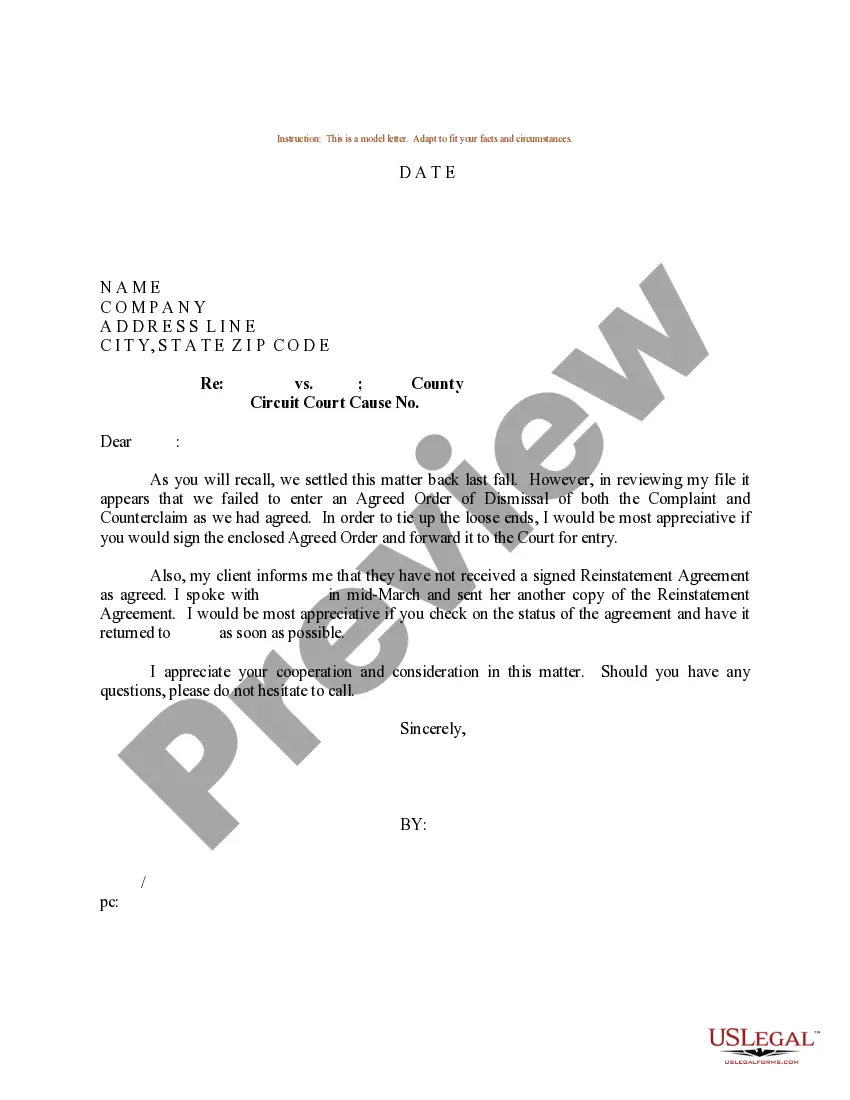
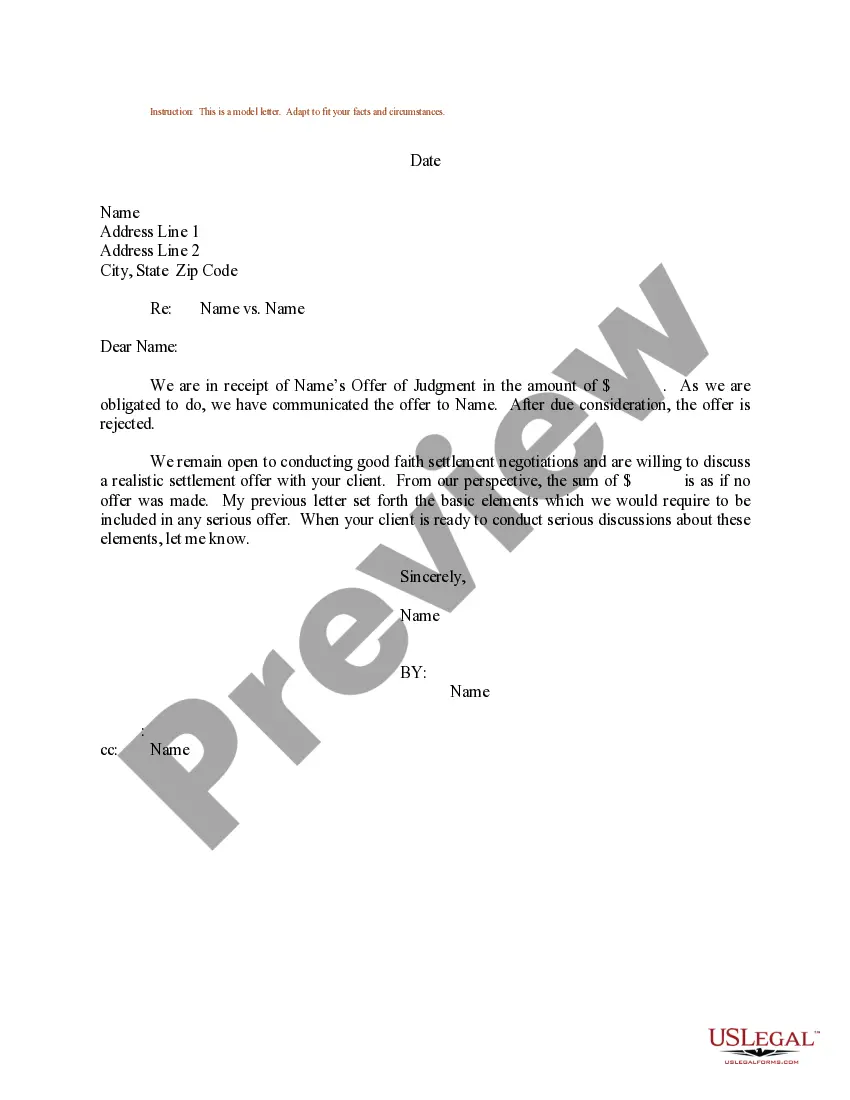
Sample Settlement Letter Without Prejudice In Nevada
Description

Get your form ready online
Our built-in tools help you complete, sign, share, and store your documents in one place.
Make edits, fill in missing information, and update formatting in US Legal Forms—just like you would in MS Word.
Download a copy, print it, send it by email, or mail it via USPS—whatever works best for your next step.
Sign and collect signatures with our SignNow integration. Send to multiple recipients, set reminders, and more. Go Premium to unlock E-Sign.
If this form requires notarization, complete it online through a secure video call—no need to meet a notary in person or wait for an appointment.
We protect your documents and personal data by following strict security and privacy standards.

Make edits, fill in missing information, and update formatting in US Legal Forms—just like you would in MS Word.

Download a copy, print it, send it by email, or mail it via USPS—whatever works best for your next step.

Sign and collect signatures with our SignNow integration. Send to multiple recipients, set reminders, and more. Go Premium to unlock E-Sign.

If this form requires notarization, complete it online through a secure video call—no need to meet a notary in person or wait for an appointment.

We protect your documents and personal data by following strict security and privacy standards.
Looking for another form?




Form popularity
FAQ
Within 14 days after the service of the motion, the opposing party shall serve and file a written opposition thereto, together with a memorandum of points and authorities and supporting affidavits, if any, stating facts showing why the motion should be denied.
FRCP 26(f)(2) requires the parties to do five things at the meet and confer: (a) consider the nature and basis of their claims and defenses; (b) consider the possibilities for promptly settling or resolving the case; (c) make or arrange for the disclosures required by FRCP 26(a)(1); (d) discuss any issues about ...
Service by mail: Some documents can be served via certified mail with a return receipt requested. The recipient must sign for the mail, confirming receipt of the documents.
The court may, for good cause, issue an order to protect a party or person from annoyance, embarrassment, oppression, or undue burden or expense, including one or more of the following: (A) forbidding the disclosure or discovery; (B) specifying terms, including time and place or the allocation of expenses, for the ...
Rule 27 - Depositions to Perpetuate Testimony (a)Before an Action Is Filed (1)Petition. A person who wants to perpetuate testimony- including his or her own-about any matter cognizable in any court within the United States may file a verified petition in district court.
If a nonmovant shows by affidavit or declaration that, for specified reasons, it cannot present facts essential to justify its opposition, the court may: (1) defer considering the motion or deny it; (2) allow time to obtain affidavits or declarations or to take discovery; or (3) issue any other appropriate order.
(A) In General. A party must disclose to the other parties the identity of any witness it may use at trial to present expert testimony. (B) Witnesses Who Must Provide a Written Report. Unless otherwise stipulated or. ordered by the court, this disclosure must be accompanied by a written report if the.
A Rule 26(f) conference is intended to help lay a strong foundation for a productive discovery plan.
Yes, a process server in Nevada can leave papers at a person's door if they cannot personally serve the individual. The documents can be left with anyone at the residence over 18 or at the front door if no one is available.
Overview Step 1: Calculate your deadline to respond. Step 2: Evaluate your options. Step 3: Prepare a response. Step 4: File your response with the court. Step 5: Give plaintiff a copy of your response. Step 6: Know what to expect next.

