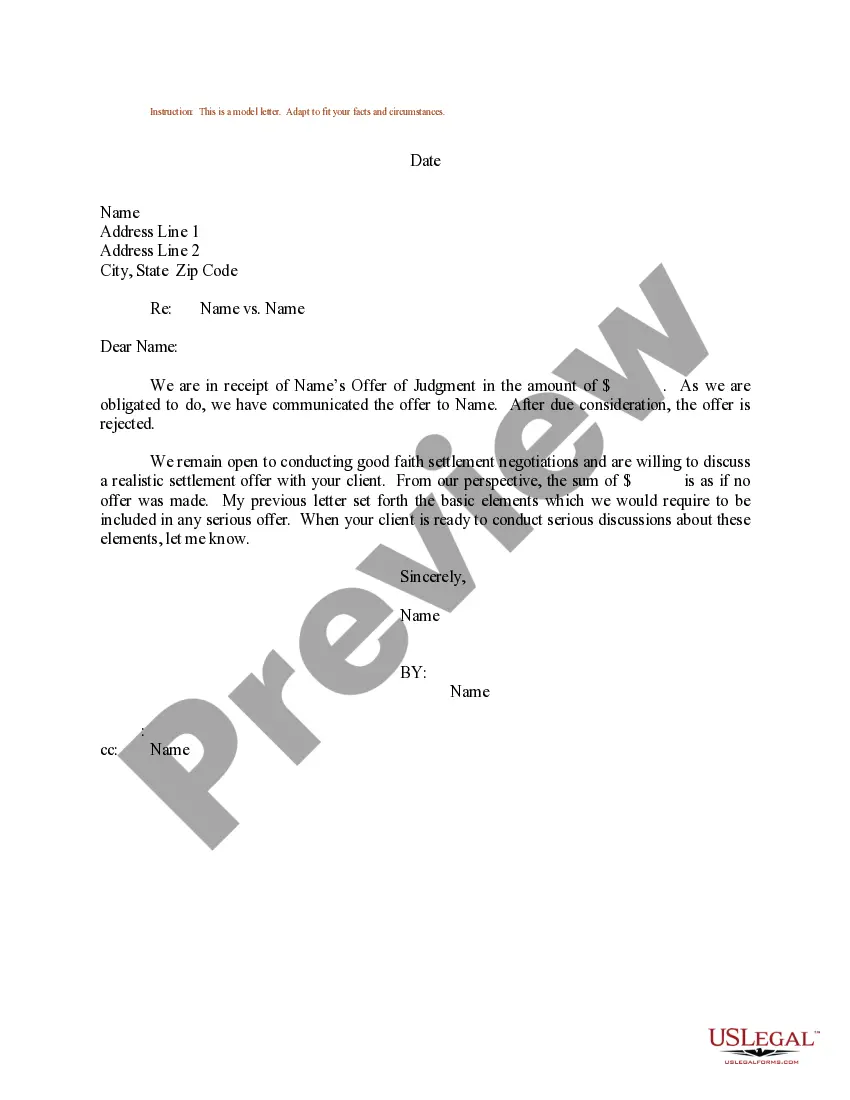
Settlement Offer Rejection Letter Sample With No Response In Hennepin
Description


Get your form ready online
Our built-in tools help you complete, sign, share, and store your documents in one place.
Make edits, fill in missing information, and update formatting in US Legal Forms—just like you would in MS Word.
Download a copy, print it, send it by email, or mail it via USPS—whatever works best for your next step.
Sign and collect signatures with our SignNow integration. Send to multiple recipients, set reminders, and more. Go Premium to unlock E-Sign.
If this form requires notarization, complete it online through a secure video call—no need to meet a notary in person or wait for an appointment.
We protect your documents and personal data by following strict security and privacy standards.

Make edits, fill in missing information, and update formatting in US Legal Forms—just like you would in MS Word.

Download a copy, print it, send it by email, or mail it via USPS—whatever works best for your next step.

Sign and collect signatures with our SignNow integration. Send to multiple recipients, set reminders, and more. Go Premium to unlock E-Sign.

If this form requires notarization, complete it online through a secure video call—no need to meet a notary in person or wait for an appointment.

We protect your documents and personal data by following strict security and privacy standards.
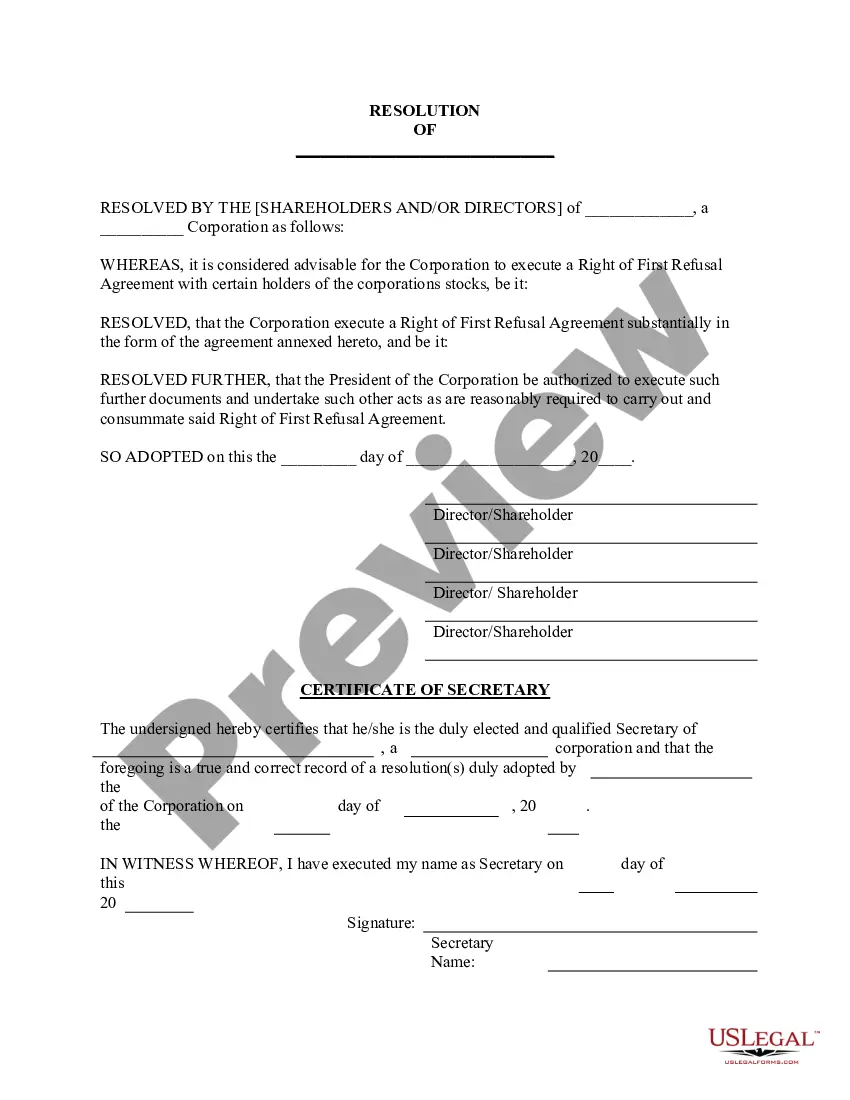
Looking for another form?







Form popularity
FAQ
name of claims adjuster, I received your letter dated date of written settlement offer. I have reviewed your letter very carefully, including your settlement offer. Unfortunately, I cannot accept your offer for the reasons discussed below.
Possible Legal Action: If negotiations don't yield a satisfactory offer, a lawsuit may become necessary, requiring additional time and resources. Risk of Lower Final Settlement: In some cases, litigation may lead to a settlement lower than the initial offer, depending on the court's decision.
The timeline for receiving a settlement response to a demand letter can vary depending on several factors. In some cases, you may receive a response within a few weeks, while in others, it may take several months. Insurance companies need time to review your claim, gather evidence, and assess liability.
There is usually no standard deadline for accepting a settlement offer from an insurance company. However, some written settlement offers may include an expiration date. While you should never rush to accept a settlement offer, you need to know all of the applicable deadlines.
How Should I Respond to a Low Settlement Offer? Try to remain calm and examine the offer. After receiving a low settlement offer, the most important thing to do is to stay calm. Provide a formal, written response. Formulate your counteroffer. Settle after you've recovered.
This letter should clearly state the reasons for rejecting the offer, such as it not providing maximum compensation for the damages incurred. Provide specific reasons for your rejection, highlighting the damages and losses not covered by the proposed settlement.
If you find the offer unacceptable, your attorney can draft a formal letter and propose a counteroffer. This letter should clearly state that the initial offer is unacceptable and refute any inaccuracies in the insurance adjuster's statements.
You can choose to decline your employer's health insurance, but make sure to carefully evaluate your budget and alternative options before making a decision. Individual health plans can be significantly more expensive than employer-sponsored coverage, especially if your employer contributes to premiums.
In a claim refusal letter, begin with a statement of appreciation, common ground, or understanding; provide a concise and factual explanation; and end in a friendly and confident way. Remember to use the indirect approach.
However, refusing a settlement offer does extend the life of your claim and delays when you receive compensation. If you have pressing medical bills or other expenses, this is a factor to consider. You'll also need to invest more time and energy into your case, including providing more documentation of your damages.

