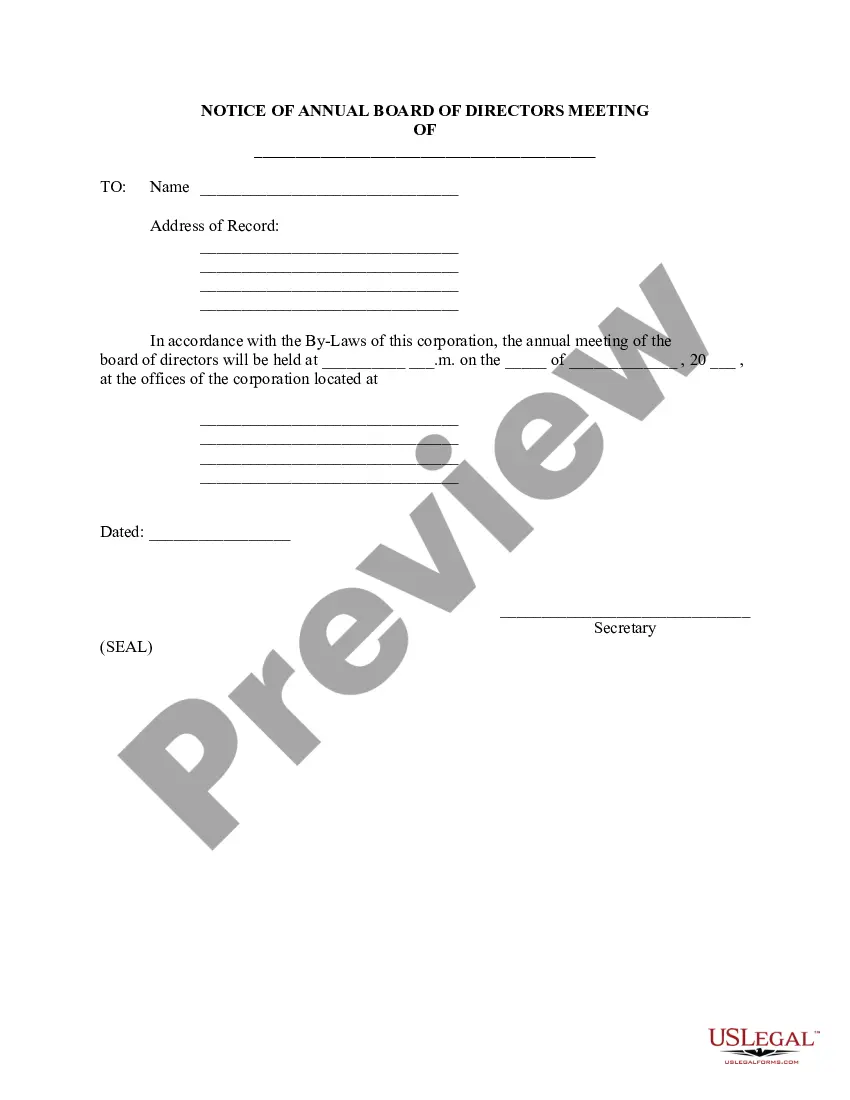
Special Meeting Notice Requirements In Wake
Description


Get your form ready online
Our built-in tools help you complete, sign, share, and store your documents in one place.
Make edits, fill in missing information, and update formatting in US Legal Forms—just like you would in MS Word.
Download a copy, print it, send it by email, or mail it via USPS—whatever works best for your next step.
Sign and collect signatures with our SignNow integration. Send to multiple recipients, set reminders, and more. Go Premium to unlock E-Sign.
If this form requires notarization, complete it online through a secure video call—no need to meet a notary in person or wait for an appointment.
We protect your documents and personal data by following strict security and privacy standards.

Make edits, fill in missing information, and update formatting in US Legal Forms—just like you would in MS Word.

Download a copy, print it, send it by email, or mail it via USPS—whatever works best for your next step.

Sign and collect signatures with our SignNow integration. Send to multiple recipients, set reminders, and more. Go Premium to unlock E-Sign.

If this form requires notarization, complete it online through a secure video call—no need to meet a notary in person or wait for an appointment.

We protect your documents and personal data by following strict security and privacy standards.
Looking for another form?




Form popularity
FAQ
Ing to Robert's Rules of Order, special meetings always require previous notice. Here are a few valid reasons for calling a special meeting: An urgent matter needs to be dealt with before the next regular meeting.
If the time and place of a directors' meeting is fixed by the bylaws or the board of directors, the meeting is a regular meeting. All other meetings are special meetings.
The trustees have the right to call a SGM by way of a written notice. The notice must specify the place, date and time of the meeting. Generally the written notice period is 14 days, but if a unanimous or special resolution is proposed, the notice period is 30 days.
Ing to Robert's Rules of Order, special meetings always require previous notice. Here are a few valid reasons for calling a special meeting: An urgent matter needs to be dealt with before the next regular meeting.
Special Committee Meetings – Urgent meetings of the committee are called Special Committee Meetings and are usually called to deal with a dispute or grievance or other matters of urgency. Minutes from the committee meeting are not available to the members. General Meetings - General meetings are for all members.
In contrast, a special board meeting is a meeting that is not scheduled well in advance and is called by someone – authorized either under the law or the organization's bylaws – for a special purpose.
A SGM may be called by the trustees whenever they think fit, and must be called upon a written request made by owners entitled to 25 percent of the total of the participation quotas of all sections, or by any mortgagee holding mortgage bonds over at least 25 percent in number of the units in the scheme.
Here are five steps to write a notice of meeting letter: Create a header. Start by creating a header for the notice of meeting letter. Write meeting information. Below the header, write a brief paragraph that includes the meeting's information. List the agenda. Conclude the letter. Revise the letter.
One member makes the motion, a second member approves it, and the chair calls for a vote. The approval of meeting minutes goes through with a majority vote. Record the approval: The secretary notes in the current meeting minutes that the board approved minutes from the previous meeting.
The company must give a clear 21 days' notice to its members for calling the AGM. The notice should mention the place, the date and day of the meeting, and the hour at which the meeting is scheduled. The notice should also mention the business to be conducted at the AGM.

