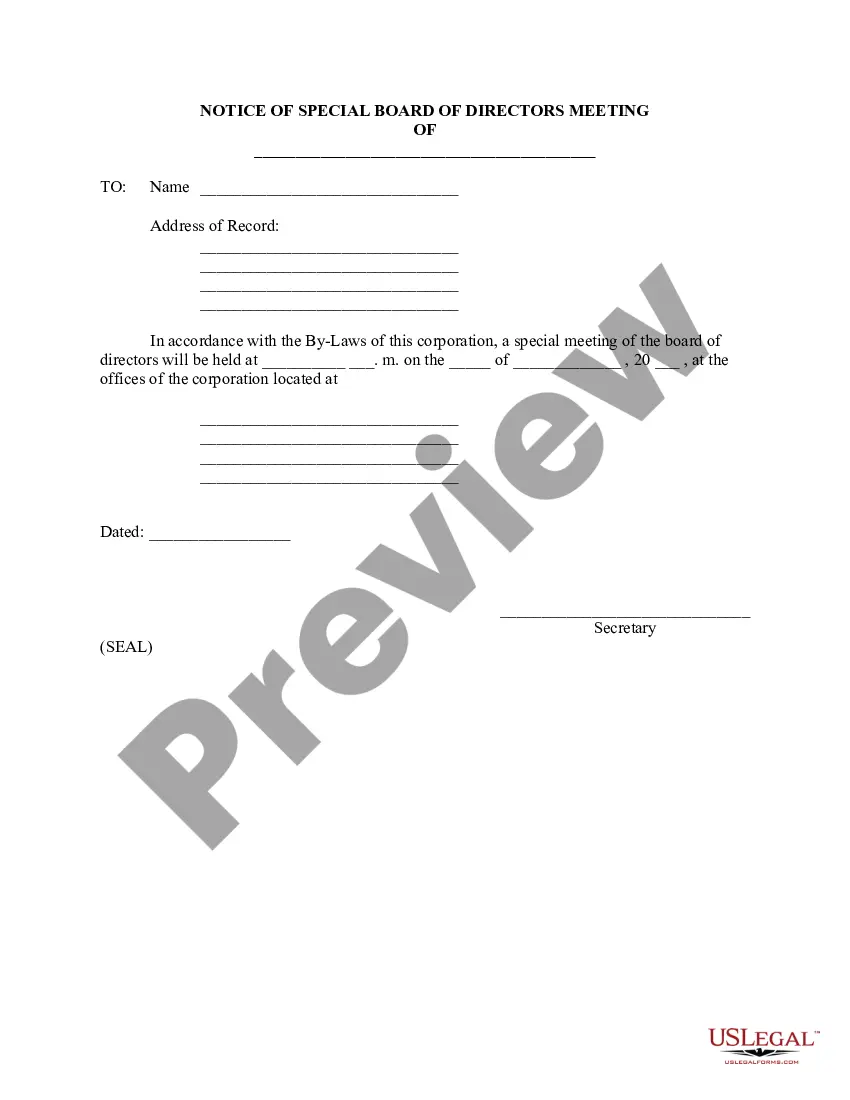
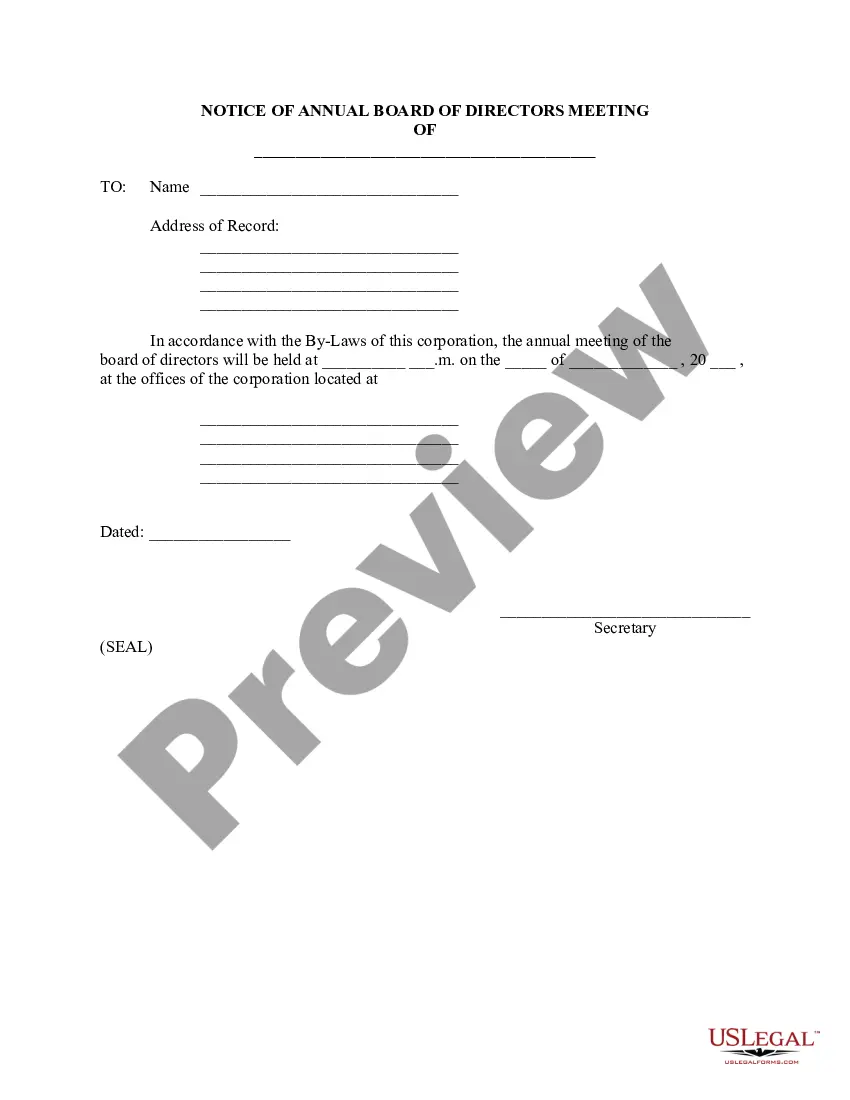
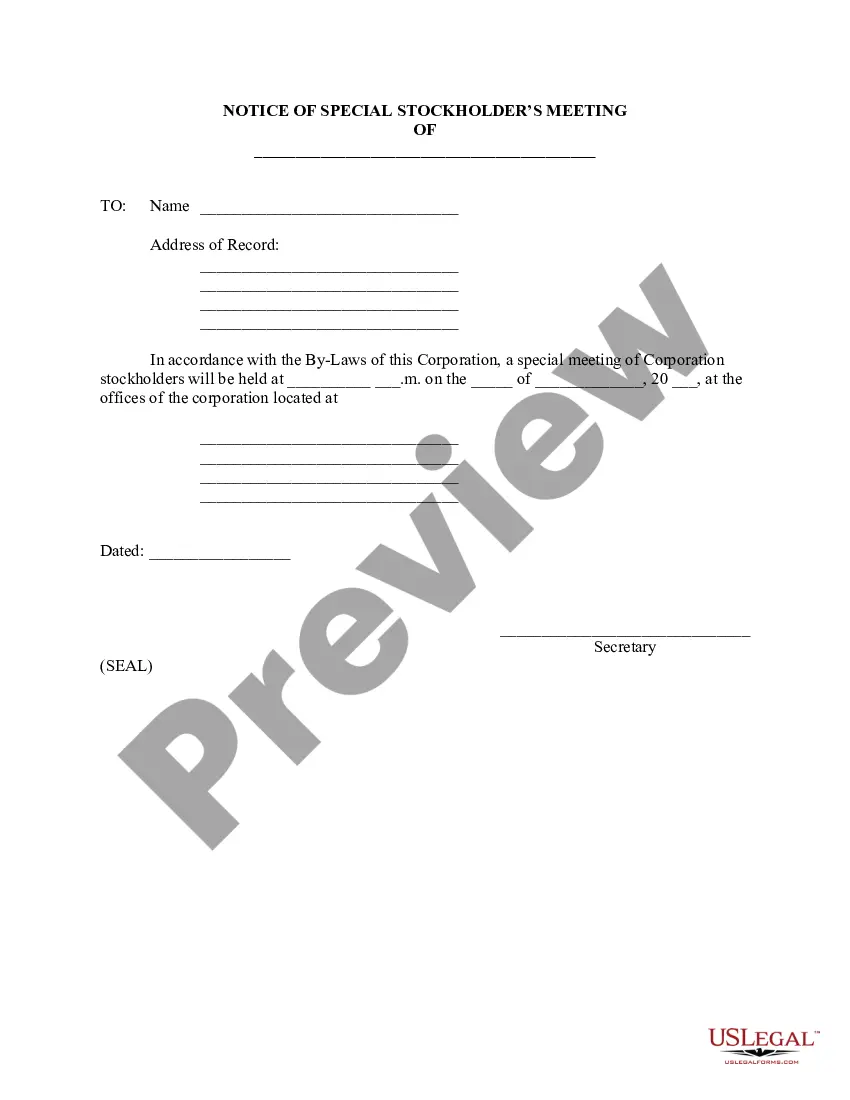
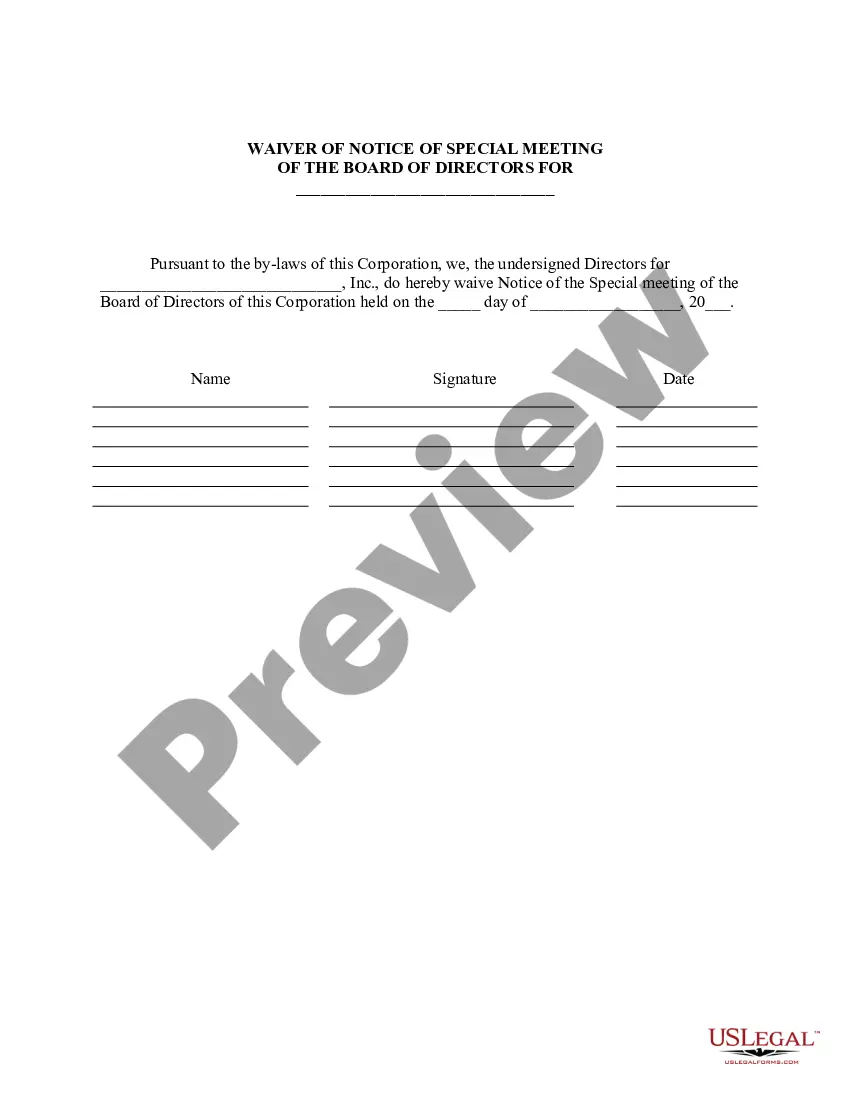
Notice Meeting Corporate With Agenda In Orange
Description
Get your form ready online
Our built-in tools help you complete, sign, share, and store your documents in one place.
Make edits, fill in missing information, and update formatting in US Legal Forms—just like you would in MS Word.
Download a copy, print it, send it by email, or mail it via USPS—whatever works best for your next step.
Sign and collect signatures with our SignNow integration. Send to multiple recipients, set reminders, and more. Go Premium to unlock E-Sign.
If this form requires notarization, complete it online through a secure video call—no need to meet a notary in person or wait for an appointment.
We protect your documents and personal data by following strict security and privacy standards.

Make edits, fill in missing information, and update formatting in US Legal Forms—just like you would in MS Word.

Download a copy, print it, send it by email, or mail it via USPS—whatever works best for your next step.

Sign and collect signatures with our SignNow integration. Send to multiple recipients, set reminders, and more. Go Premium to unlock E-Sign.

If this form requires notarization, complete it online through a secure video call—no need to meet a notary in person or wait for an appointment.

We protect your documents and personal data by following strict security and privacy standards.
Looking for another form?



Form popularity
FAQ
How to write a meeting agenda in 5 steps Define the meeting's objective. When building an agenda, think about why you are having the meeting to begin with. Determine who needs to attend. Gather input from team members. Prioritize agenda items. Assign clear roles and responsibilities.
It is literally the list of things that are to be done. Adopting the agenda is therefore one of the first things that any meeting must do since it decides the issues to address, provides the framework to organise work, and then serves as the basis for the meeting to adopt its decisions at its closing.
The agenda should always be prepared in advance by the president or chairman (also known as the presiding officer) or the secretary. At the beginning of the meeting, the agenda needs to be voted in by a majority vote of more than half of the members present.
Notice and agenda of meeting The notice of meeting informs the members when and where the meeting will be. The agenda informs the members what is to be discussed and done at the meeting so that the members can decide: if they want to attend the meeting; and.
The notice of Board Meeting refers to a document that is sent to all directors of the company. This document informs the members about the venue, date, time, and agenda of the meeting. All types of companies are required to give notice at least 7 days before the actual day of the meeting.
An agenda lists the items of business to be taken up during a meeting or session. It may also be called a "calendar". A meeting agenda may be headed with the date, time and location of the meeting, followed by a series of points outlining the order in which the business is to be conducted.
Here's how to do it effectively. Clarify meeting objectives. The first step in writing a meeting agenda is to clearly define any goals. Invite participant input. Outline key questions for discussion. Define each task's purpose. Allocate time for agenda items. Assign topic facilitators. Write the meeting agenda.
Under Robert's Rules, the agenda is initially written up by the secretary and approved by the presiding officer or chairperson. However, the adoption of the agenda for each meeting should be voted on by the majority of the assembly at the beginning of the meeting, and only at this point is it binding.
Make Sure You Have These 7 Items on Your Next Meeting Agenda Meeting name. Date and time of the meeting. Specific agenda items. Amount of time for each agenda item. Name next to each agenda item. Meeting introduction. Meeting wrap-up. Learn how to run effective meetings.