Meeting For Directors In Nevada
Description


Get your form ready online
Our built-in tools help you complete, sign, share, and store your documents in one place.
Make edits, fill in missing information, and update formatting in US Legal Forms—just like you would in MS Word.
Download a copy, print it, send it by email, or mail it via USPS—whatever works best for your next step.
Sign and collect signatures with our SignNow integration. Send to multiple recipients, set reminders, and more. Go Premium to unlock E-Sign.
If this form requires notarization, complete it online through a secure video call—no need to meet a notary in person or wait for an appointment.
We protect your documents and personal data by following strict security and privacy standards.

Make edits, fill in missing information, and update formatting in US Legal Forms—just like you would in MS Word.

Download a copy, print it, send it by email, or mail it via USPS—whatever works best for your next step.

Sign and collect signatures with our SignNow integration. Send to multiple recipients, set reminders, and more. Go Premium to unlock E-Sign.

If this form requires notarization, complete it online through a secure video call—no need to meet a notary in person or wait for an appointment.

We protect your documents and personal data by following strict security and privacy standards.
Looking for another form?



Form popularity
FAQ
If the director of the company remains absent in all the Board meetings held within 12 months with or without seeking a leave of absence he needs to vacate the office of director. Such 12 months is not a calendar or accounting or a financial or previous year or any other year.
Directors have a nondelegable duty to attend board meetings. Missing an occasional meeting is not a problem, but habitually missing meetings or refusing to attend is a breach of their fiduciary duties.
In such cases, the vacation of the director's office may not be enforceable. In conclusion, it is important for directors to attend Board meetings, as failure to attend all meetings for 12 months will result in the automatic vacating of their office.
Effective steps for running productive board meetings Step 1 – get clear on the board chair role. Step 2 – ensure board members know their role. Step 3 – communicate before, during, and after the board meeting. Step 4 – use meeting time well: right agenda, right leadership. Step 5 – prepare for meetings effectively.
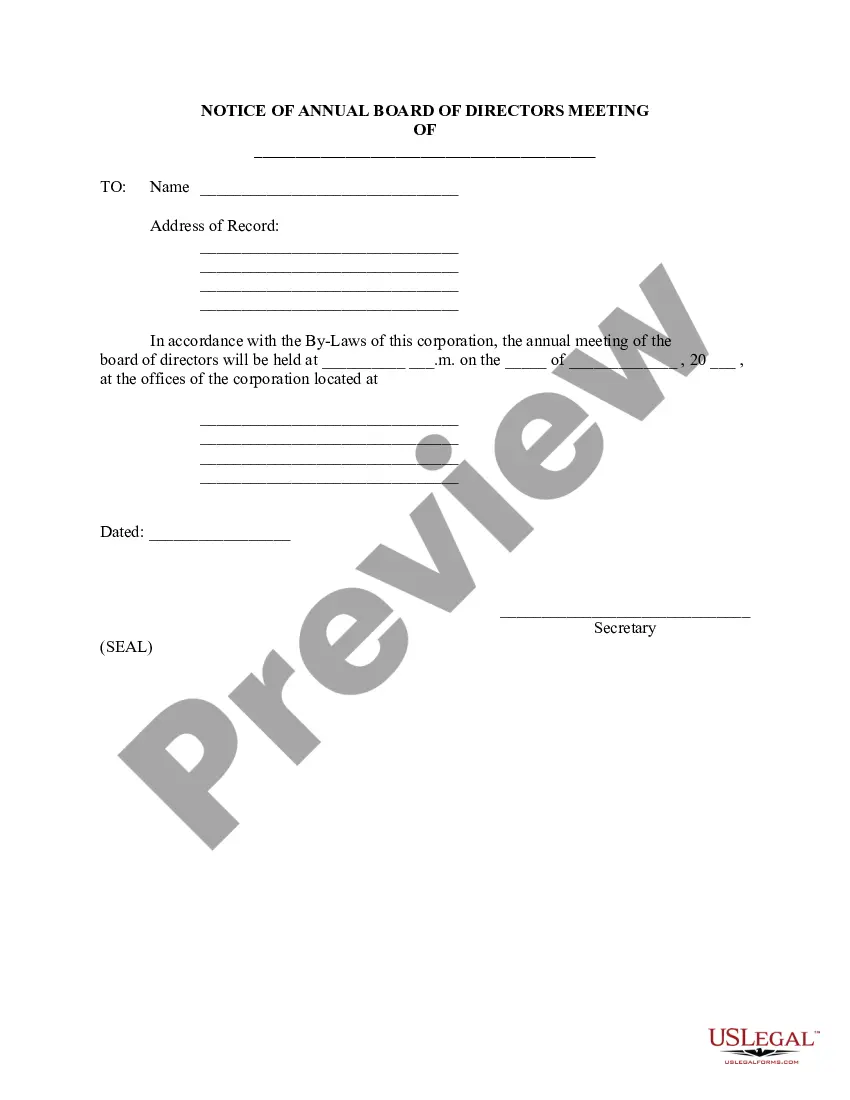
(i) There is no statutory requirement to have any specific minimum number of Board meetings per year, although Directors will need to be satisfied that they are meeting sufficiently regularly to fulfil their duties under the Act. (ii) Directors have a duty to attend meetings where they are reasonably able to do so.
(i) There is no statutory requirement to have any specific minimum number of Board meetings per year, although Directors will need to be satisfied that they are meeting sufficiently regularly to fulfil their duties under the Act. (ii) Directors have a duty to attend meetings where they are reasonably able to do so.
Starting the Meeting: ``Good (morning/afternoon), everyone. Thank you for joining us today. I'd like to welcome you to this meeting. Our agenda includes (briefly outline the agenda items). Let's begin with our first topic.''
Often, the flow of a small to medium-sized corporation meeting for shareholders and directors is to have a guided discussion on issues, voting on applicable issues, a performance review of the company, or a discussion of the company's direction.
7 Step Meeting Process Clarify Aim/Purpose. Assign Roles. Review Agenda. Work through Agenda. Review meeting record. Plan Next Steps and Next Agenda. Evaluate.

