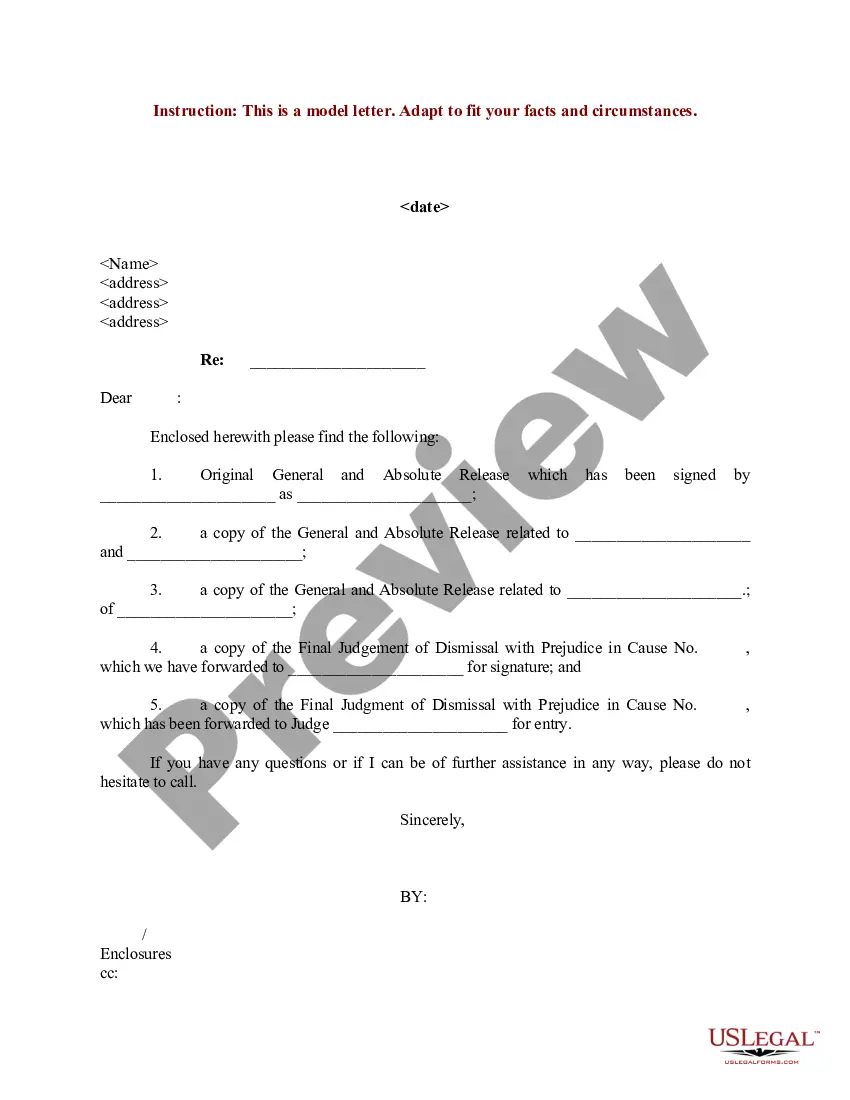
Release With Prejudice Without A Lawyer In Pennsylvania
Description

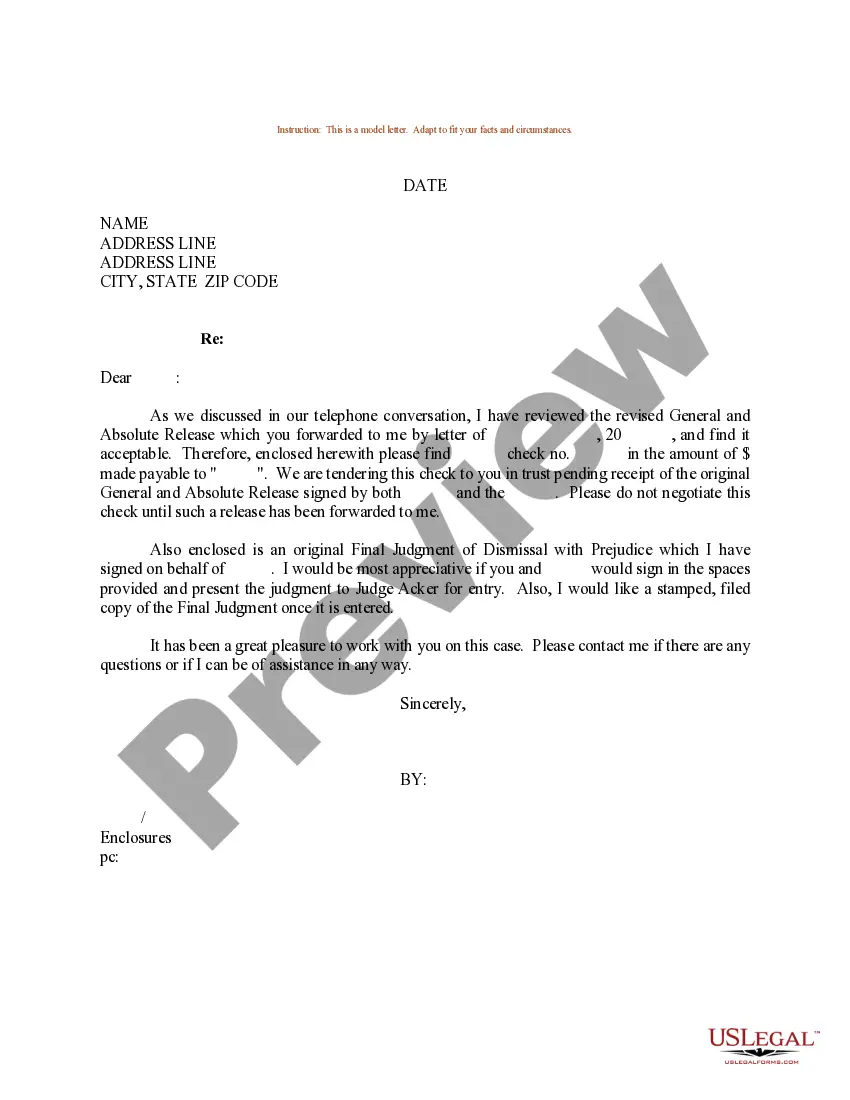
Get your form ready online
Our built-in tools help you complete, sign, share, and store your documents in one place.
Make edits, fill in missing information, and update formatting in US Legal Forms—just like you would in MS Word.
Download a copy, print it, send it by email, or mail it via USPS—whatever works best for your next step.
Sign and collect signatures with our SignNow integration. Send to multiple recipients, set reminders, and more. Go Premium to unlock E-Sign.
If this form requires notarization, complete it online through a secure video call—no need to meet a notary in person or wait for an appointment.
We protect your documents and personal data by following strict security and privacy standards.

Make edits, fill in missing information, and update formatting in US Legal Forms—just like you would in MS Word.

Download a copy, print it, send it by email, or mail it via USPS—whatever works best for your next step.

Sign and collect signatures with our SignNow integration. Send to multiple recipients, set reminders, and more. Go Premium to unlock E-Sign.

If this form requires notarization, complete it online through a secure video call—no need to meet a notary in person or wait for an appointment.

We protect your documents and personal data by following strict security and privacy standards.
Looking for another form?





Form popularity
FAQ
Rule 600. (a) Trial in a court case in which a written complaint is filed against the defendant shall commence within 365 days from the date on which the complaint is filed.
The Act states that school entities are now allowed to provide within the school year a minimum of 180 days of instruction or 900 hundred hours of instruction at the elementary level or 990 hours of instruction at the secondary level.
Whereas a case that is dismissed “with prejudice” is dismissed permanently, a case that is dismissed “without prejudice” is only dismissed temporarily. This temporary dismissal means that the plaintiff is allowed to re-file charges, alter the claim, or bring the case to another court.
District Courts may dismiss with prejudice where the plaintiff acted irresponsibly or in bad faith, or where rehearing the claim would burden the court system.
The MNO-MA asset limits are $2,400 for an individual and $3,200 for a couple. There is no additional asset disregard. 2) Asset Spend Down – Seniors who have assets over Medicaid's limit can still become asset-eligible by spending down extra assets on non-countable ones.
There is no legal maximum rent increase in Pennsylvania at the state level, as there are no rent control laws. Landlords can set rental increases as they see fit, provided they give tenants proper notice, usually 30 to 60 days, depending on the lease agreement.
As in most states, the statute of limitations in civil cases in Pennsylvania is two years. In most cases, this means that victims have two years from the date of their injury to file a civil lawsuit. However, the statute of limitations is different for minors.
If you want to file a motion, the process is generally something like this: You write your motion. You file your motion with the court clerk. The court clerk inserts the date and time your motion will be heard by the judge. You “serve” (mail) your motion to the other side.
You start a lawsuit by filing a complaint. In some circumstances, you file a petition or a motion. The court has several complaint forms that you may use in drafting your complaint. The forms are available online and at the Pro Se Intake Unit.
In Pennsylvania, a lawsuit involving a claim of $12,000.00 or less can be filed in Magisterial District Court. For claims over $12,000.00, the party filing the lawsuit, who is known as the plaintiff, must file in the Court of Common Pleas.