Release With Prejudice For Employees In Los Angeles
Description

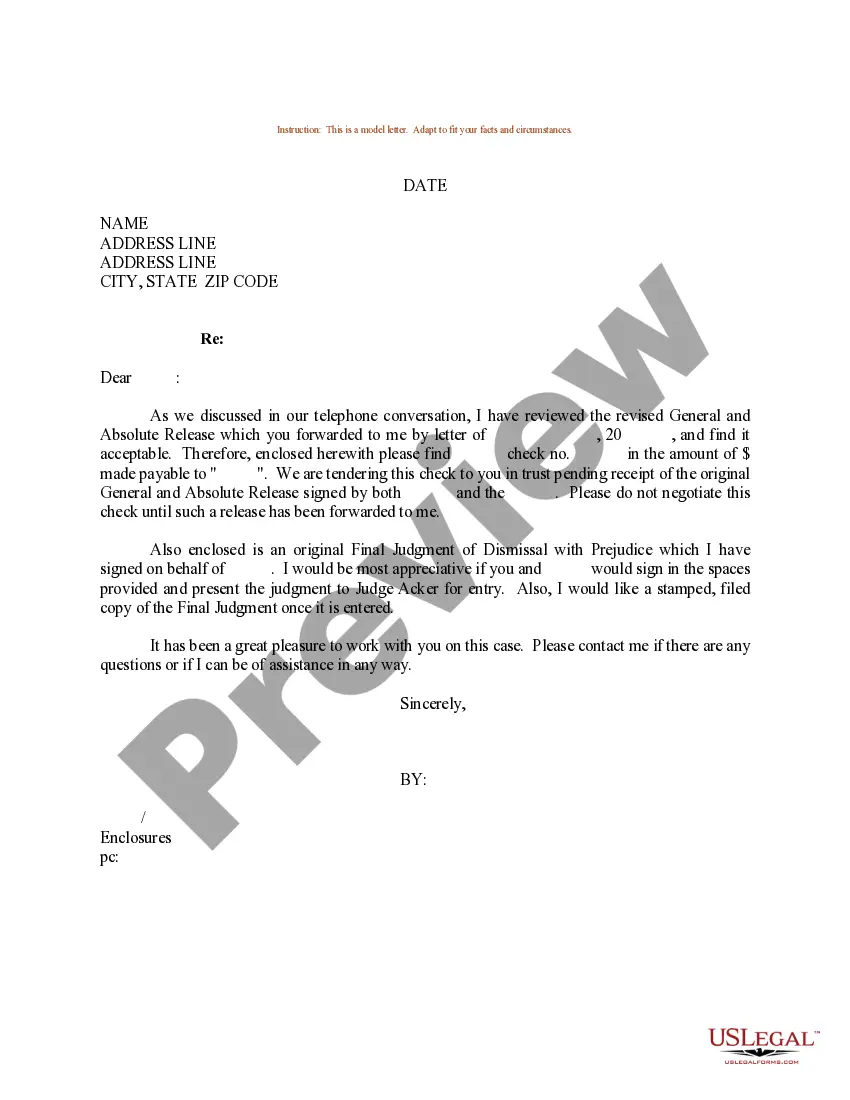
Get your form ready online
Our built-in tools help you complete, sign, share, and store your documents in one place.
Make edits, fill in missing information, and update formatting in US Legal Forms—just like you would in MS Word.
Download a copy, print it, send it by email, or mail it via USPS—whatever works best for your next step.
Sign and collect signatures with our SignNow integration. Send to multiple recipients, set reminders, and more. Go Premium to unlock E-Sign.
If this form requires notarization, complete it online through a secure video call—no need to meet a notary in person or wait for an appointment.
We protect your documents and personal data by following strict security and privacy standards.

Make edits, fill in missing information, and update formatting in US Legal Forms—just like you would in MS Word.

Download a copy, print it, send it by email, or mail it via USPS—whatever works best for your next step.

Sign and collect signatures with our SignNow integration. Send to multiple recipients, set reminders, and more. Go Premium to unlock E-Sign.

If this form requires notarization, complete it online through a secure video call—no need to meet a notary in person or wait for an appointment.

We protect your documents and personal data by following strict security and privacy standards.
Looking for another form?




Form popularity
FAQ
230. (a) An employer shall not discharge or in any manner discriminate against an employee for taking time off to serve as required by law on an inquest jury or trial jury, if the employee, prior to taking the time off, gives reasonable notice to the employer that the employee is required to serve.
Labor Code section 232 prohibits an employer from discharging or retaliating against an employee for disclosing his or her wages.
California Chamber of Commerce defines discrimination in the workplace as either actions taken against employees or that give differential treatment to employees “because they belong to certain protected classes,” such as race, color, gender, sexual orientation, origin, medical condition, religion, disability, and age.
Report discrimination to a local Fair Employment Practices Agency (FEPA). If the discrimination breaks both a state and federal law, the FEPA will also send your complaint to the EEOC. Use the EEOC's directory of field offices to find the FEPA near you.
Evidence takes several forms. It includes your testimony, which is the very first evidence gathered by EEOC. It also includes written materials such as evaluations, notes by your employer, letters, memos, and the like. You will be asked to provide any documents you may have that relate to your case.
No employer may do any of the following: (a) Require, as a condition of employment, that an employee refrain from disclosing the amount of his or her wages.
Yes, you can take legal action against a company for unfair treatment. California's employment laws protect individuals from discrimination, sexual harassment, and wrongful termination. If you believe you've been treated unfairly at work, it's essential to understand your rights and the legal avenues available to you.
The answer depends on your claims and willingness to pursue litigation. If your claims are strong and you are invested in the litigation process, it can be very “worth it” to feel you are standing up for accountability, getting compensation for your injuries, and incentivizing the company to change its ways.
If you're being treated unfairly at work, write down what's happening with dates and details. Talk to the person involved if you feel safe or report it to HR or a manager you trust. Get support from friends, coworkers or mentors. If nothing changes, you can file a complaint or talk to a lawyer.
California employers with 50+ employees or contractors must provide sexual harassment training to managers or supervisors within six months of assuming a supervisory position, and every 2 years thereafter. Training must also address harassment based on gender identity, gender expression, and sexual orientation.
