Consumer Investigative Release Format In Orange
Description
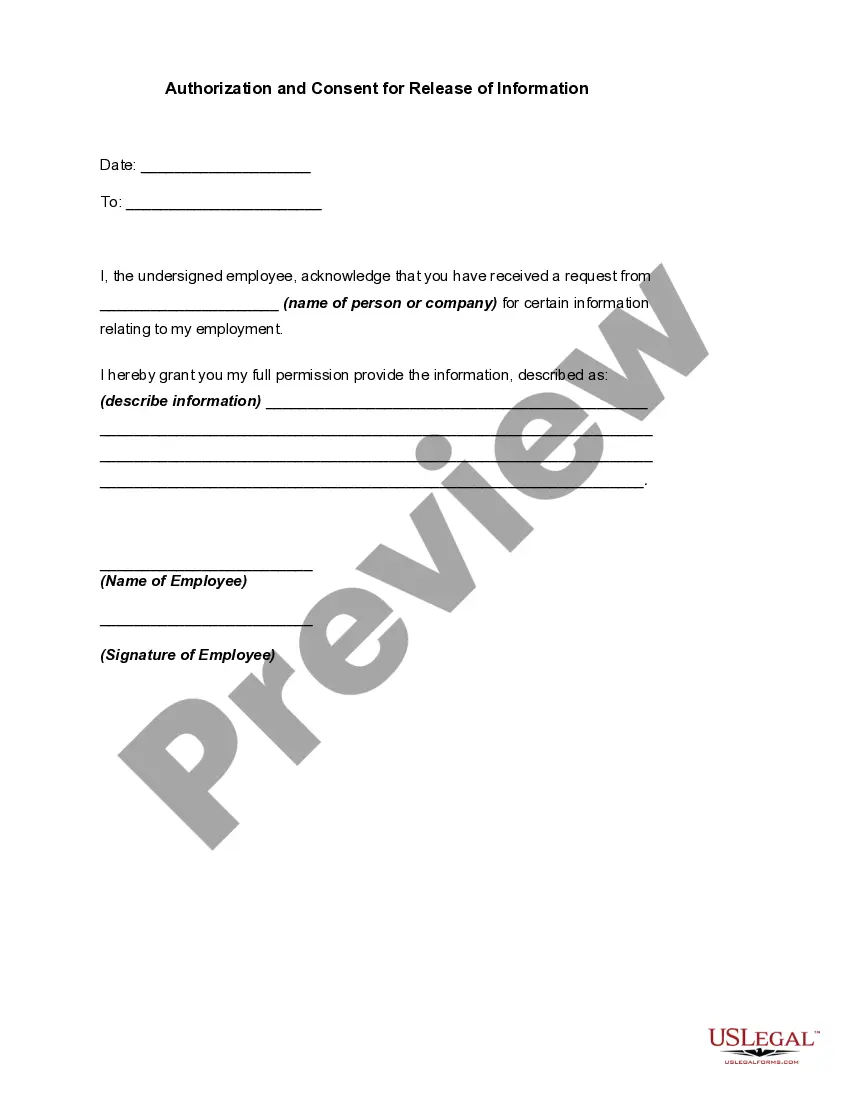
Get your form ready online
Our built-in tools help you complete, sign, share, and store your documents in one place.
Make edits, fill in missing information, and update formatting in US Legal Forms—just like you would in MS Word.
Download a copy, print it, send it by email, or mail it via USPS—whatever works best for your next step.
Sign and collect signatures with our SignNow integration. Send to multiple recipients, set reminders, and more. Go Premium to unlock E-Sign.
If this form requires notarization, complete it online through a secure video call—no need to meet a notary in person or wait for an appointment.
We protect your documents and personal data by following strict security and privacy standards.

Make edits, fill in missing information, and update formatting in US Legal Forms—just like you would in MS Word.

Download a copy, print it, send it by email, or mail it via USPS—whatever works best for your next step.

Sign and collect signatures with our SignNow integration. Send to multiple recipients, set reminders, and more. Go Premium to unlock E-Sign.

If this form requires notarization, complete it online through a secure video call—no need to meet a notary in person or wait for an appointment.

We protect your documents and personal data by following strict security and privacy standards.
Looking for another form?
Form popularity
FAQ
Reference Standard (RS) A “reference standard” is the drug product selected by FDA that an applicant seeking approval of an ANDA must use in conducting an in vivo bioequivalence study required for approval of an ANDA. In the electronic Orange Book, a reference standard is identified by “RS” in the RS column.
Therapeutic Equivalence (TE) Codes A drug product is deemed to be therapeutically equivalent ("A" rated) only if: a drug company's approved application contains adequate scientific evidence establishing through in vivo and/or in vitro studies the bioequivalence of the product to a selected reference listed drug.
Final answer: The first letter in the Orange Book rating code indicates the Therapeutic equivalence. An 'A' rating signifies that the drug is recognized as therapeutically equivalent by the FDA, while a 'B' rating suggests it is not.
Therapeutic equivalence has been established between products that have the same AB+number therapeutic equivalence code (i.e., AB1, AB2, AB3 or AB4). More than one therapeutic equivalence code may apply to some products. One common therapeutic equivalence code indicates therapeutic equivalence between products.
Page 1. FDA CODES AND THERAPEUTIC DEFINITIONS. “A” CODES Drug products that are considered to be therapeutically equivalent to other pharmaceutically equivalent products. AA Products not presenting bioequivalence problems in conventional dosage forms. AB Products meeting necessary bioequivalence requirements.
Those products that are compatible only with a specific delivery system or those products that are packaged in and with a specific delivery system are coded BN, unless they have met an appropriate bioequivalence standard and are otherwise determined to be therapeutically equivalent.
The Orange Book uses Therapeutic Equivalence codes (TE codes) a short series of letters and sometimes numbers (eg AB, AB2, BX) to categorize drugs based upon their assessed equivalency.
File a complaint with government or consumer programs File a complaint with your local consumer protection office. Notify the Better Business Bureau (BBB) in your area about your problem. The BBB tries to resolve complaints against companies. Report scams and suspicious communications to the Federal Trade Commission.
Consistent with applicable law, we securely share complaints with other state and federal agencies to, among other things, facilitate: supervision activities, enforcement activities, and. monitor the market for consumer financial products and services.
The FCC is the federal agency that regulates cable and satellite services to protect consumers. File a complaint with the FCC using their online TV complaint form. For questions, call the FCC at 1-888-225-5322.
