Consumer Investigative Release With Example In Massachusetts
Description
Get your form ready online
Our built-in tools help you complete, sign, share, and store your documents in one place.
Make edits, fill in missing information, and update formatting in US Legal Forms—just like you would in MS Word.
Download a copy, print it, send it by email, or mail it via USPS—whatever works best for your next step.
Sign and collect signatures with our SignNow integration. Send to multiple recipients, set reminders, and more. Go Premium to unlock E-Sign.
If this form requires notarization, complete it online through a secure video call—no need to meet a notary in person or wait for an appointment.
We protect your documents and personal data by following strict security and privacy standards.

Make edits, fill in missing information, and update formatting in US Legal Forms—just like you would in MS Word.

Download a copy, print it, send it by email, or mail it via USPS—whatever works best for your next step.

Sign and collect signatures with our SignNow integration. Send to multiple recipients, set reminders, and more. Go Premium to unlock E-Sign.

If this form requires notarization, complete it online through a secure video call—no need to meet a notary in person or wait for an appointment.

We protect your documents and personal data by following strict security and privacy standards.
Looking for another form?







Form popularity
FAQ
Attorney General's Consumer Advocacy & Response Division Phone. Consumer Hotline Call Attorney General's Consumer Advocacy & Response Division, Consumer Hotline at (617) 727-8400. Monday-Friday, 8 a.m. - 4 p.m. Online. File a consumer complaint. Learn more about this organization.
Typically, in order to sue a company for damages in Massachusetts, you must first draft your civil lawsuit. Then, you must file your civil lawsuit in the proper venue. The appropriate venue is generally the district court in the county that you live in, but it may also be the court where your injury occurred.
The FTC's Bureau of Consumer Protection stops unfair, deceptive and fraudulent business practices by collecting reports from consumers and conducting investigations, suing companies and people that break the law, developing rules to maintain a fair marketplace, and educating consumers and businesses about their rights ...
Information To Include in Your Letter Give the basics. Tell your story. Explain how you want to resolve the problem. Describe your next steps. Send your complaint letter. Your Mailing Address Your City, State, Zip Code Your email address
The Massachusetts privacy act requires that “every person that owns or licenses personal information about a resident of the Commonwealth must develop, implement, and maintain a comprehensive information security program”.
File a complaint with your local consumer protection office or the state agency that regulates the company. Notify the Better Business Bureau (BBB) in your area about your problem. The BBB tries to resolve your complaints against companies.
Refund, Return & Cancellation Policies Contrary to popular belief, there is no set law about return policies in Massachusetts.
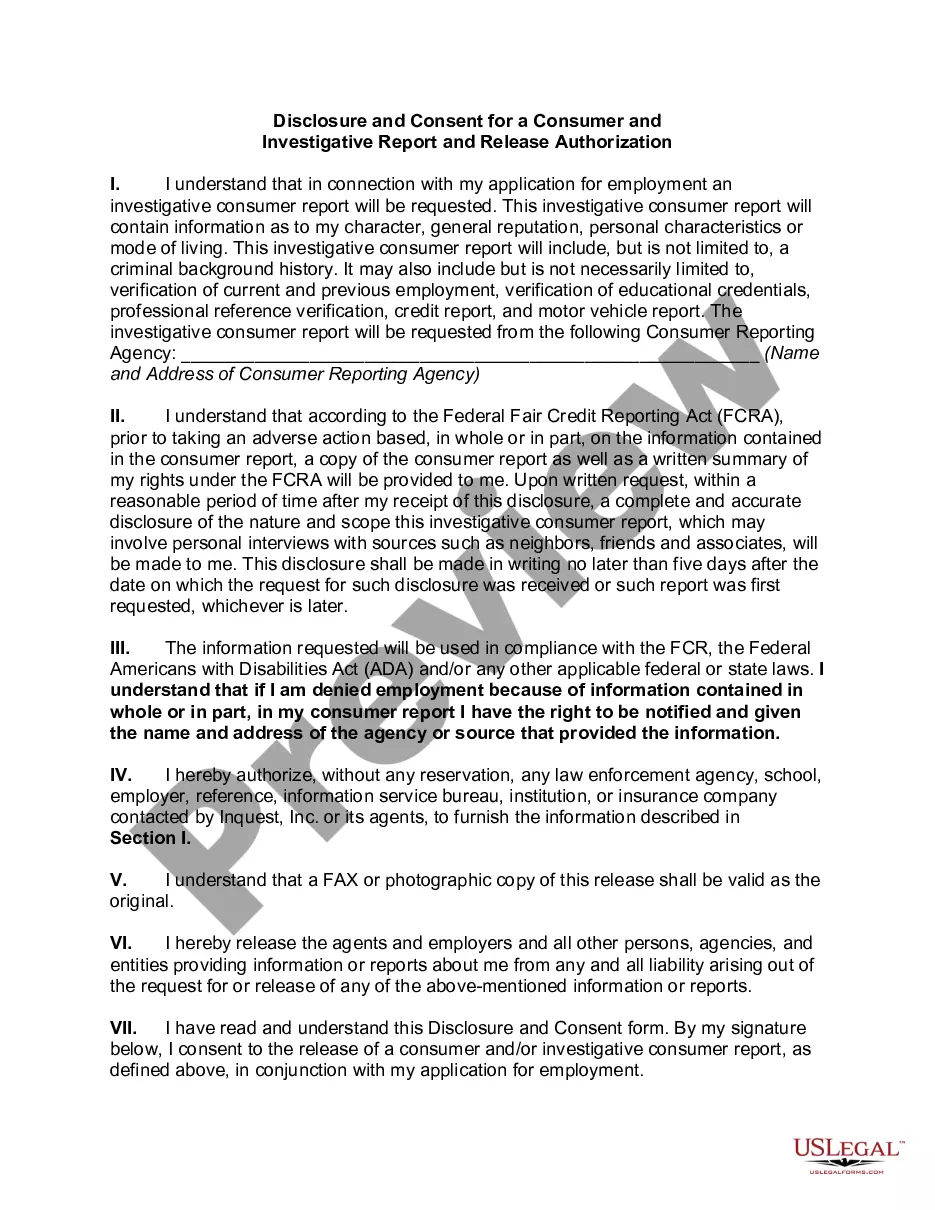
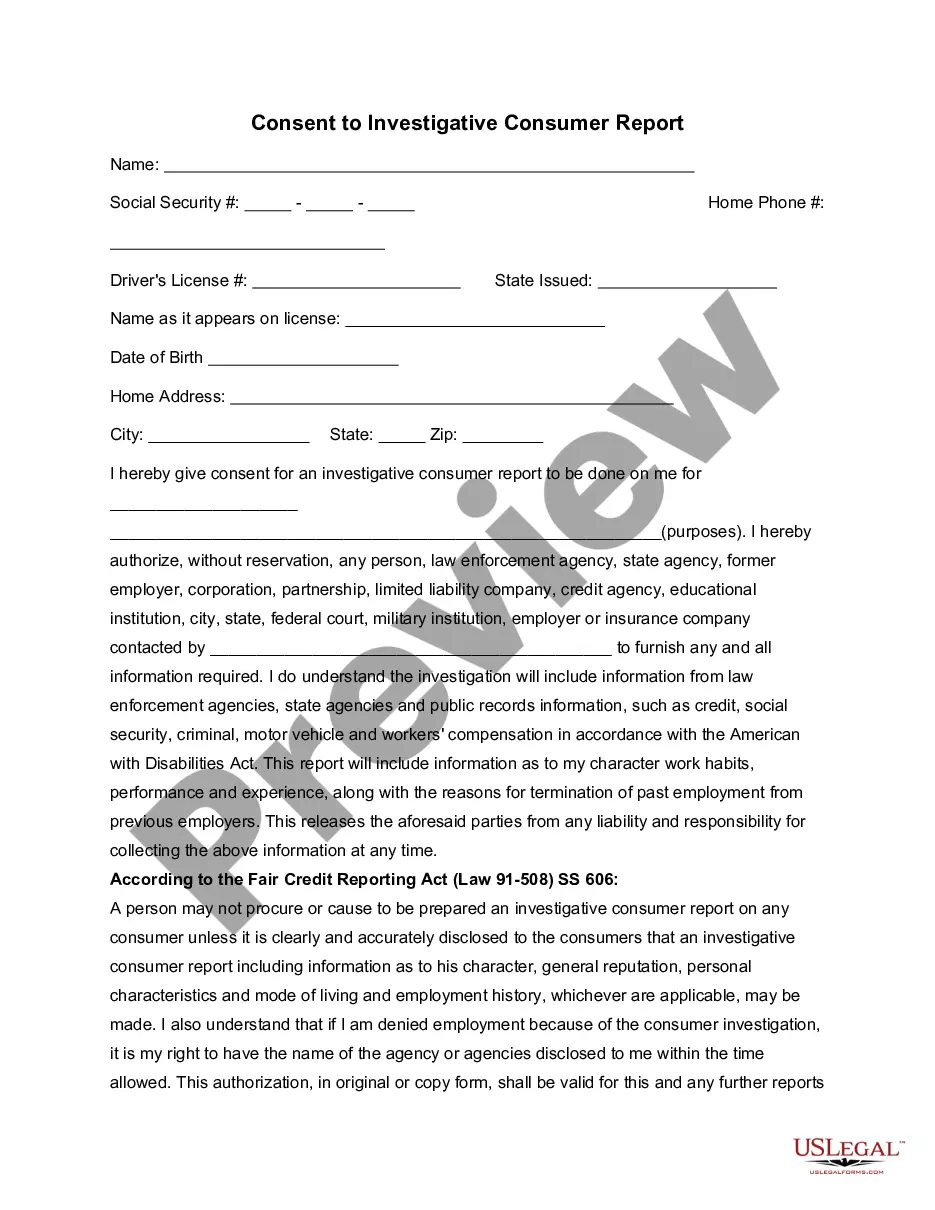
Except as otherwise provided in section 1681k of this title, a consumer reporting agency shall not furnish an investigative consumer report that includes information that is a matter of public record and that relates to an arrest, indictment, conviction, civil judicial action, tax lien, or outstanding judgment, unless ...
The FTC does clarify that obtaining information from a former employer beyond “fact-checking” could constitute an interview and be considered an Investigative Consumer Report. This could include, but is not limited to, asking a candidate's former employer about: Discipline actions against the candidate.
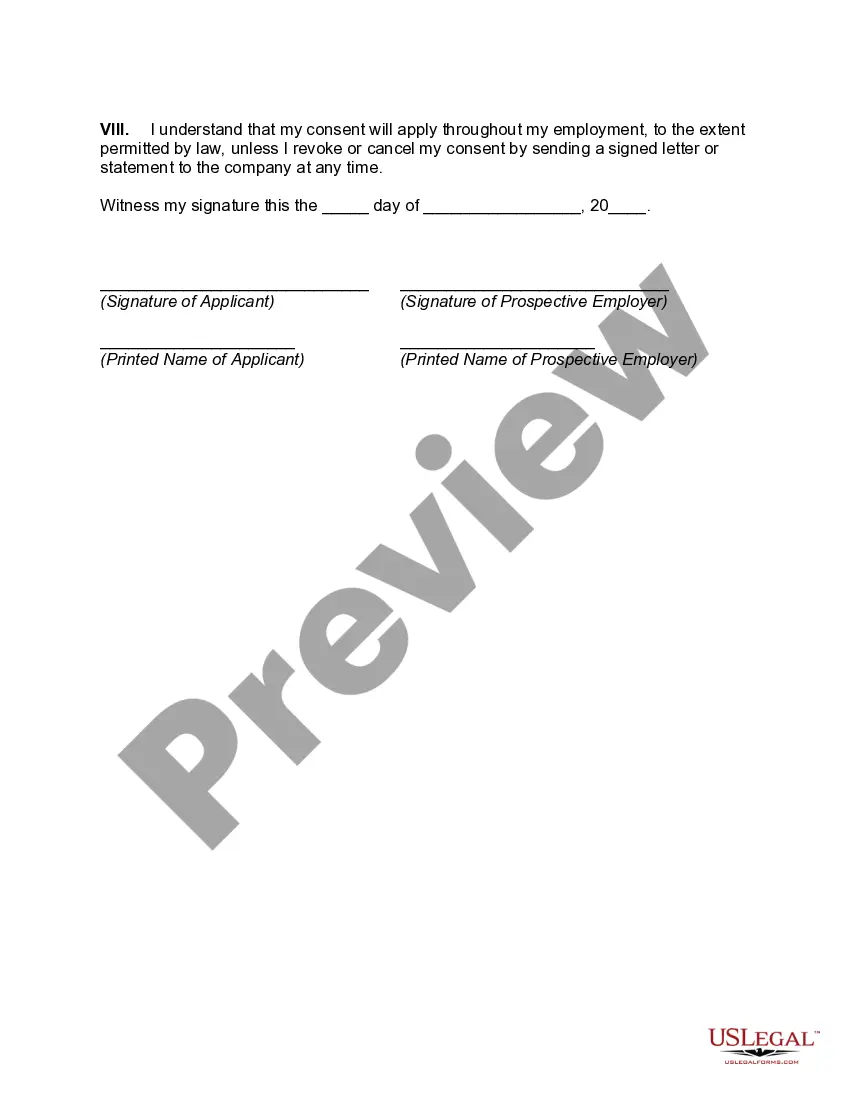
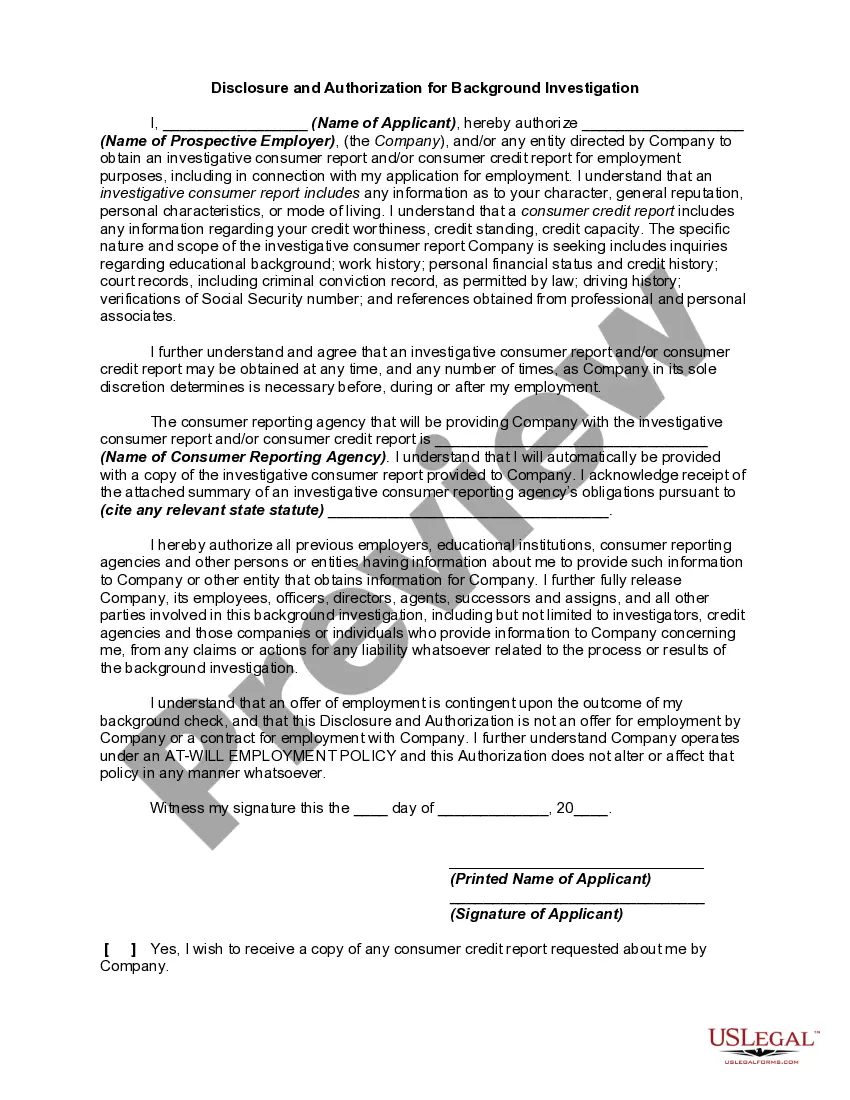
A consumer reporting agency must also include a summary of consumer rights with the disclosure to the consumer. This ensures the consumer is informed about their rights under the Fair Credit Reporting Act (FCRA). Details such as the firm's name and address, and privacy policies are also typically included.
